
This guide helps any vocal ensemble prepare and lead the liturgy in a parish setting. It aims at shared prayer and the active participation of the faithful.
The mission is clear: the schola or choir is a recognized liturgical service, called to guide and support the congregation, not to replace its singing. Official texts recall this role.
We offer a practical view of leading worship, from the entrance hymn to the dismissal, with concrete steps for preparation and musical coordination.
The approach draws on online resources — SATB recordings, sheet music libraries, and tutorials — to choose hymns suited to the rite. See also a selection of liturgical hymns.
Final objective: to allow the congregation to sing, pray, and celebrate simply, without overloading the arrangements, leaving room for recollection.
Understanding the Choir’s Liturgical Mission
Church documents set out a clear framework for communal singing. GIRM no. 103 and Musicam sacram recall that the vocal group has its own liturgical function. Their aim is to foster the active participation of the faithful and ensure that the hymns are performed appropriately.
Participating Actively: GIRM, Musicam sacram, and the Church’s Call
“To foster the active participation of the faithful”
These texts invite the parish to choose music according to the rite. John Paul II emphasizes that the group guides and supports prayer, without taking the place of the people or the priest.
Choir, Schola, Choral Group: A Service of the Rite and the Congregation
The group is not an isolated entity, but part of the congregation at the service of the rite. Humility, accuracy, and an appropriate style are essential.
Guiding and Supporting Prayer: When to Sing and When to Be Silent
Discerning the proper and shared parts helps determine when to lead, alternate, or support. Parish resource sites confirm that this positioning strengthens fervor and unity.
Church Choir: Leading Mass with Your Choir
A precise musical project gives meaning to vocal service and guides practical choices. Start by making the purpose explicit: prayer, praise, liturgy, and the expected level of participation. This framework makes the singers’ work easier and helps the congregation understand.
Clarify Your Goals: Prayer, Praise, Liturgy, Participation
Formalizing a pastoral and musical project helps determine the repertoire, tempos, and place of polyphony. Note the “why” behind the choice of hymns and connect it to the parish project.
“Singing must foster the participation of the congregation.”
Plan Over Time: Sunday Masses, Once a Month, Feasts
Define a realistic rhythm: leading Sunday Masses, participating once a month for some groups, or mobilizing for major feasts. Spread new material over several weeks so the congregation can make the pieces its own.
- Progression: introduce new melodies slowly.
- Indicators: measure the clarity of responses and the fervor.
- Resources: build programs from reliable sites and recordings.
- Alignment: place the project within the parish missionary plan.

To explore the role of singing and teams further, consult the official text on liturgical music. It guides the choice of hymns in connection with the liturgical season.
Preparing the Celebration: Framework, Team, and Order of Service
A brief meeting with the priest makes it possible to state the intention of the day, announcements, and local constraints.
During this meeting, note the pastoral emphasis and the parish’s key moments. This guides the choice of pieces and the singers’ work.
Meet the Priest and the Liturgy Team
Organize a short meeting to validate the high points: sacraments, dismissal, feasts. Indicate the parts where the congregation should sing or remain silent.
Rely on reference sites to obtain sample orders of service and hymn lists if resources are limited.
Assign the Roles
Clarify who leads the singing, who gives the cues, and who reads the psalm if needed. Plan for a music director, a song leader, and the musicians.
- Briefing before the service: microphone tests and positioning.
- Precise running order: keys, cues, breaths.
- Logistics: sheet music, water, pencils, visible clock.
| Role | Responsibility | Key Moment | Note |
|---|---|---|---|
| Music director | Running order and choice of key | Entrance, communion | Prepares the running order |
| Song leader | Guides the congregation | Responses, refrains | Avoids face-to-face opposition |
| Organist / musicians | Accompaniment | Processions, offertory | Adapt the difficulty |
| Reader / psalmist | Psalmody and transitions | Liturgy of the Word | Coordination with the choir |
After the service, document what worked well and what needs to evolve. This small task makes preparing the next parish moment easier.
Choosing Hymns Connected to the Rites
Connecting each hymn to the rite helps the congregation understand and live the liturgical gesture. Think about the theological meaning of the moment: entrance, Kyrie, Gloria, profession of faith, Sanctus, anamnesis, Agnus Dei, communion, and dismissal.
Entrance, Ordinary Parts, and High Points
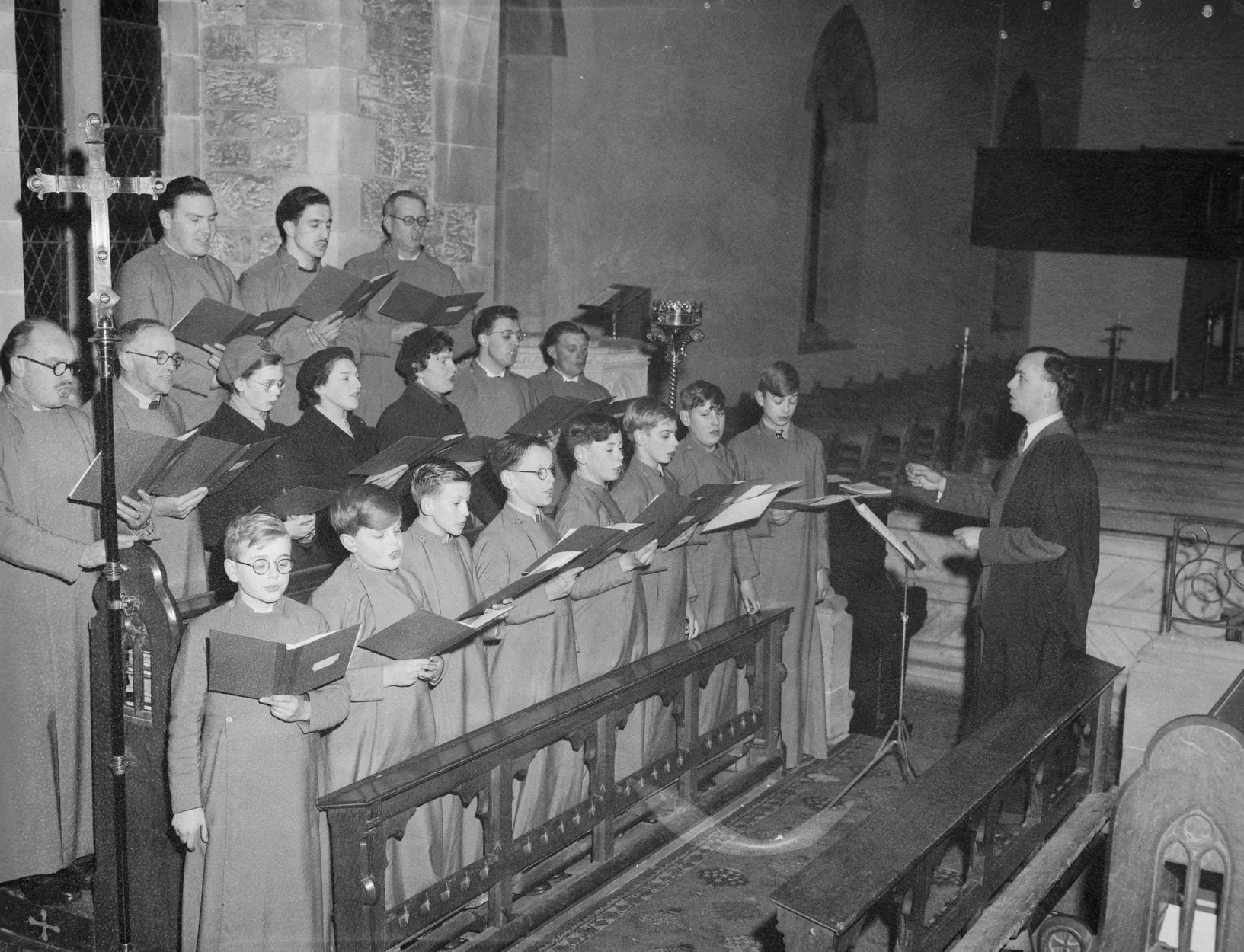
Prioritize unison for the entrance hymn, the Kyrie, the Gloria, and the profession of faith. One shared breath strengthens unity and makes it easier for everyone to respond.
Unison, Refrain, and Verses
Favor memorable refrains. The choir often takes the verses while the people sing the refrain. This helps participation without tiring the congregation.
Managing New Material and Polyphony
Introduce only one new hymn at a time and repeat it over several Sundays. Avoid polyphonic Mass settings at moments when the congregation is expected to respond fully.
- Connect each piece to its liturgical function.
- Check the score and vocal range before imposing a melody.
- Prepare the refrains on clear sheets or screens.
- Maintain an organized sheet music library: versions, keys, and tempos.
| Moment | Function | Practical Advice |
|---|---|---|
| Entrance | Gather | Unison, moderate tempo, memorable refrain |
| Communion | Meditation | Choose a text on Christ’s gift, avoid the Ave Maria |
| Ordinary parts (Gloria, Creed) | Congregational response | No polyphonic Mass setting: favor unison or refrains |
Building the Musical Flow of the Mass
Each part of the ritual deserves a musical gesture designed to gather and support. The musical thread must respect the rhythm of the liturgy and foster participation.
Welcome Hymn: Gathering “With One Voice”
Define a welcome hymn in strong unison. Choose a simple text and a lively tempo. The goal is to call the congregation to participate from the very first moment.
Liturgy of the Word: Silence, Psalmody, Extending Meditation
Respect the silences after the reading to let the Word resonate. Offer accessible psalmody: the schola takes the verses and the people sing the refrain.
After the homily, the choir can extend the meditation with a hymn that echoes the text, brief and suited to the season.
Procession of the Gifts and Communion: Choral Pieces at the Service of the Rite
Prepare a piece for the procession of the gifts, controlled in length and with a clear ending. Anticipate communion: a simple hymn for the congregation, then, if necessary, a meditative choral piece.
Nave-Choir Dialogues: Alternating, Responding, Supporting
Set up short exchanges between the nave and the group: alternating stanzas, simple canons, ostinatos that support without overwhelming. Frame transitions with visual cues and shared breathing.
- Review the order of service: each part must be useful, never superfluous.
- Use reference points found on sites for typical durations and the choice of the ordinary.
- Evaluate in context and note moments that are too long in order to adjust the next celebration.
| Part | Function | Practical Advice | Suggested Duration |
|---|---|---|---|
| Welcome | Gather | Unison, moderate tempo | 2–3 min |
| Liturgy of the Word | Meditation | Accessible psalmody, silences | 3–6 min |
| Procession of the gifts / Communion | Offering and sharing | Short choral piece, clear ending | 4–7 min |
| Transitions | Links | Visual cues, shared breathing | 30–60 sec |
Choral Technique: Voices, Tempo, Balance, and Pitch Accuracy
Sound quality depends on methodical work. Start by securing the basic elements: unison, placement, and breathing.
Work on Unison Before Polyphony
Prioritize unison to make timbres and the common attack more homogeneous. This work helps choristers listen and blend their sound.
Start with short exercises on simple intervals. Only begin polyphony once pitch accuracy is stable.
Master Tempo, Phrasing, Accentuation, and Breathing
Stabilize the tempo in rehearsal with a metronome and clarify the conductor’s gestures. Shared breaths maintain the foundation of the singing.
Take care with phrasing: clear articulation and emphasis on theological words. In case of weakness, return to unison to refocus pitch accuracy.
Prepare Scores and Folders So You Can Pray Without Distracting Noise
Prepare the scores in advance: bookmarks, numbers, and technical sheets (key, entries, breaths). Avoid page turning during the service.
| Action | Responsible Person | Tools | Recommended Duration |
|---|---|---|---|
| Unison | Vocal director | Metronome, exercises | 10–20 min in rehearsal |
| Tempo and phrasing | All voices | Recordings, conductor’s cue | 5–10 min per piece |
| Score preparation | Music director | Sheets, bookmarks, lighting test | Before the entrance |
| Plan B | Conductor | Simplification, return to unison | Immediately if necessary |
Training Your Choristers: Tools, Rehearsals, and Resources
Providing audio reference points and sheets allows beginners to gain confidence. Set up a digital teaching approach based on SATB recordings and tutorials so each voice can be learned at home.
Organizing rehearsal: set a clear goal, divide the time by piece, practice cross-listening, and finish with a final run-through. Create section duos to support new choristers.
Structuring the sheet music library: classify scores by rite, liturgical season, vocal range, and level. Preserve materials (audio, PDF, notes) and share them on an internal site accessible to members.
Make use of reference sites used by teams in Toulouse, Geneva, or Quebec to retrieve recordings, scores, and suggested orders of service. Adapt these resources to local work through feedback from celebrations.
- Listening sheets and tutorials for intonation and rhythm.
- Season calendar with milestones for introducing new material.
- Technical micro-goals at each session (attack, breath, pitch accuracy).
Coordinating Choir and Musicians
Coordinating voices and instruments requires a simple, shared protocol. A brief technical check-in before the service reassures everyone: keys, introductions, and codas.
Invite the organist and musicians to specify breaths and entries. Define clear signals: glance, upbeat, or rhythmic figure to know who starts what at each moment.
Favor orchestration that supports the rite. Avoid textures that cover the congregation and favor restrained interludes for transitions.
- Write a shared running order: introduction measures, number of refrains, ending.
- Test the acoustics: quick balance and adjusted organ registrations.
- Plan alternatives: a cappella or transposition if needed.
Music must serve the liturgy, not performance.
| Action | Responsible Person | Why |
|---|---|---|
| Short meeting | Conductor + musicians | Clarify keys and entrances |
| Sound test | Organist | Adapt the dynamics |
| Document | Music director | Improve the work for the next moment |
Pool resources and arrangements through a reference site. Note what works, so the music continues to serve prayer.
The Spiritual Life of Choristers: Praying While Singing, Singing While Praying
The group’s inner life is nourished by the words we proclaim together. When the text is meditated upon, the vocal gesture becomes an offering and not merely a performance.
Consenting to the work of the Spirit requires humility and service: accepting the common tempo, listening to one another, and placing oneself at the service of the congregation. This helps faith grow through action.
The offering of breath transforms technical skill into prayer. Shared breathing is a liturgical act. Prepare everything in rehearsal so that, during Mass, every phrase is true and available to the Lord.
- Meditate on the texts before learning the melodic line.
- Practice short biblical moments and a silence before rehearsals.
- See beauty as a sign of grace for the parish.
| Practice | Duration | Responsible Person |
|---|---|---|
| Meditative reading of the text | 5–10 min | Vocal director |
| Silence and brief prayer | 2–3 min | Everyone |
| Shared breathing exercise | 5 min | Music director |
| Sharing experience (site and feedback) | 10 min | Coordinator |
Pastoral Dimension: At the Service of the Parish and the Mission
The collective practice of singing carries a message of generosity and beauty for the parish. The gift of the voice becomes witness: it reveals the grace offered to all and supports the community’s spiritual life.
Generosity, Beauty, and Communion: An Opportunity for the Community
Offering music without material expectation creates a space of encounter where bonds are woven. The musical presence helps the parish carry joys and sorrows to the altar.
The practice unites generations. It fosters communion and the transmission of a repertoire that, over the years, becomes local heritage.
Working Between Choirs: Shared Projects and Solemn Masses
Multiplying joint projects strengthens the pastoral network. Vigils, solemn Masses, or a triduum bring several teams together and broaden the horizon of service.
- Pool a sheet music library and recordings through a site.
- Train song leaders and conductors to ensure succession.
- Assess pastoral impact: welcome, participation, and quality of prayer.
| Strength | Action | Why |
|---|---|---|
| Fraternity | Shared projects | Strengthen the parish |
| Resources | Sharing on a site | Gain efficiency |
| Durability | Stable repertoire | Carry prayer over the years |
“Music at the service of the community becomes a visible sign of the Church’s love.”
Coordinate these initiatives with the deanery and the diocese to place the action within the life of the local Church and support the Masses that mark the parish mission.
Adapting the Leading of Worship: Baptism, Communion, Profession of Faith, Wedding, Multilingual Masses
Choose according to the sacrament. For a baptism or a profession of faith, favor simple, familiar texts. A repetitive refrain helps families and children participate.
For communion, choose a meditative piece that is easy to sustain. Avoid complex arrangements that hinder collective prayer.
For weddings or Masses in several languages, opt for well-known hymns or universal ostinatos. Short translations or displayed refrains help guests.
Respect the liturgical season. Adapt the repertoire to Advent, Eastertide, or diocesan feasts. Always coordinate the choice with the priest and the liturgy team.
Plan a quick 5-minute rehearsal before the service to anchor a key refrain. Use reliable sites for scores and learning audio.
“Simplicity and clarity foster common prayer.”
After each celebration, assess what encouraged participation and simplify what held it back. This loop improves future Masses.
Common Mistakes and Good Practices
Many teams encounter the same mistakes, which are simple to correct. A quick diagnosis is enough to improve participation and preserve collective prayer.
Too many new hymns and too much polyphony
Diagnosis: the congregation drops out if several new pieces are introduced at the same time or if the texture becomes too dense.
Correction: limit new material to one hymn at a time and repeat the choice several times. Reserve polyphony for pieces outside the ordinary parts, where the congregation is not called to respond.
Lack of Dialogue with the Congregation
Encourage alternation: verse taken by the group, refrain by the congregation. Sometimes silence is the best way to give the faithful their voice back.
Offer a mini-rehearsal of a refrain before the celebration to provide the teaching momentum that will make the people’s response easier.
Technical Settings: Prepare Everything Beforehand
Avoid adjustments during the service. Test keys, microphones, and scores in advance. Use recordings for voice work and to prepare each part.
- Create a checklist: keys, entries, placements, folders, and signage.
- Observe the congregation: if it drops out, simplify (unison, livelier tempo).
- Document mistakes: note causes and remedies for the next service.
- Build on recognized sites and recordings for preparatory work.
| Problem | Frequent Cause | Corrective Action | Expected Result |
|---|---|---|---|
| Too much new material | Simultaneous introductions | One new hymn at a time | Gradual adoption by the congregation |
| Misplaced polyphony | Use in the ordinary parts | Reserve it for accompaniment pieces | Clear responses from the people |
| Technical tests during the service | Incomplete preparation | Checklist and tests beforehand | Liturgical silence preserved |
| Loss of dialogue | Lack of alternation | Alternate voices and congregation, sometimes remain silent | Participation restored |
“Prepare, rehearse, then simplify: that is the rule so music remains service and not spectacle.”
Conclusion
In closing, let us retain the central idea: music supports the rite and fosters participation. The texts (GIRM no. 103, Musicam sacram, the words of John Paul II) call for simplicity and service.
Keep the essentials in view: serve the Mass and the congregation. Aim for unison, choose hymns connected to the rite, and create a true dialogue between the nave and the group. Prepare each folder carefully and use the resources of a reliable site.
In the long term, build a shared repertoire over the years. Cooperate with the priest, the musicians, and the teams. May the Lord’s grace guide this work. This week, adjust one hymn choice and take care with unison for a more prayerful celebration.