
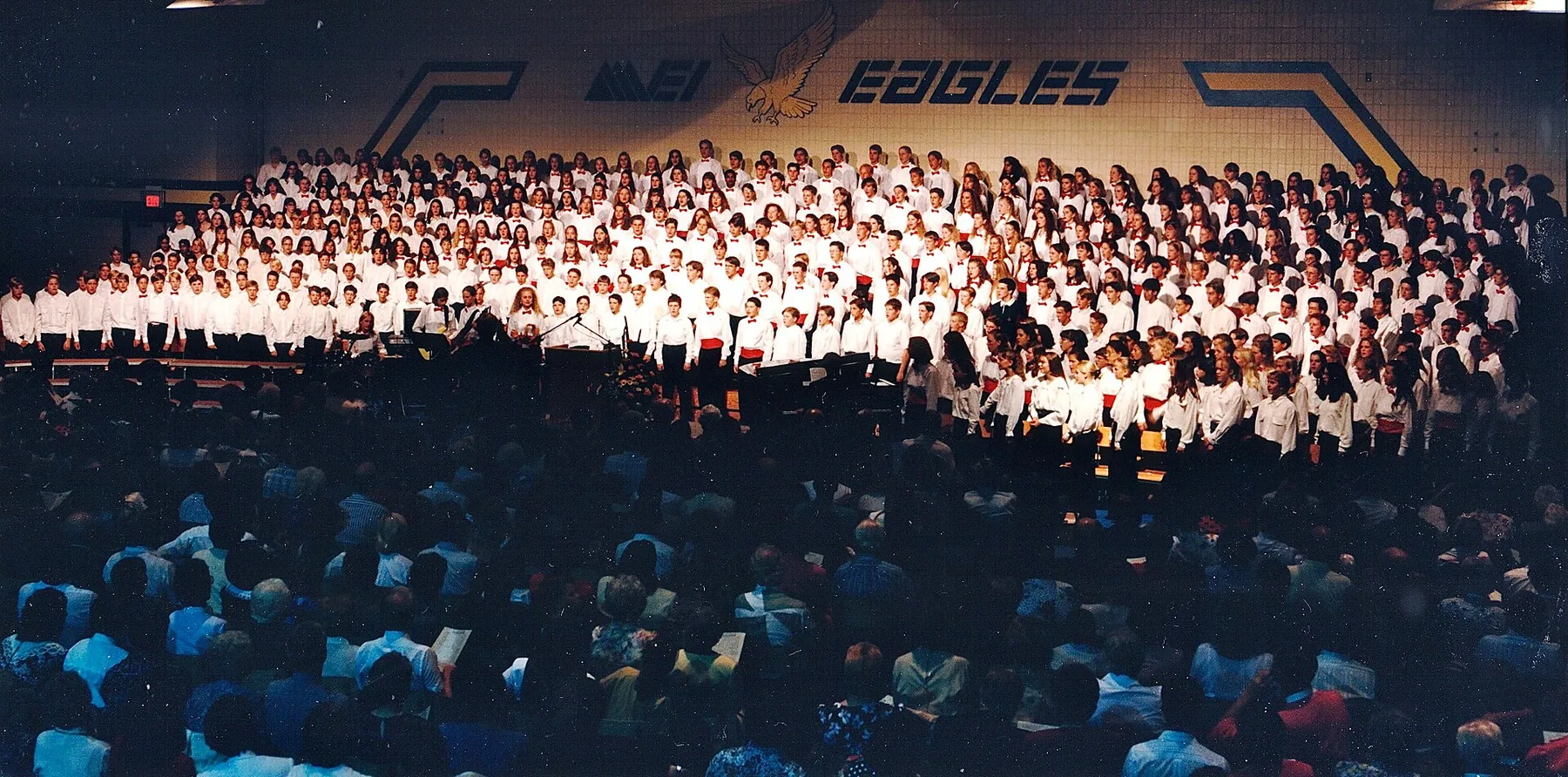
A clear, practical overview: this article presents the songs that bring French audiences together during the holiday season. It explains why certain melodies have become classics around the world.
You will discover a simple progression: great classics, modern hits, repertoire accessible to children, and walkabout performances. Each suggestion aims for precise diction, memorable choruses, and SATB or SSA arrangements.
We also give historical reference points, from Silent Night to White Christmas, and teaching tips for working on vocabulary and pronunciation. The goal is to offer a varied repertoire, between religious carols and pop songs, for a balanced program.
Across the sections, expect specific titles, arrangement tips, suitable keys, and staging ideas for a concert that reaches families and the local audience.
Why English Christmas songs are perfect for a choir in France
Certain melodies from the United Kingdom or North America create a familiar atmosphere from the very first notes. They quickly set the mood of the season, from markets to church services, and reach several generations.
The spread of these tunes is worldwide: historical examples such as We Wish You a Merry Christmas (Victorian tradition) or Jingle Bells show how these songs have been adopted by schools, churches, and families.
A universal, unifying repertoire
Simple, repetitive choruses make it easier for beginners to join in while still leaving room for experienced voices. Styles range from traditional music to light swing and festive pop.
| Strength | Impact | Example |
|---|---|---|
| Shared tradition | Immediate atmosphere | We Wish You a Merry Christmas |
| Accessibility | Audience and children take part | Jingle Bells |
| Varied arrangements | From unison to SATB | Silent Night / White Christmas |
For a score that is useful in rehearsal, see We Wish You a Merry Christmas. This repertoire fits naturally into the holiday staging and creates a friendly final sequence where the audience sings with the ensemble.
English Christmas songs for choir: the essential great classics
The essential classics provide clear reference points: comfortable keys, clean entrances, and choruses that are easy to memorize. Here is a useful overview for building a central block in the program.
Silent Night — timeless softness and ideal diction
Strength: unison or light SATB highlights diction. Text by Joseph Mohr (1816) and music by Franz Gruber (1818), recognized by UNESCO.
The Twelve Days of Christmas — a cascading memory game
An 18th-century cumulative song. Use “cascading voices” to work on rhythmic precision and articulation, especially on “five golden rings.”
Jingle Bells — simple rhythm, instant effect
Moderate tempo, with a natural swing in the syllables. Ideal for opening a concert; a bilingual alternative is possible with “Vive le vent.”
| Song | Choral strength | Arrangement tip |
|---|---|---|
| Deck the Halls | Work on “fa la la” attacks | Unified sections, projection |
| White Christmas (Bing Crosby) | Nostalgic color | Warm key, long breath |
| Winter Wonderland | Light jazz harmonies | Soloist + choir response |
“Choose an alternation of slow and lively pieces to hold everyone’s attention.”
Final tip: end the block with We Wish You a Merry Christmas for a participatory finale and an impactful modulation.
Modern hits for pop and gospel choir
Contemporary hits bring energy and gospel textures that speak to today’s audience. They modernize the program while preserving the festive spirit.

Last Christmas — storytelling and 80s groove
Last Christmas (Wham!, composed by George Michael) combines a love story with a retro groove. Work on the contrast between verses and choruses, and on vocal improvisations for mixed voices. The cultural phenomenon and its more than 6 million copies sold guarantee an audience reaction.
All I Want for Christmas Is You — energy and call-and-response
Mariah Carey (released in 1994) offers ideal energy for a pop-gospel arrangement. This song requires breath control and placement; the responding choir strengthens the chorus and works very well on the radio as well as on stage in December.
Fairytale of New York and Rockin’ Around the Christmas Tree
Fairytale of New York plays on the soloist/tutti contrast with a folk color. Plan an adapted version depending on the audience.
Rockin’ Around the Christmas Tree relies on light swing and a rhythmic choir. Simple stage movements energize the performance.
| Title | Style | Arrangement tip |
|---|---|---|
| Last Christmas | 80s pop | Dynamic contrasts, present bass line |
| All I Want for Christmas Is You | Pop/gospel | Call-and-response, soloist riffs |
| Fairytale of New York | Folk/duet | Alternating soloists, light instrumentation |
| Rockin’ Around the Christmas Tree | Vintage swing | Marked accents on the offbeats, rhythmic choir |
“A short modern medley helps keep attention and makes staging easier.”
Easy repertoire for children and beginner choirs
A simple, joyful repertoire makes it easier to engage children while serving as a teaching tool for English and music. These tunes have clear melodic lines, repeated choruses, and a progression suited to small sections.
Rudolph the Red-Nosed Reindeer
History: created in 1939 by Robert L. May, then turned into a song by Johnny Marks in 1949; Gene Autry’s version was a huge success from its first year.
Work on descriptive vocabulary (reindeer, red-nosed, guide, foggy). Bring sections in one by one to energize the unison and simple harmonies.
Frosty the Snowman
A 1950 song (Rollins & Nelson). Use action verbs in the simple past in a playful way and emphasize the onomatopoeia “thumpety thump thump.”
Keep a joyful tempo and precise articulation so the lyrics remain intelligible.
Santa Claus Is Coming to Town
A popular tune since 1934 after the Macy’s parade. Make use of the repetitions (“you better,” “is coming”) and stage dynamics with simple gestures.
Recommend comfortable keys, light percussion, and visual aids (pictures of gifts, flashcards) to connect vocabulary with movement.
- Short, frequent rehearsals centered on keywords.
- Call-and-response versions to structure the group.
- A shared unison finale on a simple verse to showcase all singers.
Dynamic songs for walkabouts, markets, and illuminated streets
To enliven markets and illuminated streets, rely on rhythmic tunes that are easy to project. A mobile repertoire must capture attention from the first measure and remain clear despite ambient noise.
Deck the Halls is ideally suited to outdoor performance. Derived from the Welsh melody “Nos Galan,” it preserves the “fa la la” phrases inherited from the Renaissance. Work on breath support and consonant attacks on these syllables for effective open-air diction.
Jingle Bells (1857) works like an audience magnet. Add sleigh bells and light percussion to establish a lively rhythm. A brief instrumental introduction catches the listener and launches the song instantly.

Recommend short arrangements (2-3 minutes) and a mobile repertoire of 4 to 6 titles. Arrange the sections in a tight arc to optimize projection without amplification.
- Favor mid-range keys to preserve the voice.
- Use compact lyric sheets or memorize the choruses to maintain eye contact.
- Anticipate the weather and breaks: light scarves, hydration, vocal warm-up if needed.
“A short medley extends audience engagement during stops.”
| Song | Strength | Practical tip |
|---|---|---|
| Deck the Halls | Vocal projection | Controlled breath, clear “fa la la” phrases |
| Jingle Bells | Instant hook | Sleigh bells, steady tempo |
| Mobile medley | Flexibility | 2-3 min per piece |
Choosing the right keys, arrangements, and staging

Choosing the right key starts with measuring the real vocal range of the sections. Transpose a song if the vocal center is too high or too low. In a long program, lowering by a semitone preserves vocal freshness.
Differentiate the arrangements: unison for accessibility, 2-3 voices for flexibility, SATB/SSA/TTBB for harmonic richness. Gospel/pop versions bring rhythmic momentum and help the audience follow the beat.
Test the “comfort point” of choruses in rehearsal. Keep brightness without tension, especially on the long lines of White Christmas or Have Yourself a Merry Little Christmas.
Work on rhythm with a metronome, subdivisions, and syncopations for swing pieces. Take care with the lyrics: consistent vowels, articulated final consonants, and emphasis on key English words.
Staging and logistics: semicircle placement, smooth entrances, soft lighting, and clear conducting. Plan a short version and a long version of each piece.
| Type | Strength | Tip |
|---|---|---|
| Unison | Accessibility | Projection and simple rhythm |
| 2-3 voices | Flexibility | Distribute melody and harmonies |
| SATB / gospel | Color and rhythmic momentum | Breath control, practiced syncopations |
“Including at least one chorus that the family can sing back creates a direct connection with the audience present.”
Learning English through Christmas songs
Familiar choruses provide a playful way to enrich holiday-related vocabulary. Singing combines memory, rhythm, and meaning, which makes learning and oral confidence easier.

Key vocabulary and useful expressions
Lists by song: All I Want for Christmas Is You: make my wish come true, underneath the Christmas tree, wish; Santa Claus Is Coming to Town: present continuous (is coming), you better; The Twelve Days of Christmas: numbers, gifts (gold rings, partridges).
Pronunciation, rhythm, and memorization
Work on diction with Silent Night at a slow tempo to lengthen the vowels. Use Deck the Halls for clear attacks on the “fa la la” syllables.
Strengthen memorization through repetition: choruses, call-and-response, and gestures. Plan progression over the year: start with a simple chorus, add the verses, then the harmonies.
Create mini-sheets with “lyrics + vocabulary” and finish with a short oral activity (quiz, greeting card) to anchor the vocabulary.
| Goal | Method | Expected result |
|---|---|---|
| Seasonal vocabulary | Lists by song and flashcards | Active memorization |
| Grammar | Examples in context, such as the present continuous | Natural use |
| Pronunciation | Varied tempos, syllabification | Clear diction |
Conclusion
Relying on a balance between classics and modern hits makes it possible to embody an English-speaking Christmas and reach a wide audience. This approach offers contrasts: the emotion of Bing Crosby’s White Christmas and the energy of All I Want for Christmas Is You (Mariah Carey, released in 1994).
Familiar choruses (Jingle Bells, We Wish You a Merry Christmas) encourage participation from families and the audience. They also serve as teaching tools for working on vocabulary, diction, and rhythm.
Plan over the year: start early, vary the keys and arrangements, and alternate rhythmic sessions with work on the lyrics. Songs played on the radio every December accumulate millions of listens and strengthen the media appeal.
For ideas for religious and family repertoire, see a useful selection. By keeping your choices well adapted, you will create an unforgettable moment where modern songs and classics coexist with elegance and warmth.