
Music in daycare and preschool transforms everyday routines. Singing supports memory, attention and motor skills. It creates a climate of trust where every child can take part.
Action rhymes use repetitive words to make memorization easier. They help introduce numbers, body parts, animals, colors and shapes.
This guide offers a progressive repertoire, group formats and easy-to-lead sessions. Goal: integrate singing into transitions, dedicated activities and home life to extend learning.
The activities adapt to TPS, PS, MS and GS levels. They combine oral tradition and contemporary creations to support all-round education.
Why sing and move in preschool starting now
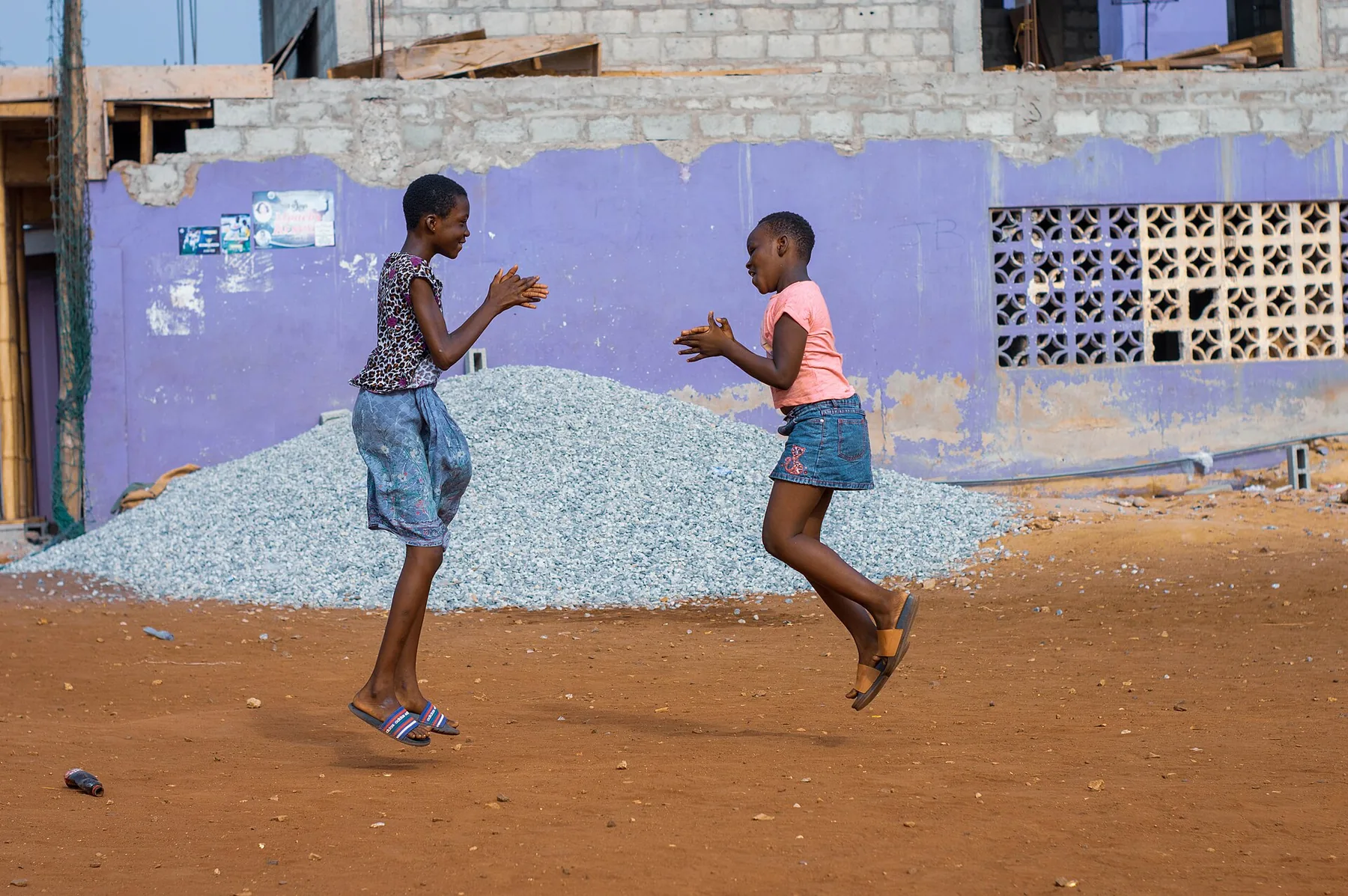
When the body follows the song, the brain encodes sounds, words and sequences more effectively. Connecting the voice to movement turns a simple chorus into an accessible lesson for every child.
Motor, cognitive and emotional learning
Nursery rhymes that include gestures and repetitive sequences make memorization easier. They stimulate creativity, motor skills and cognition while helping regulate emotions.
Memory, attention and confidence through gestures and repetition
- Pairing movement with singing helps children encode sounds, words and rhythms.
- Miming an action while singing strengthens procedural memory and concentration.
- Ritualized choruses reassure children and build confidence when they speak or sing aloud.
- Singing channels energy, soothes the group and encourages cohesion at school or in daycare.
- Practical examples: action choruses, short nursery rhymes, using fingers for rhythm and counting.
Choose short micro-sessions throughout the day (transitions, rituals). Start by repeating one song for several days with the same sequence of gestures before expanding the repertoire. It is a lever for all-round education: language, fine motor skills and active listening.
Educational framework and official objectives in preschool
The official framework recalls the central role of voice and listening in building sensory and language-based knowledge in very young children.
Voice and listening as instruments of sensory intelligence
The BO (Special issue no. 1 of 02/14/2002) emphasizes the use of hearing, voice, movement and gesture.
Activities mobilize hearing, voice, movement and gesture, alternating listening, imitative production, repetition, transformation and invention.
Sessions should alternate listening and production to support attention and creativity.
Expected skills by the end of preschool
The progression aims to build a living repertoire of nursery rhymes and songs, enriched each year through daily repetition.
- Memorize a varied repertoire and perform it in a small group.
- Play with the voice (timbre, intensity, pitch) and coordinate text with body accompaniment.
- Use finger plays to support fine motor skills and the first steps into rhythm.
- Find one’s place in a group, briefly take a solo part, listen and respond.
In practice, a school choir should remain a reasonable size to ensure vocal engagement and encourage cultural openness: songs in French, in a regional language or in a foreign language.
Preschool Choir: Simple and Playful Song Ideas
Choosing a suitable repertoire makes vocal and physical learning easier.
Selection criteria: favor short phrases, a verse + chorus form and a limited vocal range.
Linking each song to one or two gestures supports understanding. Start with very short nursery rhymes and finger plays for the youngest children. Then introduce action songs such as Jean Petit qui danse to structure the head, shoulders, arms and hands.
Group formats
Alternate solo/choir work to build listening and confidence. Use small choirs to help children feel secure before a mini dramatized performance.
Work on rhythm separately if a passage is difficult. Include gentle movements (walking, sitting down, standing up) to vary the energy.
| Format | Benefit | Practical tip |
|---|---|---|
| Solo / Soloist | Highlights the pupil and develops confidence | Have them rehearse in a small group before the presentation |
| Full choir | Strengthens cohesion and collective listening | Choose simple choruses and synchronized gestures |
| Small groups | Allows differentiation and reassurance | Offer alternating roles (singing, mime, rhythm) |
| Dramatization | Stimulates expression and memory | Prepare mini-scenes with movements and simple objects |
- Define a “ready-to-sing” repertoire: memorable choruses and simple rhymes.
- Connect each song to obvious gestures to support the text.
- Plan the week: review, new song, mini-presentation.
To enrich your repertoire, consult resources offering age-appropriate nursery rhymes.
Action songs for learning the body and the five senses
Gesture-based choruses anchor spatial and sensory reference points for children.
Tête, épaules, genoux et pieds: body landmarks in motion
Start with this classic to establish the head, shoulders and reference points on the floor. Alternate standing and sitting to identify the feet.
Jean Petit qui danse: mobilizing arms, hands, feet and knees
Use “Jean Petit qui danse” to name the arms and hands. Scale the difficulty for toddlers and older children.
Savez-vous planter les choux ?: fingers, hand, nose, head
Vary the instructions by pointing to the fingers, hand, nose and head to connect vocabulary with precise gestures.
Mes p’tites mains and Mon visage: coordinating text and gestures
These nursery rhymes develop fine motor skills. Emphasize diction while showing the nose, mouth and eyes during the gesture.
| Song | Objective | Practical instruction |
|---|---|---|
| Tête, épaules, genoux et pieds | Spatial reference points | Alternate slow/fast rhythm, touch the named body part |
| Jean Petit qui danse | Arm/hand/foot mobility | Start with mime, then add movement through space |
| Savez-vous planter les choux ? | Precise vocabulary (fingers, nose) | Point and name before singing |
| Mes p’tites mains / Mon visage | Fine motor skills and diction | Repeat the syllables while showing the parts of the face |
- Tip: offer mini-challenges: speed up, slow down or sing softly.
- Finish with a paired presentation where each child mimes a part of the body.
Finger plays and action rhymes for toddlers
Finger plays quickly capture toddlers’ attention and prepare fine motor skills. Begin each session with a short rhyme to wake up the voice and fingers.
Monsieur Pouce va à l’école: hands and fingers in action
Monsieur Pouce is ideal for working on laterality and hand-finger coordination. Make slow gestures, then speed them up.
Classroom routines: punctuating the day with finger plays
Set up three rituals: one game during the morning gathering, another before recess and one for returning to calm.
- Start with short finger plays to capture attention and warm up fine motor skills.
- Use hands and fingers to mark the pulse, count and indicate direction.
- Vary the instructions: fingers that hide, hands that open/close, right/left alternation.
- Pair a simple chorus with coded gestures to help children anticipate the rest of the song.
- Encourage the suggestion of a new gesture, then conclude with calm breathing, hand on the belly.
Songs for back-to-school and school life
The first songs help children become familiar with classroom furniture and instructions. Select 2 to 3 tunes from the first week to get used to places, objects and rituals.
Recommended titles
Dans mon cartable (Gérard Billon-Tyrard) helps list school supplies and enrich classroom vocabulary.
C’est la rentrée ritualizes the welcome and creates a reassuring group moment.
À l’école de Madame Nicole evokes jobs, spaces and rules for living together.
- Select 2 to 3 nursery rhymes for the welcome week.
- Offer a listening game: recognize and mime familiar classroom sounds.
- Use short phrases for children learning French as an additional language, and mark out the syllables.
- Hand out a small song sheet so families can sing at home.
- Close the mini-sequence with a simple circle dance to strengthen cohesion.
“Music helps establish stable reference points for every child.”
Seasonal themes: autumn, winter, spring, summer
Organizing songs by season helps children connect singing with the passing of time. It gives meaning to the activities and makes it possible to address vocabulary, colors and movements linked to each period.
Autumn
Pomme de reinette, Vent frais and Dans la forêt lointaine offer strong imagery. Favor choruses with a regular rhythm to work on gestures and the colors of leaves.
Winter
With Brrr… Il fait froid, Le bonhomme de neige and La neige, play with a soft voice and slow tempi. These nursery rhymes illustrate “it’s cold” and add listening games (wind, trickling water).
Spring
À la volette and Bonjour oisillons encourage light pitches and mimed wing movements. Consider linking the song to a timeline frieze or a creative workshop.
Summer and holidays
To finish the year, C’est l’été and Haut les mains peau d’lapin offer energetic choruses. These tunes suit a mini-concert that shares collective joy.
| Season | Key titles | Objective | Classroom action |
|---|---|---|---|
| Autumn | Pomme de reinette, Vent frais | Rhythm & imagery (leaves, colors) | Season frieze, sorting by color |
| Winter | Brrr… Il fait froid, La neige | Breathing, slow tempi, soundscapes | Measure temperatures, sound effects (wind, water) |
| Spring | À la volette, Bonjour oisillons | Vocal pitches, wing movements | Making young birds, gesture games |
| Summer | C’est l’été, Haut les mains peau d’lapin | Energy, participatory choruses | Mini-concert, songs in circles |
- Tip: include listening games (rain, wind, water), then other atmospheres depending on the season.
- To extend the activity at home, invite families to celebrate spring through a practical selection.
Celebrations and events: Halloween, Christmas, New Year, Epiphany cake, Carnival, Easter
Planning sequences around celebrations motivates children and structures learning. Prepare short micro-sessions aligned with the calendar to maintain attention and joy.
Halloween
Une araignée sur le plancher and L’araignée Gipsy lend themselves to spider gestures. Offer voice games to imitate shivers and a short group mime.
Christmas
Build a familiar trio: Mon beau sapin, Petit Papa Noël, Vive le vent. Consider including Trois petits sapins depending on the local repertoire.
New Year and Epiphany cake
Sing Bonne année during a ritual exchange of wishes. For the galette, work on J’aime la galette with a rhythmic game on the syllables “ga-let-te.”
Carnival and Easter
At Carnival, organize a farandole to Mardi gras with masks and simple steps. For Easter, use Une poule sur un mur and Les œufs de Pâques, miming beaks and shells.
- Build short, festive sequences.
- Offer gestures, small games and a song to learn at home to involve families.
Learning language: colors, shapes, everyday vocabulary
Nursery rhymes make it possible to introduce concrete vocabulary linked to gestures and visual aids.
Organize short sequences around a song that names colors and shapes. Start with Une souris verte and Coccinelle demoiselle to point to each shade with the hand.
Shapes in motion
Use “Carré, rectangle, triangle” and “La danse des carrés” to trace shapes in the air.
Children draw the outline with their hands, then position themselves according to the shape. This connects word, gesture and body placement.
- Mark the pulse by syllables with the hands to work on pronunciation.
- Vary the materials: color cards, geometric blocks, illustrated posters.
- Have children show the head or the nose when the song mentions a body part.
| Objective | Song | Activity |
|---|---|---|
| Name colors | Une souris verte | Color pointing + classroom search |
| Associate shapes | La danse des carrés | Tracing in the air, group positioning |
| Pronunciation | Carré, rectangle, triangle | Syllables marked with the hands |
Close with a short oral production: each child names a color or shape by repeating a fragment of a chorus. This anchors language through practice and listening.
Counting with music: rhythms and numbers in songs
Combining counting and rhythm turns number learning into a lively moment for children. Number rhymes make abstraction concrete through gesture and pulse.
Examples: start with “1, 2, 3 nous irons au bois” and “Ils étaient 5 dans le nid” to work on addition and subtraction in a sung context.
Rhythm games to stabilize counting
Simple practices:
- Pair a nursery rhyme with a gesture: show quantities with fingers at each phrase.
- Stabilize the tempo: clap hands, speak the rhythm, then sing from beginning to end.
- Offer games: pass a feather or scarf on a signal, stop on the requested number, count backward.
- Isolate tricky passages: speak the rhythm, sing slowly, then speed up again together.
- Finish with a mini-presentation in trios to combine listening, rhythm and counting.
“For difficult passages, working in small groups makes segmentation and confidence easier.”
To go further, consult the teaching guide, which offers progressions and resources for these activities.
Animals and nature: from home to the garden and the sea
Offer a musical journey that takes children from home all the way to the sea. Start with familiar tunes, then open up to the garden and finally explore water and its movements.
Familiar animals:
Mon petit lapin, La mère Michel
Sing Mon petit lapin and La mère Michel to evoke animals close to everyday life. These nursery rhymes encourage imitation and dramatic play.
Garden and tools:
J’ai descendu dans mon jardin, Le petit jardinier
Then move on to the garden to talk about soil, seeds and seasons. Let children handle soil and water seedlings during the song.
Water and sea:
Bateau sur l’eau, Les petits poissons dans l’eau
Finish with Bateau sur l’eau and Les petits poissons dans l’eau to explore vocabulary related to water. Work on wave-like gestures and movements that imitate swimming.
- Build a “home → garden → sea” journey to give meaning.
- Play with space: crouch down “below,” grow like a stem, glide like a fish.
- Highlight a mini living tableau (home group, garden group, sea group) and extend it into visual arts.
Imagination and adventures: pirates, circus and travel
Take children into sung stories to awaken imagination and movement.
Pirates: sing “Le chant des pirates” then “Hissez la grand’voile.” Walk in rhythm, mime the maneuver and sing as a choir to strengthen cohesion.
Pirates — putting it into action
Offer roles: captain, sailor, helmsman. Use a feather to guide breathing and mark entries.
Circus — short performance
With “J’ai un gros nez rouge” and “Venez, venez dans mon cirque,” create a mini act. Work on facial expressions, costume colors and accessory shapes.
Around the world — sound journey
Play varied timbres, then ask children to imitate birds flying to symbolize movement. Alternate a brief story with a sung chorus.
“Vocal play turns the story into a scene where every child finds their place.”
| Theme | Activity | Objective |
|---|---|---|
| Pirates | Walking, hoisting the sail, group singing | Rhythm, cooperation |
| Circus | Facial expressions, costumes, short dance | Expression, colors and shapes |
| Travel | Listening to timbres, imitating flight, farandole | Cultural openness, breathing |
- Give children a role and a signature gesture.
- Conclude with a “travel” farandole, then a gradual return to calm.
Vocal warm-up and physical preparation before singing
A playful vocal warm-up encourages relaxation, listening and group engagement. Before any song, a short routine prepares children’s bodies and voices.
Posture and relaxation: puppet, stretches, release
Set the posture: feet apart and grounded, knees soft, shoulders relaxed, head upright like a puppet.
To release tension, offer intentional yawns, rotations of the head and shoulders, then shakes of the arms. Relax the jaw and face.
Playful breathing: candles, straw, dandelion
Place hands on the diaphragm and blow as if putting out a candle. Play with an imaginary straw: breathe in, then blow out for a long time.
Have children blow on an imaginary dandelion. Vary the exhaled sounds: “SSSS,” “Chchch,” “Kssssss” and the little “Hop!” for the onset.
Resonance and articulation: Zzz, Mmm, ding-dong, tongue twisters
Explore resonance with “Zzz” like a bee, then “Mmm” with pleasure. Move the “ding-dong” up and down from high to low.
Refine articulation through games: “Nonono,” “Doum-doum” and a simple tongue twister. Turn Une souris verte into “dabadaba” to work on phrasing all the way through.
- Coordinate fingers and hand to mark attacks; raise one arm for the choir’s entry.
- Add a knees-feet exercise for grounding and a “feather” breath held as long as possible.
- Finish with a short song where everyone must imitate a bird’s flight to settle the voice.
“Setting up these small routines makes concentration easier and supports the musical education of children.”
Staging a preschool choir session
Structuring fifteen minutes maximizes attention and learning. Here is a compact plan for leading a lively and reassuring session.

Alternating listening, imitation, repetition, transformation and invention
Start with a short vocal warm-up: breath, vocal sirens, standing posture. Then offer a model listening moment before guided imitation.
Follow the progression: repeat a known song, then make a small transformation (change one gesture) and finally move into collective invention.
Sequencing verses/chorus, tempo and pitch accuracy through play
Work on the verse/chorus sequence by pointing out breaths and sustaining phrases from beginning to end. For a difficult passage, slow down or break it into parts.
Have 2 to 3 children sing first, then expand to the choir. Vary the formats: solo/choir and small groups to strengthen confidence.
“Conducting with the arms and marking the tempo with foot taps helps synchronize body and voice.”
- Typical 15-minute plan: vocal warm-up, review, new song (e.g. Jean Petit qui danse), rhythm game, mini-presentation, return to calm.
- Set up simple gesture codes (arms for entries, feet for tempo) and finish with a shared gesture and 2 seconds of silence.
- Adapt the session to the space, the number of children and the school’s acoustics.
Resources and organization: repertoire, playlists and tools
A clear, progressive repertoire helps the teacher plan sessions across the year. Building a stable base makes daily repetition and increasing complexity easier.
Building a progressive repertoire of nursery rhymes and songs
Start with 5 to 6 core nursery rhymes per period and add titles each year from oral tradition and contemporary authors.
Plan short repetitions each morning. This method consolidates memory and makes it possible to introduce new movements without overload.
Playlist ideas by theme and season for class and home
Create themed playlists: back-to-school, seasons, celebrations, body and senses, numbers, colors, animals. They help families repeat at home and bring coherence to classroom activities.
- Structure: 5 to 6 titles per period, listed in a repertoire notebook.
- Classify: by theme to make searching easier in a school situation.
- Tracking tools: laminated song sheets, display of key gestures (icons).
- Adaptations: slow, instrumental or count-in versions.
| Element | Purpose | Example |
|---|---|---|
| Progressive repertoire | Yearly consolidation | 5 to 6 nursery rhymes repeated each period |
| Themed playlists | Independent listening | Back-to-school / seasons / celebrations |
| Practical tools | Tracking and memorization | Laminated sheets, notebook, gesture icons |
Varying oral tradition and contemporary creations enriches children’s musical experience.
Conclusion
Key takeaways: a progressive repertoire, clear gestures and short sessions support lasting progress.
Every child, even the very youngest, finds their place through suitable, supportive formats.
Music combined with movement strengthens memory, attention and confidence. The joy of singing together stimulates group engagement.
Encourage continuity with home through playlists and song sheets to extend learning.
Throughout the year, revisit themes and choruses: gestures anchor language, rhythm and listening through to the end of the cycle.