
Preparing an end-of-year program requires a balance between tradition and accessibility. This article sets out a clear framework to guide French choir directors during vigils and concerts.
We present essential melodies, benchmark versions, and practical advice, from Advent to Epiphany. We also mention useful historical reference points, such as Adolphe Adam and Franz Xaver Gruber, to enrich your presentations.
The selection blends sacred music and popular song. The goal: to build a repertoire that inspires joy, contemplation, and audience participation.
Clear criteria: familiarity, quality of the lyrics, vocal level, and variety of styles. Teaching ideas will help mixed ensembles and children sing with pleasure.
Entering the Holiday Spirit: Tradition, Simplicity, and Choral Joy
The holiday spirit is rooted in simple gestures and shared melodies.
From the Vigil to Midnight Mass: One Shared Fervor
Tradition brings together welcome, procession, and proclamation. The SNPLS recommendation calls for noble simplicity: keeping the ordinary of the Mass stable supports the continuity of the liturgical season.
English carols, with their more communal character, complement French hymns. Together, they create a contemplative, festive, and unifying atmosphere.
The Magic of Melodies: Passing Emotion on to Children and Elders
Music becomes accessible through memorable refrains, careful diction, and moderate tempi during the vigil. In this way, joy and contemplation are shared across generations.
- Progression: welcome -> proclamation (angels, shepherds) -> contemplation around the Nativity scene.
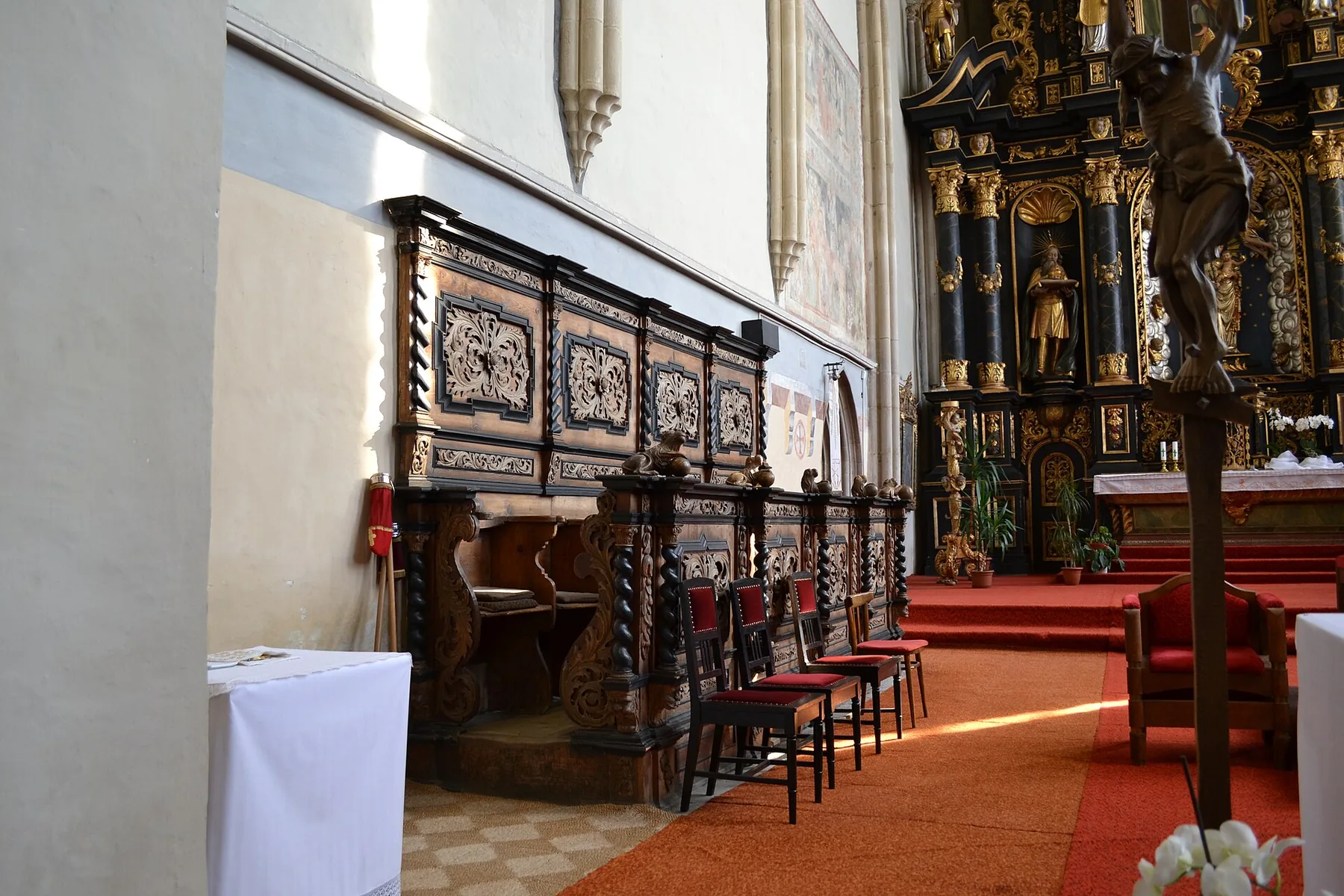
- Staging: processional entrance, well-placed sections, subdued lighting, discreet Christmas tree.
- Alternation: choral pieces and unison songs to encourage participation.
“Live this liturgical season with “noble simplicity.””
| Staging | Keys | Tempo |
|---|---|---|
| Frontal procession, sections in a semicircle | Accessible keys (C, G, F) | Moderate, with marked breathing points |
| Subdued lighting, illuminated Christmas tree | Transpositions for children | Discreet rhythmic support (organ/guitar) |
| Alternation between soloist and participatory singing | Careful choices for vocal stability | Moments of silence between pieces |
Christmas Songs for Choirs: The Essential Selection
A successful repertoire alternates solemnity, tenderness, and popular rhythms to reach every audience.
Minuit, chrétiens (1847, Adolphe Adam) serves as a central hymn. It works well with a soloist supported by the choir, with a climax on “Peuple à genoux” and a possible placement during Midnight Mass.
Douce nuit (1818, Gruber) offers a slow, enveloping melody. Its simple version shines a cappella or with guitar and highlights lyrics that evoke the innocence of the Nativity scene.
Lively Moments and Friendly Pieces
- Il est né le divin enfant: lively refrain, clear rhythm, ideal for children and the congregation.
- Les anges dans nos campagnes: alternate unisons and harmonies on “Gloria in excelsis Deo.”
- Mon beau sapin: 2- or 3-part harmonizations to emphasize the symbols of the Christmas tree.
“Music unites generations and gives the season of the Nativity a shared emotion.”
| Title | Characteristic | Staging Use |
|---|---|---|
| Minuit, chrétiens | Solemn hymn, lyrical orchestration | Middle of the program, soloist + choir |
| Douce nuit | Intimate melody, three progressive verses | Penultimate song, a cappella or with guitar |
| Carol of the Bells | Rhythmic ostinato, crescendo | Dynamic finale or transition |
Traditional Francophone Songs in the Spotlight
Traditional melodies anchor the vigil in the local language and culture. They honor the Nativity scene while remaining accessible to families and volunteers.
Aujourd’hui le roi des cieux, Accourons tous à la crèche
Aujourd’hui le roi des cieux offers a clear melodic contour and lyrics carried by an impulse of praise.
Place it at the entrance or dismissal with a steady pulse. Accourons tous à la crèche engages the congregation through alternation between solo verses and a choral refrain.
Dans une étable obscure, Tout le ciel reluit
“Dans une étable obscure” and “Tout le ciel reluit” are well suited to meditation. They call for piano and mezzo forte nuances, as well as careful diction, so that the words reach everyone.
Pair Il est né le divin enfant and Les anges dans nos campagnes for a lively duo. Favor simple 2- or 3-part harmonizations to preserve their popular freshness.
- Tempo: moderate, without rushing.
- Harmonization: simple, serving vocal blend.
- Brief context before each piece: origin and liturgical use.
“These pieces favor popular freshness while preserving noble simplicity.”
Liturgical Repertoire for Advent and Christmas
Advent calls for a repertoire that carries expectation without rushing the coming.
Ô viens, Emmanuel is the Advent hymn par excellence. Based on a medieval Latin text, it adopts a modality close to Gregorian chant. The lines remain simple and support words of waiting and hope.
The SNPLS recommends keeping the same ordinary of the Mass (Kyrie, Gloria, Sanctus, Agnus) throughout the period. This musical unity helps the congregation sing with confidence and experience the liturgical season as a whole.
Procession and Post-Communion
Plan an alternation between psalmody and antiphon, followed by a processional hymn. Avoid overly abrupt contrasts between hymn and traditional songs.
- Moderate tempi and clear diction to carry the words and the humble love that prepares Christmas.
- Practical choice: “La voici la nuit de Dieu” in a gentle walking pace, with a homophonic coda for settling at the altar.
- Post-communion: “Au commencement était le Verbe” in a piano nuance, broad breaths, and a peaceful cadence.
“A stable celebratory structure allows the faithful to enter more deeply into prayer.”
Epiphany and the Baptism of the Lord: Broadening the Sacred Program
Epiphany extends the Nativity through pieces that celebrate the manifestation of Christ to the nations.
À l’Orient l’étoile a paru is perfectly suited as an entrance song: flowing tempo, balanced voices, and clear consonant articulation. Offer this title to announce the coming of the Magi and affirm the kingship of the promised Christ.
Un chant s’élève dans le ciel works well as a participatory refrain. Gradually build the dynamics and shape the ending carefully to express the joy of the nations and engage the congregation.
For the Baptism of the Lord
Choose “Baptisés dans l’eau et dans l’Esprit” and “Peuple de baptisés” with a moderate tempo. Favor a supportive legato and check the accuracy of the tenors and basses.
- Move thematically from the manifestation of the King to the revelation at the Jordan.
- Alternate simple refrains for the congregation with solo verses to vary the textures.
- Emphasize soprano clarity, alto warmth, and a solid bass foundation.
| Occasion | Recommended Piece | Vocal Direction |
|---|---|---|
| Epiphany (entrance) | À l’Orient l’étoile a paru | Flowing tempo, crisp consonants |
| Epiphany (refrain) | Un chant s’élève dans le ciel | Gradual build, radiant ending |
| Baptism of the Lord | Baptisés dans l’eau et dans l’Esprit / Peuple de baptisés | Moderate tempo, legato, attention to basses |
Close-Up on an Iconic Song: Douce nuit, sainte nuit
Composed in 1818 by Franz Xaver Gruber to a text by Joseph Mohr, Douce nuit was first performed with guitar during a vigil because the organ was out of service.
Origin and Versions: From Austria to French Choirs
Its Austrian genesis explains the warmth of the melodic line and its immediate universality.
Recognized by UNESCO in 2011, this intangible heritage has been translated all over the world and adopted by many ensembles in France.
Choral Arrangement: Guitar, Organ, or A Cappella for an Intimate Atmosphere
A cappella version: favor intimacy, blended voices, and careful legato.
With organ: solemnity is strengthened, but watch the attacks to preserve warmth.
With guitar: the color becomes more family-oriented, ideal for involving children and encouraging shared singing.
- Work on intonation, discreet vibrato, and nuanced dynamics (piano -> mezzo forte).
- Three-verse structure: rising intensity, then a gentle coda to let the night resonate.
- Accessible key for children; slow tempo without dragging; planned shared breaths.
- Refine diction: rounded vowels and softened consonants in the church’s reverberation.
- Place the piece just before the dismissal to create an emotional calm that concludes the vigil.
“A brief introductory anecdote – the organ out of service and UNESCO status – increases the audience’s attention.”
Close-Up on an Iconic Song: Minuit, chrétiens
Minuit, chrétiens is a hymn composed by Adolphe Adam in 1847 to a text by Placide Cappeau. It was presented during Midnight Mass, and its place in the Nativity remains central.
Lyrical Power and Message: “Peuple à genoux”
The vocal writing favors broad lines and climaxes on the liturgical call. Solid breath support is needed to sustain the rising phrases and preserve the color of the voice.
Notable Interpretations: From Tino Rossi to Pavarotti
Singers such as Tino Rossi and Luciano Pavarotti have offered famous versions that illuminate the dramatic intention. Adapt the range to the choir’s profile and choose a soloist, tenor or baritone, to answer the tutti.
- Refine the articulation of the words to carry the theological meaning.
- Set a noble, flowing tempo, with breaths prepared as in orchestral conducting.
- Balance the sections so they do not cover the soloist, and work on cadence intonation.
Performers and Reference Versions for Choirs
Great interpretations provide useful reference points for shaping the choir’s musical intention.
Tino Rossi embodies warmth and diction; his recordings of “Minuit, chrétiens” and “Mon beau sapin” remain benchmarks for timbre. Andrea Bocelli offers lyrical projection that helps convey the breadth of a hymn. Nana Mouskouri brings a delicate reading, useful for sensitive melodies.
Tino Rossi, Andrea Bocelli, Nana Mouskouri: Tradition and Modernity
Listen to several versions to choose tempo and nuance without copying. Comparative listening to “Minuit, chrétiens” sheds light on dramatic phrasing and the balance between soloist and ensemble.
Choirs and Ensembles: Balance of Voices, Diction, and Nuance
Prioritize section blend. Work on fusion, accuracy, and clarity of the words.
- Piece-by-piece approach: straight, simple lines on “Mon beau sapin,” controlled rubato on “Adeste Fideles.”
- Internal media library: recordings, annotated scores, and tempo markers.
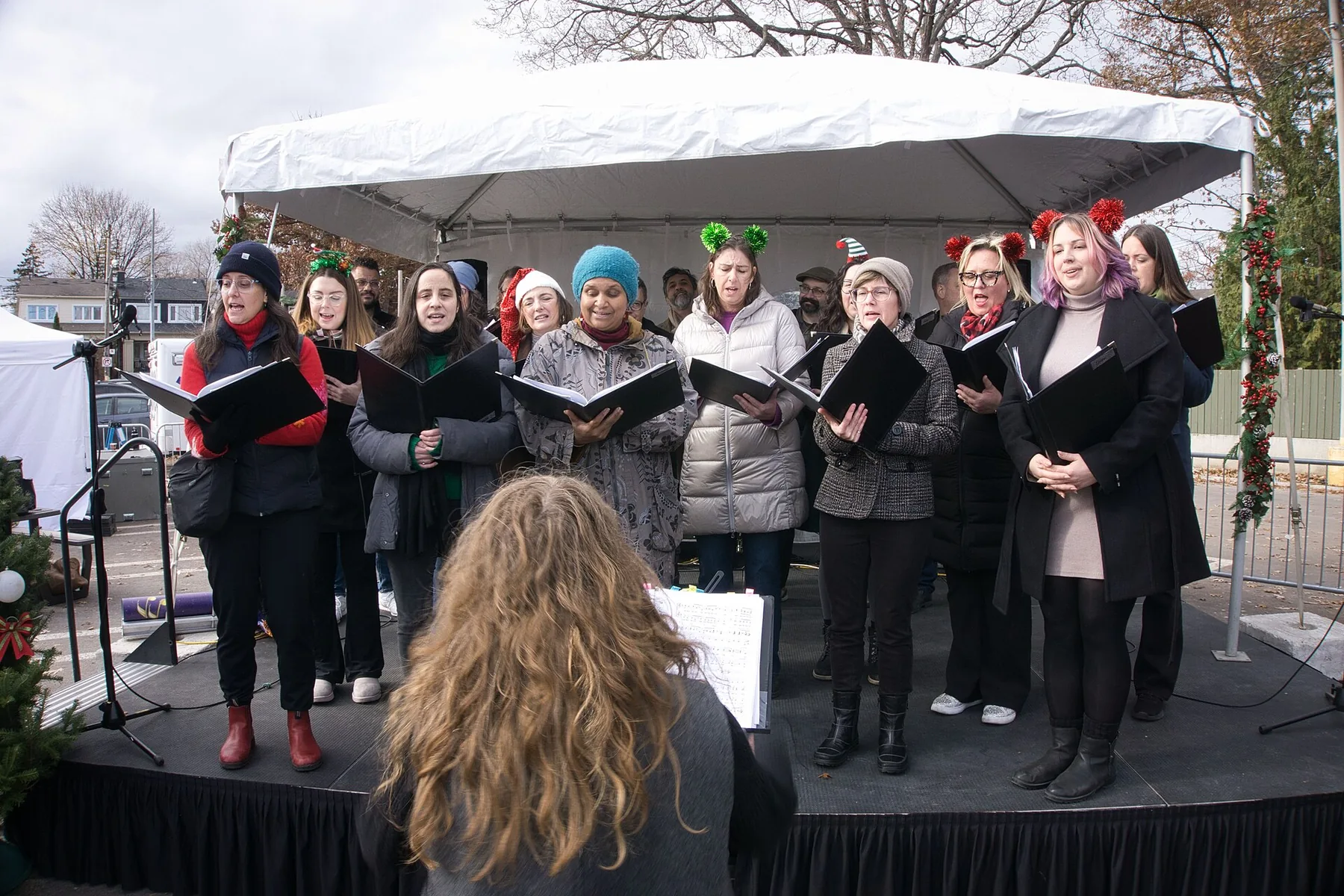
- Simple staging: placement, eye contact, and shared breathing strengthen the impact.
“Melodies serve the message as much as the music; favor clarity and sincerity.”
Practical Advice for Choir Directors and Singers
Preparing a successful vigil begins with choices of key and duration suited to the audience. Consistency across the whole period makes learning and participation easier. The SNPLS recommends “noble simplicity” to support prayer and music.
Choosing Keys, Adapting Voices (Soprano/Alto/Tenor/Bass)
Select comfortable keys for the congregation: central range, with transpositions if needed. Protect section endurance by avoiding extremes.
Have sopranos sing simple lines during refrains and enrich the tutti with harmonies. Double fragile entrances to secure the attack.
Rhythm and Simplicity: Respecting the “Noble Simplicity” of the Liturgy
Work on rhythm: clear pulse, pickups prepared together, and breathing markers. Final ritardandos should be agreed upon, not improvised.
Mark shared breaths to preserve the phrase and the intelligibility of the words. Avoid cutting words in ways that break the meaning or emotion.
Creating a Vigil List: Alternating Classics, Latin Pieces, and Carols
Build an arc: welcoming opening, liturgical core (Latin or Advent hymn), emotional peak, and festive closing. Include at least one acoustic version to vary the atmosphere.
- Target duration: 25 to 30 minutes per vigil sequence.
- Plan an alternative in case something unexpected happens, for example if the soloist is unavailable.
- Bring in the children on a short, simple verse to encourage participation.
“A clear list and well-considered range choices hold the program together and preserve fervor.”
| Aspect | Recommendation | Expected Effect |
|---|---|---|
| Key | Central range, transpose if necessary | Better accuracy, preserved endurance |
| Rhythm | Clear pulse, shared breaths | Intelligibility and unity |
| Song list | Arc: welcoming -> liturgy -> peak -> exit | Controlled emotional curve |
Conclusion
Carefully chosen repertoires make it possible to move from waiting to joy in just a few well-selected melodies. A balanced list combines old hymns and friendly pieces to support the celebration and the community spirit.
Only a few elements are needed when love of singing guides the interpretation. The magic of vigils lies in sincerity, careful transitions, and a stable foundation from year to year, for example by keeping “Douce nuit.”
Take care with the staging: a discreet Christmas tree, sober lighting, and clear words amplify the impact. Record the performance, train the young singers, and invite the elders: every voice extends peace well beyond the end of the vigil.
To enrich your repertoire, consult this repertoire collection, which helps build lasting programs between tradition and renewal.
Thank you to the singers, musicians, and technical teams: your commitment keeps hymns and songs alive and passes on a living heritage.