
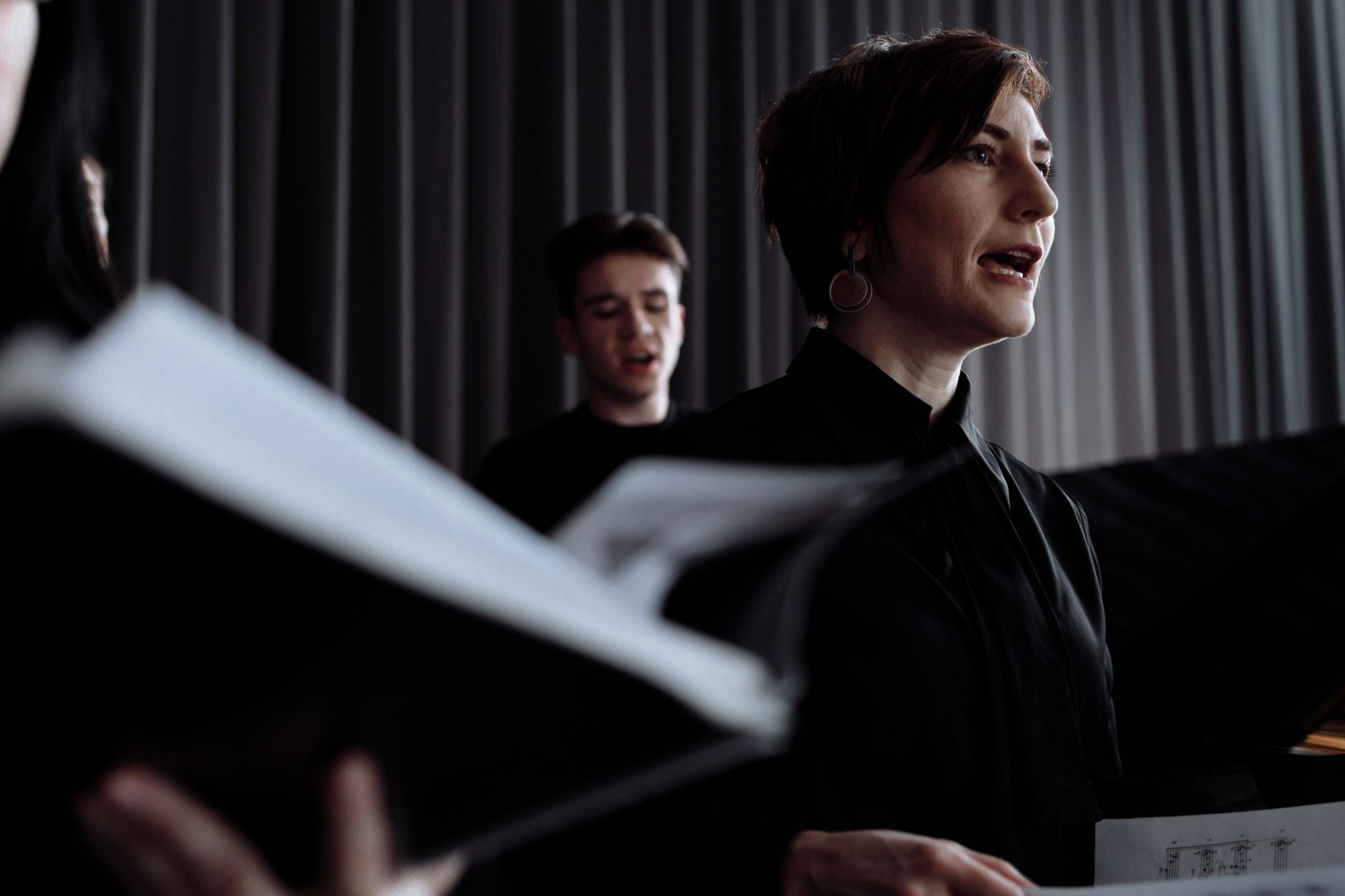
This guide offers ten concrete steps to prepare choristers’ voices. It provides a clear progression to improve singing quality and vocal cord safety starting today.
Recommended duration: allow 10 to 20 minutes, ideally two hours after waking. Before opening up the voice, hydrate and avoid sodas and dairy products.
Warm-up engages the body: rib cage, jaw, lips, tongue. It stabilizes breathing, projection, and intonation. The goal is simple: to sing clearly without tiring.
By the end, you will have practical tips for counting beats, feeling the areas being engaged, and securing register transitions. Build these routines into every rehearsal to improve session after session.
Vocal Warm-Up: Definition, Benefits, and Duration for a Choir in 2025
Before singing, a short routine prepares the muscles and air you need. Defining a warm-up: it is a structured sequence that engages breathing, resonance, diction, and relaxation. It makes sound production gradual and safe.
Who is it for? All singers in the choir, but also section leaders, soloists, actors, and teachers whose voices are heavily used. This work protects the voice and establishes steady vocal production.
Main benefits: prevention of tension and microtrauma, better quality of attack, smoother register transitions, and more stable sustained notes.
Recommended duration: 10 to 20 minutes depending on how you feel that day; you can go up to 30 minutes if needed. Choose a moment when the body is awake, at least two hours after getting up, and hydrate.
- Start with gentle actions: breath, vibrations.
- Increase intensity gradually and test a few phrases.
- Pay attention to diaphragmatic breathing for a steady flow of air.
To go further, consult a specialized course that explains how to structure these routines.
Wake Up the Body Before the Voice: Posture, Stretching, and Release
Moving the torso and neck creates the space the voice needs. First adopt a neutral posture: stable feet, soft knees, lengthened spine, and open sternum. This foundation protects the muscles and supports projection.

Gentle Stretches: Shoulders, Spine, and Rib Cage
Practice slow movements: shoulder circles while keeping the shoulder blades low, arms raised, then lengthening upward. Do side bends and gentle pelvic rotations.
Example: a 3- to 5-minute routine to oxygenate the rib cage before the breathing phase.
Relax the Jaw, Tongue, and Neck
Release the jaw with small openings and massages of the masseters. Draw small circles with the head around the occiput-atlas-axis (OAA), singing “ang” on a medium note, shoulders still.
“A relaxed face lets the voice pass through effortlessly.”
- Activate the lips and cheeks with light humming.
- Keep the throat free and the neck lengthened without raising the shoulders.
- Suggested routine: 2 minutes of jaw/neck/tongue release, then transition to breathing.
Goal: an available, flexible body that lets the voice express itself better, without overworking the surrounding muscles. For a more detailed physical warm-up, see this practical guide.
Abdominal Breathing and Air Management: The Basis of a Good Warm-Up
Well-placed breathing is the quiet foundation of steady vocal production. It prepares support and protects the voice before singing.
Guided Diaphragmatic Breathing
Hands on the belly: inhale for 4 beats without lifting the shoulders. Exhale for 8 beats, evenly and with control. Do 5 repetitions to calibrate the breath.
Facing the Wall
Place your hands against the wall, back straight, with a slight forward lean. This posture frees the intercostals and encourages low breathing.
Check with one hand on the belly: the belly moves forward on the inhale and returns on the exhale.
Whistling Exhale and “sss”
Inhale for 4 seconds, suspend for 2 seconds, then exhale while whistling for 20 seconds. Variation: a sustained “sss” to stabilize airflow and prepare projection.
- Aim: establish low breathing and steady support.
- Muscles involved: transverse abdominal, intercostals, pelvic floor.
- Test: sing a simple line and check how well the notes are sustained.
| Exercise | Goal | Duration / Repetitions |
|---|---|---|
| 4/8 hands on the belly | Calibrate air and support | 5 cycles |
| Facing the wall | Activate intercostal breathing | 1-2 minutes |
| Whistling exhale / “sss” | Control airflow and phrase endings | 4-2-20 |
“An even breath can help smooth attacks and lengthen sustained notes.”
SOVT Work to Protect the Voice: Straw, Bubbles, and Lips
Semi-occluded methods make coordination between breath and pitch easier. In practice, they reduce the load on the vocal cords while gently warming up the voice and breathing.

The Straw in Water
Place a straw in a glass of water and blow to form regular bubbles. Keep the airflow steady.
On the same exhale, alternate between producing sound and no sound while keeping the bubble size the same. Gradually move up into the high range.
Then take the straw out and pinch it slightly to increase resistance and refine control. Finally, hum a simple melody into the straw.
Lip Trills and Humming
Vibrate the lips in a glissando, without forcing. This movement releases tension and protects the larynx.
Goal: steady airflow, laryngeal release, and gentle activation of the breathing muscles. 2 to 4 minutes is enough to feel the difference.
“Semi-occlusion is an effective way to get the voice going without tiring it.”
| Technique | Aim | Duration |
|---|---|---|
| Straw in water | Stabilize airflow and attack | 2-3 minutes |
| Pinched straw out of water | Refine air control | 1 minute |
| Lip trills | Relax the lips and larynx | 2-4 minutes |
Projection, Resonators, and Head Voice: Place the Sound Without Pushing
Looking for resonance in the nasal cavities clarifies the tone. This placement makes it possible to project without increasing laryngeal pressure. It combines intention, forward support, and breath control.
The “Nasal Sound” and Using the Cavities as a Resonance Chamber
Gently close the nose with your fingers and produce a sustained “ee.” Slightly contract the pelvic floor and keep the breath steady.
Unblock the nose and feel the vibration rise toward the face. Repeat the exercise if the sensation fades. Be careful if you have a cold: resonance naturally decreases.
Smile and Forward Placement: A Simple Way to Project Better
A slight smile opens the mask. It stabilizes the tone and improves sound quality without forcing the neck muscles.
Keep the lips flexible and the jaw relaxed for freer singing.
The Vocal Siren: Glide from Low to High to Even Out the Voice
Make a continuous glissando from the lowest note to the highest, then come back down. Keep a steady airflow and a stable head.
- Place the sound: forward support through nasal resonance.
- Practice: 1 minute of nasal “ee,” 2 minutes of sirens.
- Choir: unify placement on well-aligned vowels.
“A well-used mask amplifies without increasing effort.”
Work on Note Attacks for a Clean Entrance
The attack of a note often determines the clarity of a collective entrance. This exercise aims to isolate three ways of initiating a sound in order to achieve clean, coherent entrances.
Glottal Attack: Feel the Vocal Cords Close
Start by saying “uh-oh” several times to locate the vibration. Then pronounce only “uh” with the cords closed, without pushing. Repeat on all vowels, then transfer the action into singing the same note.
Simultaneous and Aspirated Attack: A Clean Start Without Tension
The simultaneous attack is practiced by inhaling while keeping the cords open, then producing “oh” or “yo” on the exhale. The aspirated attack uses a light breath beforehand: “hoh,” with the cords open just before phonation.

Goal: break down the coordination between abdominals, larynx, resonators, lips, and tongue to obtain notes that enter clearly. Work softly, on several pitches and several times, to make the way you enter automatic.
“A prepared entrance saves the voice and supports unison.”
- Define the point of attack before each entrance.
- Test glottal, simultaneous, and aspirated attacks on varied notes.
- Practice in tutti, then in unison, before adding polyphony.
Inner Hearing, Intonation, and Diction in Choir
Visualizing each pitch before producing it helps the group stay in tune. Train the inner ear by mentally singing the melody, note by note, before producing the sound. Start with simple tunes like Au clair de la lune to anchor the intervals.

Hear Each Note Mentally: A Simple Exercise
Close your eyes and hum the line in your head. Then gently pronounce the vowels without pushing the voice.
This practice can be done once before singing a difficult passage. It stabilizes intonation and reduces corrections during rehearsal.
Articulate Without Tension: Tongue Twisters and Clarity
Work on French tongue twisters such as “Trois tortues trottaient sur un trottoir tres etroit” or “Seize jacinthes sechant…” These phrases develop precision and agility.
Articulate with a relaxed jaw and throat. Avoid exaggerating the lips: this can alter the tone.
“Humming simple syllables – mi, no, la – prepares diction without forcing.”
- Develop the inner ear: visualize and hear each note before producing it.
- Start simple: mentally mark out the intervals in a familiar song.
- Practice without tension: release the jaw and throat, and limit exaggerated lip movement.
| Goal | Technique | Duration |
|---|---|---|
| Intonation | Mental listening + humming | 2-3 minutes |
| Diction | Tongue twisters and syllables (mi/no/la) | 3-5 minutes |
| Collective control | Section assessment and adjustment | 5-10 minutes |
To explore the method further and find technical reference points, consult La Voix du chanteur.
Vocal Warm-Up for Choir: 10 Key Exercises
Start this sequence with targeted vocalises that prepare the larynx for work. Practice the syllables or, o, and oui on five stepwise notes, then in arpeggios.
“or” opens the pharyngeal cavity. “o” helps stabilize a relaxed larynx. “oui” adds focus and squillo. Take breaks between each series to recalibrate the air.
Octave Glissando at the Piano
Play C4 then C5 and glide gently between the two while keeping the head stable. Repeat, moving chromatically on the keyboard.
Tongue Placement and Articulation
Practice the sequences yor/ye/yi and gnor/gne/gni while keeping the tongue flexible, with the tip near the lower incisors. This exercise prevents tongue tension and clarifies diction.
- Suggested routine: whistling exhale 4-2-20, sustained “sss.”
- SOVT: straw in water + lip trills to protect the cords and coordinate breath/sound.
- Siren: glide from low to high while keeping the sensation of head voice at the top.
“Finish with a short a cappella song to check intonation and section blend.”
Conclusion
A brief, regular routine gradually transforms the quality of the collective voice. Aim for 10 to 20 minutes combining breath, SOVT, placement, and diction. Humming remains a gentle and effective tool when the voice needs to wake up.
Listen to your sensations and adapt the time spent on an exercise according to the day’s repertoire. Hydrate, avoid dairy products and sodas, and respect around 7 hours of rest to care for the throat.
Set simple goals – cleaner attack, better pitch, better air support – and reassess every week. A singing lesson or a targeted course can help correct weak points quickly.
In conclusion, a few well-led minutes at every rehearsal are worth more than rare sessions. Practice with pleasure: progress will come, the voice will hold up better, and the group will sound more unified.