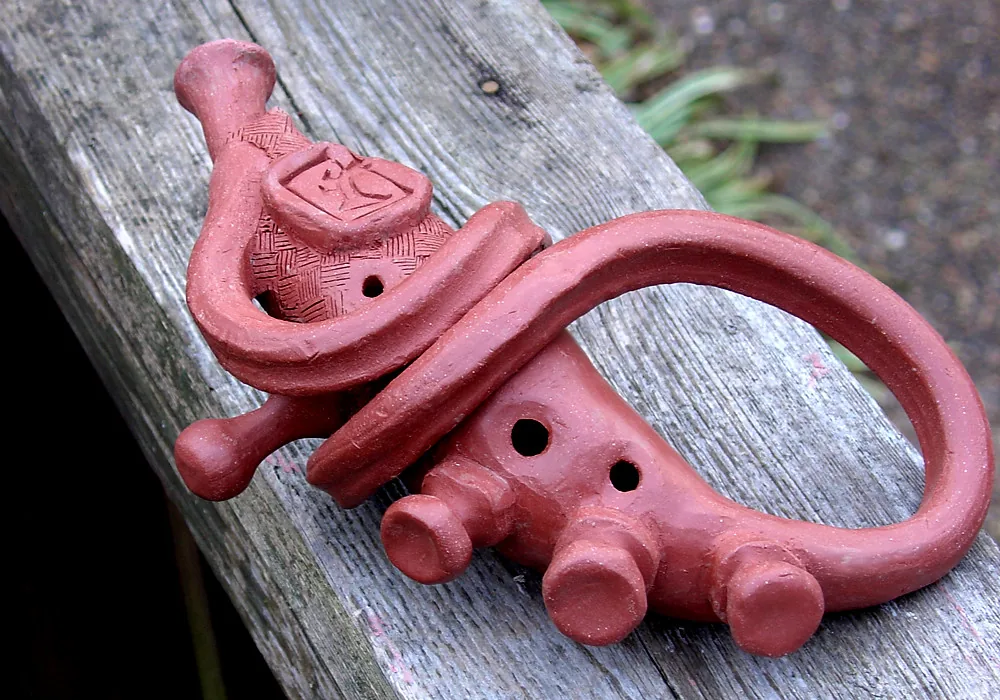
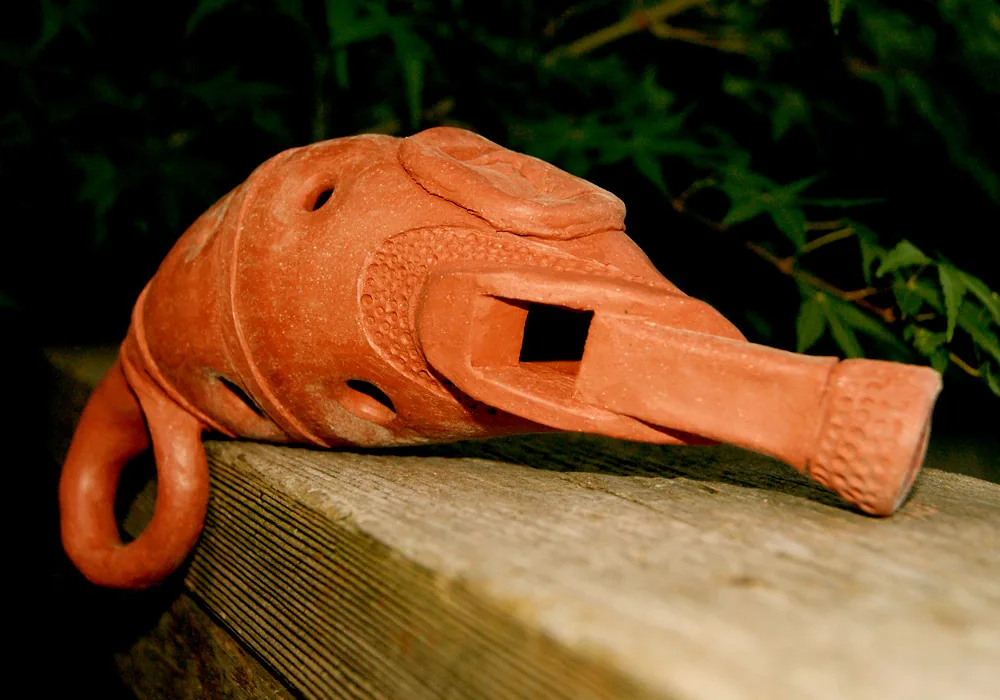
The ocarina is a fascinating musical instrument that has endured through the centuries. Its simplicity and acoustic beauty make it a favored choice for many musicians. Often made from terracotta or ceramic, this globular wind instrument produces melodic sounds through the vibration of air and by opening or closing its holes.
The name “ocarina” comes from Italian and means “little goose,” referring to its distinctive shape. With origins dating back several millennia, this instrument appears in various cultures around the world, notably in China and South America.
Accessible to both children and experienced musicians, its price generally ranges from €20 to €150 depending on the materials used. Its unique tone, at once soft, expressive, and warm, invites musical exploration.
In this article, we will cover the history and origins of the ocarina, its technical characteristics, and its uses in contemporary culture. Get ready to discover the many facets of this singular instrument.
The Origins and History of the Ocarina
The rich history of this instrument goes back several thousand years. The earliest archaeological traces, such as the Runik ocarina discovered in Kosovo, attest to the age of this type of wind instrument. This terracotta object, dated to around 8,000 years ago, has a characteristic ovoid shape.
In South America, pre-Columbian cultures such as the Chibchas in Colombia and the Aztecs used ocarinas, sometimes referred to as huilacapiztli, in their rituals. These objects, often made of terracotta, took zoomorphic forms, representing llamas or birds, for example. They were much more than simple instruments: they held an important place in spiritual culture.
“Ocarinas were much more than instruments; they were bridges between the spiritual world and everyday life.”
In Asia, the Chinese xun, around 7,000 years old, is often presented as a close ancient relative of this instrument. In Africa, similar objects, such as the niwawu hui, show that globular flutes existed in varied cultural contexts, highlighting the worldwide dimension of this instrumental family.
In Europe, the ocarina began to evolve from the Renaissance onward. Inspired by certain medieval instruments such as the gemshorn, it gradually gained popularity among musicians while expanding its range.
A major turning point came in 1853, when Giuseppe Donati perfected the ocarina with a 10-hole model capable of playing a full chromatic scale. This model, whose shape recalls a small goose, helped give the instrument its modern name. In 1864, Donati founded the “Gruppo Ocarinistico Budriese,” the first professional ensemble dedicated to this musical instrument.
In the 20th century, new innovations continued to transform this instrument. In 1928, Takashi Aketagawa developed a 12-hole model, making it possible to reach a range of about 2.5 octaves. After 1950, Japan played a key role in the revival of the ocarina, notably thanks to Nomura Sojiro. The emergence of multi-chamber, double, triple, and quadruple models then made it possible to extend the playable range even further and, depending on the model, to explore polyphonic effects.
Over the centuries, this instrument has adapted, evolving from a ritual object made of clay into a sophisticated musical instrument appreciated around the world. To learn more about the fascinating history of this instrument, you can read this article dedicated to the history and origins of the ocarina.
Technical Characteristics and How the Ocarina Works: An In-Depth Definition
This musical object, often made from terracotta, has characteristics that distinguish it from other wind instruments. The materials, shape, and acoustic operation are essential to understanding its sound.
Materials and Manufacturing Process
Traditionally, this instrument is made of terracotta, but other materials are also used:
- Plastic: ideal for beginners, it is durable and easy to maintain.
- Ceramic: it offers a rich sound thanks to a delicate firing process.
- Wood: it provides a warm tone, often appreciated by experienced musicians.
- Porcelain, stone, and metal: each of these materials brings distinct nuances to the sound.
The firing of ceramic models is a matter of artisanal know-how and contributes to the stability, projection, and tonal character of each piece.
The Different Types of Ocarinas and Their Ranges
There are several types of ocarinas, each suited to different playing styles:
- Transverse models: these are the most common and are often used by musicians.
- Pendants: compact and easy to carry, they are suited to simple, mobile practice.
- Multi-chamber models: they make it possible to expand the playing range and, depending on their design, to play several notes simultaneously.
Ocarinas are available in different ranges, notably soprano, alto, and tenor, each offering its own expressive possibilities.
Acoustic Operation and Sound Production
The sound of this instrument is based on an acoustic principle close to that of the Helmholtz resonator. Here are a few key elements:
- The globular shape creates a resonant cavity in which air vibrates to produce sound.
- The holes modulate the notes: by covering or uncovering them, the musician adjusts the pitch of the sounds.
- The mouthpiece is crucial: it directs the breath and influences the clarity as well as the accuracy of the notes produced.
12-hole models offer an extended range and make it possible to play a full chromatic scale. The evolution of this instrument took it from 6- or 8-hole models to 10-hole models, notably with the transverse ocarina perfected by Giuseppe Donati in the 19th century.
To explore this musical instrument further, you can read this article on the history and origins of the ocarina.
The Ocarina in Music, Culture, and Contemporary Uses
Across the ages, this instrument has established itself in a variety of musical contexts, from ancestral rituals to modern stages. Its use in traditional music, particularly in the Andes, remains especially significant. During festivals such as the one in Cuzco, it accompanies dances and rituals with melodies that captivate listeners.
Use in Traditional and Classical Music
In Asia, the ocarina also has its place, notably in Japan. Musicians such as Nomura Sojiro use it in solo pieces that explore the full richness of its range. This approach highlights the beauty of its tone and allows listeners to appreciate its nuances.
In the field of classical music, renowned composers such as Ligeti, in his Violin Concerto, and Janáček have incorporated this instrument into their works. They make use of the nostalgic and melancholic character of this object, thereby giving orchestral writing a distinctive color.
The Role of the Ocarina in Video Games and Pop Culture
A major turning point for the ocarina’s renown came with the video game The Legend of Zelda: Ocarina of Time, released in 1998. This game brought the ocarina to the forefront of the global stage and helped introduce its sounds to an entire generation.
In addition to its role in video games, the ocarina appears in films such as The Good, the Bad and the Ugly and in series such as Princess Sarah. Today, it is also used in short-form content and trailers shared on TikTok, strengthening its visibility among a young audience.
The Ocarina Today: Accessibility, Popularity, and Learning
The popularity of this instrument continues to grow, driven by how easy it is to access, its compact size, and its connection to popular culture. This trend shows that the ocarina stands the test of time and still attracts new musicians.
For those who want to learn to play, several resources are available. Platforms such as OcarinaForest.com, Sojiro tutorials, many free YouTube videos, and dedicated mobile apps make learning accessible to everyone.
Affordable and durable plastic models are particularly well suited to children, making the ocarina an excellent choice for getting started with music. In addition, innovations such as MIDI ocarinas and connected models open up new prospects for the future.
In Italy, ocarina orchestras are developing, strengthening the collective dimension of this musical instrument. The ocarina thus demonstrates remarkable versatility, able to move from ancestral rituals in South America to video game soundtracks, not to mention classical concert halls.
Conclusion
This musical instrument has captivated the world thanks to its unique sound and fascinating history. Present for several millennia, it has crossed cultures, from ancestral rituals in South America to modern melodies. Its technical evolution, from the earliest models with only a few holes to today’s multi-chamber ocarinas, testifies to its adaptability.
Accessible to everyone, it allows children and musicians of all levels to explore music. As Nomura Sojiro so aptly says: “music is a universal language.” To discover or purchase an ocarina, you can visit specialist shops such as Thomann, which offer a wide selection of models suited to different budgets.
In conclusion, this instrument continues to enchant listeners with its acoustic beauty. It represents an ideal gateway into the world of music for anyone who wants to learn to play.