

Goal: this article offers a clear, ready-to-sing selection of songs suited to choirs in France. You will find guidance for building an effective and accessible repertoire, with ideas for simple arrangements.
We aim for a balance between energy and emotion. For an amateur or semi-professional group, the idea is to be able to sing with pleasure and joy from the very first rehearsal. The choices favor memorable melodic lines and choruses that are easy to join in with.
The selection criteria include repetitive verse/chorus structures, call-and-response possibilities, and accessible 3- or 4-part harmonizations. These pieces work with piano, guitar, or a cappella, depending on your forces.
Finally, the article sets out options for ceremonies and local concerts, and emphasizes the importance of lyrics that speak of love and hope. Choir directors and singers can choose according to their needs: an opening number, an intimate moment, or a unifying finale.
Why these gospel songs remain the simplest and most effective today
Their success comes from an immediate melody and a message that speaks directly to people. Songs such as Oh Happy Day, When The Saints, and Down By The Riverside have stood the test of time because they are easy to remember and invite collective singing.
These songs have a history carried by oral tradition and recordings. They grew in popularity through radio, cinema, and touring, eventually taking their place in the culture of the whole world.
The formal structure — call-and-response, ostinatos, and short choruses — helps a French choir master each song quickly. The swing and groove inherited from jazz make timing and collective phrasing easier.
Technically, these pieces remain accessible: comfortable ranges, triadic harmonies, and homorhythmic entries give each section security. Their dimension of spirituality and hope strengthens the audience’s connection from the very first listen.
“Ain’t Gonna Study War No More” — Down By The Riverside, a peace-centered message rooted in biblical texts.
- Clear values: love, sharing, hope.
- Educational role: developing listening, vocal blend, and intonation.
- Immediate stage impact in a ceremony or concert.
Easy gospel songs for choir: the immediate selection
To start an accessible repertoire, these three pieces offer simple and effective structures.
Oh Happy Day — a worldwide standard
Oh Happy Day (arr. Edwin Hawkins, 1967) comes from an 18th-century hymn. Its melody and chorus are memorable.
Start in unison, then open out into 3 or 4 parts to create uplift. A moderate tempo and clear diction keep the energy alive.
When The Saints (Go Marching In)
A hymn recorded as early as 1923 and popularized by Louis Armstrong in 1938. Use call-and-response between soloist and choir.
March lightly to feel the placement, and take care with unified attacks.
Down By The Riverside
Published in 1918 and recorded in 1920, this song carries a peace-centered message. Work on the repetitive chorus loop and the diction of the key lyrics.
Vary the dynamics (mp → f) to create a progression, even with a small ensemble.
| Title | Level | Strength | Suggested accompaniment |
|---|---|---|---|
| Oh Happy Day | Beginner-intermediate | Memorable chorus, harmonic uplift | Piano with block chords / guitar with rhythmic strumming |
| When The Saints | Beginner | Call-and-response and march feel | Claps / foot tapping, rhythm guitar |
| Down By The Riverside | Beginner | Repetitive structure, strong message | Simple bass + piano on the strong beats |
Essential classics to add to your group’s repertoire
These classics offer vocal textures and a history that strengthen any performance. They combine vocal projection, message, and practical arrangement possibilities for an amateur choir in France.
The Hymn of Joy (Joyful, Joyful)
Context: a text by Henry Van Dyke (1907) set to Beethoven’s Ode to Joy melody, made popular in a modern version in Sister Act 2.
Work on projection and long vowels. Divide the SATB voices into homorhythmic blocks for a powerful, accessible result.
Go Down Moses
A reference to Exodus 8:1, a symbol of liberation, popularized by Paul Robeson and later performed by Louis Armstrong. Favor contrasts between strong passages and softer ones.
Give the lead line to a low-voiced singer to strengthen the depth of the piece, and take care with diction. Light appoggiaturas and a broad tempo reinforce the gravity and faith of the message.
Wade In The Water — He’s Got The Whole World In His Hands
Wade In The Water calls for a marked groove: beat the tempo with the foot and play with the choir’s short responses.
He’s Got The Whole World… works well in a simple version, alternating short solos and tutti sections. These two pieces combine well in a medley (Wade → Joyful) for a triumphant finale.
- Accompaniment tip: piano with a simple bass line or guitar on the offbeats.
- Adaptation: transpose to keep the middle voices comfortable and maintain a singable bass line.
Popular songs for a wedding ceremony in France
Well chosen, musical pieces heighten the emotions and shape each key moment of the ceremony.
God Bless The Child — intimacy and vocal beauty
Tip: slow tempo, stripped-back arrangement. Save this song for an intimate passage before or after the vows.
Crying In The Chapel — gentleness and contemplation
Transpose for the choir’s comfort and work on piano/mezzo-piano nuances. This choice creates a genuine moment of inward stillness.
Ave Maria (modern version) — grace and breadth
Make the most of the grace of the melodic line. Place it at the bride’s entrance or during the blessing for maximum impact.
I Love The Lord — intensity and hope
Support the lead voice with the choir’s responses in the background. This song brings an expressive build to the central moment.
His Eye Is On The Sparrow — a sensitive duet
Offer a duet for two soloists, with the choir as a harmonic cushion. Take care with diction so the message of love and trust comes through.
| Title | Use | Recommended format |
|---|---|---|
| God Bless The Child | Before/after vows | Piano/voice or small group |
| Crying In The Chapel | Moment of contemplation | Soft guitar or piano |
| Ave Maria (modern version) | Entrance / blessing | Solo voice + piano |
| I Love The Lord | Key moment, intensity | Lead voice + supporting choir |
| His Eye Is On The Sparrow | Duet / message of love | Two soloists + choir |
Practical tip: favor gentle transitions and light formats (piano/voice) if space is limited. Check the keys to avoid tiring high notes, and adapt the lyrics to the French setting of the ceremony.
French-language and contemporary options to diversify your repertoire
Including contemporary songs in French helps bring the music closer to the local audience.

Gospel in French: the French scene offers songs blending soul, R&B, and urban influences. Varied formations — duo, quartet, octet — modernize the repertoire while preserving its spiritual dimension.
Workshops and small ensembles
Short workshops focused on rhythmic placement and vocal blend strengthen the group’s cohesion. Work on a simple groove and accessible harmonies so everyone can make quick progress.
- Favor songs in French to reach a wider audience and make the message clearer.
- Offer intimate formats (voice + guitar/piano) for smaller stages and modest budgets.
- Consider occasional collaborations with a chamber orchestra for a noble color.
Practical tip: develop individual talent through supervised solos, and equip yourselves with solo microphones and an ambient microphone. This showcases local culture and carries the group’s passion on stage.
Performance tips: voices, emotions, and message
A successful performance grows out of simple technique and a clear intention shared by the group. Start by working on collective breathing and vocal placement to achieve a homogeneous tone.
Favor sustained vocal lines and broad endings, without forcing. Mark breaths and entries to secure each section.
Connect the text to the choir’s lived experience to convey sincere emotions. Interpretation comes from understanding the message and strengthens the faith and spirituality of the result.
Take care with diction in French and English: clear consonants, rounded vowels. Build dynamic levels to add depth and respect the values of the repertoire.
| Goal | Action | Expected result |
|---|---|---|
| Breathing | Group warm-up, breath markers | Homogeneous tone |
| Diction | Work on vowels and consonants, adaptation to the acoustics | Clarity in French and English |
| Solos | Guidance, controlled volume | Passion sustained without covering the choir |
| Groove | Discreet body percussion (foot/hand) | Stable rhythmic placement |
For practical advice on vocal technique and placement, see this guide to singing gospel. Prepare rehearsals focused on risky passages to make the best use of your time.
Building a balanced setlist: joy, hope, and depth
Organizing an effective setlist means thinking of emotion as a through line.
Three-act structure: the opening should sweep the audience along (e.g., Oh Happy Day), the heart of the ceremony becomes more intimate (e.g., Crying In The Chapel), and the finale brings everyone together (e.g., When The Saints).
Energetic opening, ceremonial heart, and unifying finale
Alternate fast songs and ballads to hold attention. Vary the vocal textures: unison, duet, tutti.
Distribute solos among the sections to showcase the group and preserve the voices. Prepare 3 to 5 songs for a ceremony: a few well-rehearsed pieces are better.
Alternating tempos and vocal textures to maintain momentum
Planning transitions in compatible keys avoids dead spots. Add short interludes if needed to set the atmosphere.
“Placing a joyful moment between two deeper sections maintains emotional balance.”
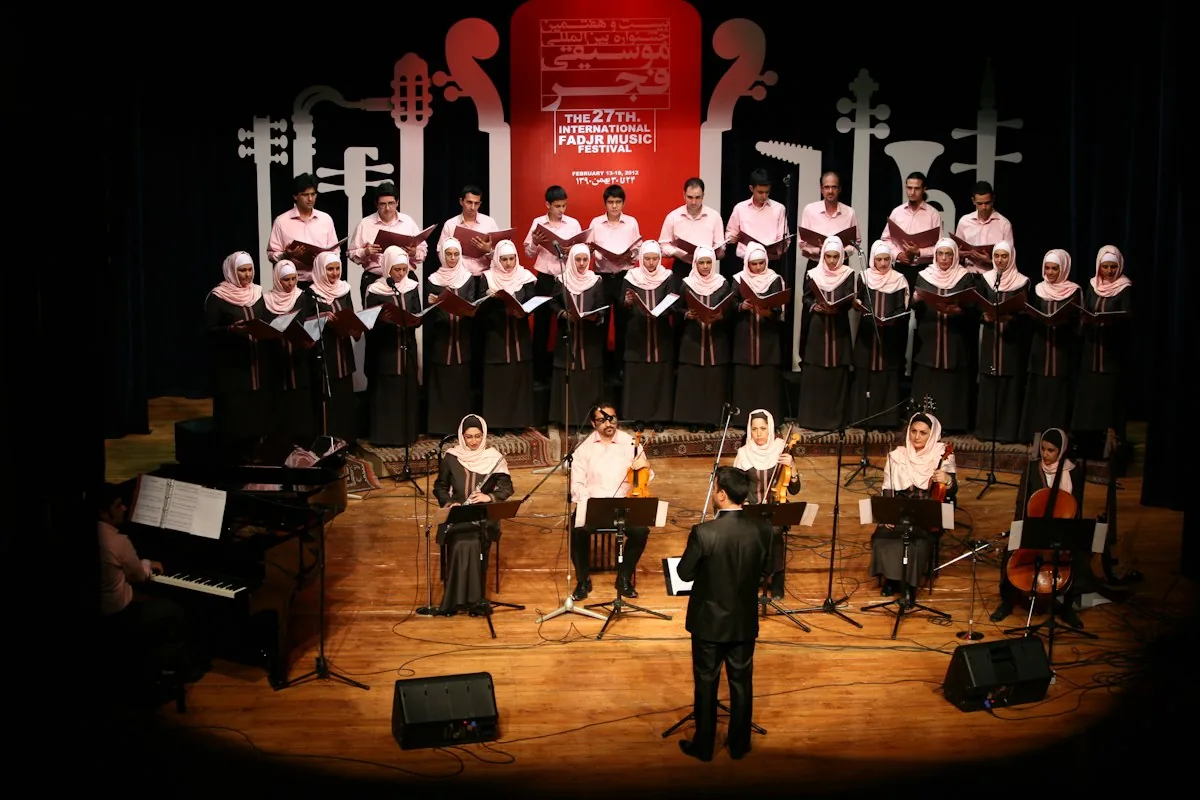
- Identify 1 or 2 interactive moments (chorus, clapping) to create a bond with the audience.
- Take care with logistics: stage placement, breathing, and the conductor’s cues.
- Adapt the volume and number of singers to the venue and acoustics.
| Act | Goal | Example |
|---|---|---|
| Opening | Bring energy | Oh Happy Day |
| Heart | Introspection and emotion | Crying In The Chapel |
| Finale | Unity and participation | When The Saints |
Conclusion
To close, remember the keys that make these songs immediately singable and meaningful.
Goal: offer a solid, practical foundation, with simple and expressive songs to work on several times in order to gain cohesion and nuance.
The popularity of the classics makes audience engagement and learning easier. The right balance of emotion, message, and simplicity honors gospel culture and music.
Explore modern versions and songs in French to enrich your identity. Adapt keys, tempos, and ensemble sizes to the comfort of the singers and the group.
Listen to reference versions and consult the “gospel in French” dossier for ideas for versions. Use this article as a roadmap.