
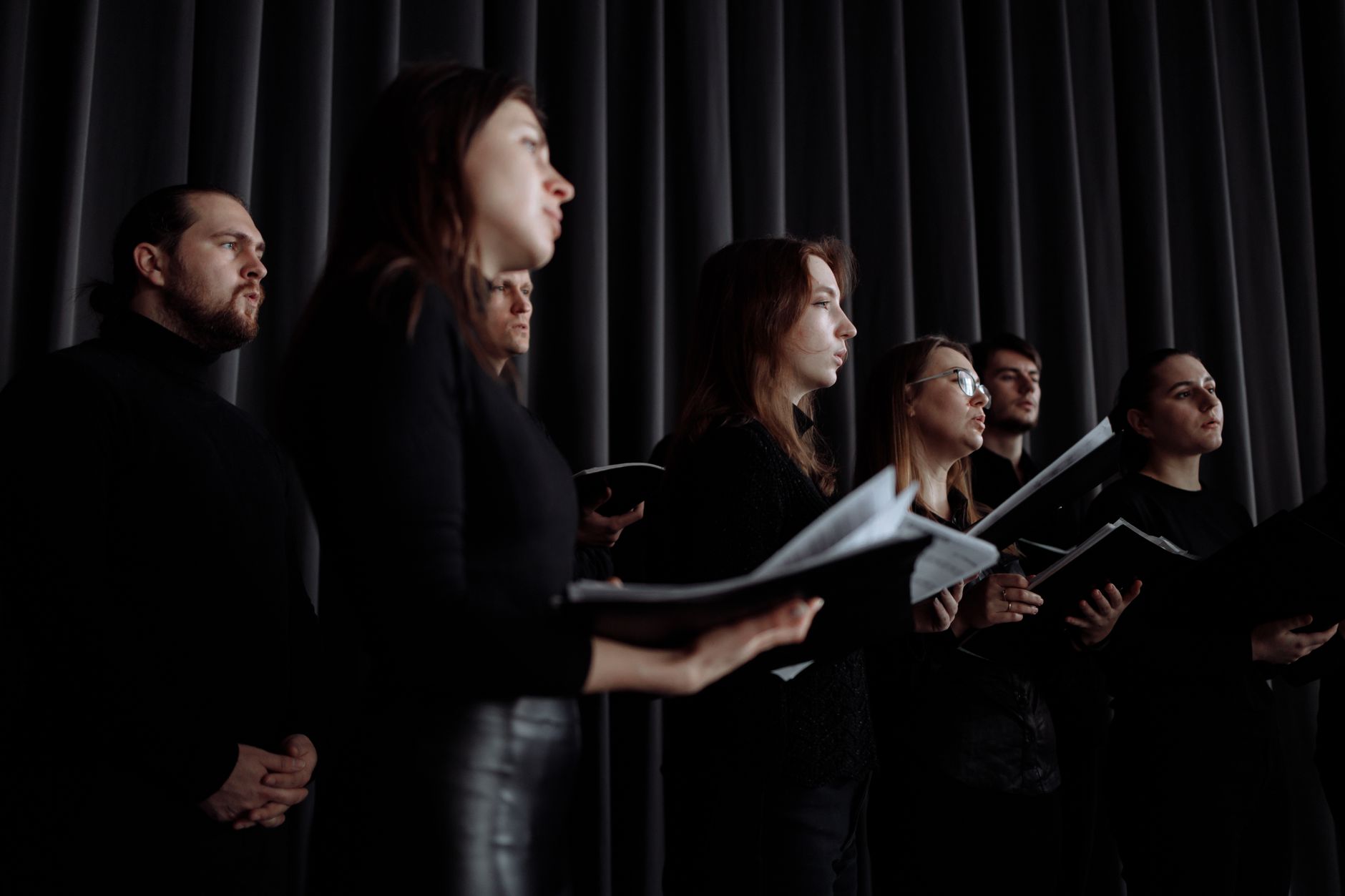
Objective: this article offers a clear repertoire you can use immediately to program and learn pieces as a group. It is intended for choir directors, music teachers, workshop leaders, amateur singers, and everyone who wants to sing together in France today.
The selection criteria are simple: suitability for the available voices, appeal of the song, rhythmic and melodic accessibility, and shared enjoyment during singing. We prioritize well-known contemporary titles and revisited classics to offer artistic balance.
The article is organized around thematic lists by style and era, vocal technique and diction advice, and ready-to-use program ideas. Each section provides practical pointers for choosing quickly and well, along with concrete resources for finding scores and accompaniment tracks.
Purpose: to make collective music accessible without sacrificing the group’s artistic quality.
Why a repertoire of easy French songs for choirs today
Choosing approachable titles opens the door to shared enjoyment from the very first session. A good starting point for beginning singing is a French song with familiar language and clear lyrics. These elements help the group synchronize quickly and focus on listening.
Well-known pieces make it easier for the audience to connect and motivate everyone to learn to sing with songs they enjoy. By starting with simple pieces, the director can then offer more elaborate arrangements to maintain interest.
From a teaching standpoint, an accessible repertoire makes it possible to work on intonation, prosody, and tonal blend without overloading technique. French requires precise diction: simple melodic lines encourage shared articulation.
Finally, a well-chosen set of titles simplifies rehearsal planning and highlights every section. A progressive program builds social connection and establishes a lasting practice of collective singing.
What makes a French song “easy” to sing in a choir
A song that is easy for beginners to sing is first built on a simple, repetitive melody. Short and memorable, it frees up collective listening and supports shared intonation.
A memorable melody and a comfortable range
Prioritize a limited range centered in the middle register. Staying in this zone avoids difficult leaps, which tire the voices and disrupt alignment between sections.
Check the tessitura of each section to secure harmonic balance.
Moderate tempo, clear diction, and breathing
A moderate tempo helps singers manage breath and place consonants. This improves rhythmic cohesion and attack precision.
Work on silent, coordinated breathing: it is the key to a homogeneous collective line.
For learning, move forward by sections (verse, chorus, bridge) with short loops. Add targeted warm-ups on vowels and consonants to optimize technique and clarity of delivery.
Choral Repertoire: Easy French Songs
For an ensemble that wants to progress quickly, here are four accessible titles with strong teaching value. Each one offers a specific training ground: intonation, rhythm, dynamics, and diction.
Tout oublier — Angèle & Roméo Elvis
Tout oublier uses short, repetitive musical phrases. It is ideal for anchoring intonation through loops.
La Grenade — Clara Luciani
The chorus is powerful and driven by committed lyrics. This piece encourages collective projection without forcing.
Immortels — Dominique A
A gentle ballad with subtle variations: perfect for working on the singing line and piano-mezzo nuances.
Un homme debout — Claudio Capéo
The dynamic alternation between verses and choruses is very useful for rhythmic work and setting up echoes between sections.
“Work in echoes between sections on the choruses to strengthen mutual listening.”
- Diction: emphasize the explosive consonants in the choruses.
- Reference: use recordings to set the tempo and breathing points.
- Finale: synchronize clean endings for stronger stage impact.
| Title | Teaching advantage | Practical goal |
|---|---|---|
| Tout oublier | Repetitive motifs | Rhythmic precision |
| La Grenade | Energetic chorus | Collective projection |
| Immortels | Gentle atmosphere | Nuance and line |
| Un homme debout | Narrative verses | Rhythm and pulse |
Accessible pop-rock for choir
Pop-rock brings clear melodies and immediate energy, ideal for group vocal work. In France, modern French chanson offers simple frameworks that can be used for technique and expressiveness.
Dernière danse — Kyo
Dernière danse (Kyo, 2003) is a pop-rock classic with a simple melody that supports emotional expression. Recommend this song for working on sustained phrases and collective nuances over a repetitive framework.
L’aventurier — Indochine
L’aventurier (Indochine, 1982) offers a very repetitive structure and a driving rhythm. Use this song for the chorus’s memorability and the ensemble dynamic, ideal for engaging the whole group.
Week-end à Rome — Étienne Daho
Week-end à Rome combines gentle melodies with lively rhythms. Use this title to explore the alternation between an intimate verse and a broad chorus, and to refine the balance between sections and voices.
- Offer simplified SATB or SSA distributions and clear rhythmic supports.
- Place shared breathing points to align the vocal flow.
- Work on final consonants for clean diction at a moderate tempo.
- Favor minimal keyboard or guitar accompaniment before moving to an a cappella performance.
- Memorize in blocks (intro, chorus, bridge), with short repetitions to anchor the pop-rock pulse.

“Work in blocks and keep clear rhythmic supports to encourage a convincing stage result.”
This short passage from the article guides the choice of pop-rock titles and offers practical ideas for a group at the end of a workshop.
Rap and urban pop adapted for choral singing
Adapting urban titles for collective work requires simple choices: clarify the roles, secure the pulse, and preserve the meaning of the lyrics. These pieces offer rich ground for working on the balance between sung sections and spoken passages.
Coeurdonnier — Soprano
Coeurdonnier alternates gentle passages with fast rap. Use this alternation to work on spoken-sung phrasing. Simplify the fast sections into ostinatos or spoken word so the whole group can follow without forcing articulation.
Dommage — Bigflo & Oli
Dommage offers an introspective text suited to work on nuance. Use this song to improve the clarity of the lyrics and collective narration. Work on dynamic contrasts by section.
La même — Maître Gims & Vianney
La même is built on catchy choruses and repeated lines. This song is ideal for quick learning. Set up echoes between low and high voices, and start with a metronome or a light rhythm.
“Simplifying rap verses into ostinatos supports homogeneity without betraying the style.”
- Emphasize the cohesion of attacks so the message carries.
- Plan collective breaths at line endings.
- Alternate singing and spoken word to preserve the urban color.
Classics of French chanson arranged for choir
Melodies from the last century lend themselves to clear, educational adaptations. They make it possible to combine a taste for text with concrete work on voice and harmony.
Georges Brassens in SATB (choir and piano arrangements)
SATB arrangements with piano of Georges Brassens exist and serve as excellent material for developing accessible polyphony. The piano stabilizes pitch accuracy and guides prosody.
Favor simple vocal lines, responsorial soloist/section distributions, and instrumental cells to breathe between verses.
Popular songs for children’s choir
Collections adapted to school ensembles offer narrower tessituras and memorable choruses. They make it easier to involve children and balance them with women’s voices.
Practical advice:
- Add spoken or rhythmic introductions to prepare the group’s entrance.
- Adjust keys for the comfort of children’s and women’s voices.
- Work on word endings: clear articulation respects the poetic style and French diction.
“By stabilizing the harmony, the piano makes it possible to refine the color and prosody of the text.”
To find editions and accompaniment resources, consult a selection of composers and collections for choir on these specialized pages.
Easy-to-program French choral masterpieces
Short, well-written masterpieces offer excellent practice material for an ensemble. This article suggests options that respect tessitura and balance between sections. They make intonation work easier and support the pleasure of singing.
Gabriel Fauré: SATB excerpts with organ or piano, and SSA versions such as Les Roses d’Ispahan for women’s choir. These formats strengthen the French color without overloading the sections.
Francis Poulenc: a cappella miniatures for men’s or women’s choirs. Ideal for working on pitch accuracy and ensemble blend without accompaniment.
Claude Debussy: choirs with piano ad libitum to add harmonic support during the first rehearsals.
Camille Saint-Saëns: economical SATB a cappella scores (instant download from €2.00) delivered as PDFs within 2 to 6 business days depending on the format.
- Progress: alternate a cappella and accompaniment to protect the voices.
- Choice: favor central tessituras and partial homorhythm for better balance between the voices.
- Practice: note tempo markers and shared breaths to make cohesion reliable from the first rehearsal.
“Choose short pieces and isolated excerpts: they are perfect for a quick and musical setup.”
After the film Les Choristes: the rise of choirs in France
The success of the film Les Choristes brought group singing back to the heart of school and community practices. It inspired thousands of children, teachers, and amateurs to come together to sing.
The effect was rapid: new ensembles were created, workshops appeared in rural and urban settings, and interest in vocal practice was renewed. This movement also strengthened local musical life and spread the practice beyond the region.
Where to find scores and karaoke tracks to download
Many publishers now offer choir scores as PDFs, available for instant download. Physical versions remain available, with short delivery times (2 to 6 business days).
Explore catalogs dedicated to French choral music to find arrangements suited to your group and your voices.
- Use karaoke tracks and piano accompaniments for independent learning.
- Favor PDF editions to prepare concerts and workshops quickly.
- Encourage intergenerational projects to bring together families, schools, and associations.
“A unifying repertoire maintains the momentum born from this cultural enthusiasm.”
| Resource | Format | Advantage |
|---|---|---|
| Publisher scores | PDF / print | Instant download or delivery within 2 to 6 days. |
| Karaoke tracks | MP3 / WAV | Rhythmic and tonal support for the sections. |
| Teaching guides | PDF (handbook) | Advice for workshops and schools — see the handbook. |
Repertoires by choir type
Each type of vocal ensemble needs titles designed for its tessitura and homogeneity. This choice makes technical work and text projection easier.
Mixed choir (SATB)
Prefer works with piano or organ accompaniment to stabilize the ensemble. Fauré’s SATB scores with piano are a good example.
Women’s choir (SSA) and girls’ choir
Choose pieces in a middle tessitura. Fauré’s Les Roses d’Ispahan offers suitable lines for working on timbral blend.
Men’s choir (TTBB)
Choose moderately difficult a cappella works, such as certain pieces by Poulenc, to strengthen the cohesion of lower voices.
Children’s choir and equal voices
Favor short tunes, repetitive choruses, and simple keyboard accompaniments. PDF collections for children allow quick downloads or physical delivery within 2 to 6 days.
- Adapt keys to the group’s resources and plan doublings to secure entrances.
- Build varied programs across eras and languages while encouraging French pronunciation.
- Document each piece with breathing, nuance, and phrasing markers.
- Use cross-listening exercises to adjust balance between sections.
Choosing according to the voices: tessituras, timbres, and balance
Before selecting a piece, first identify the comfort and effort zones of each section. This diagnosis protects vocal health and makes rehearsal work easier.
Define the target tessituras and avoid sustained notes in prolonged tension zones. Check the color of the voices: choose a song that highlights the group’s natural timbre.
Adapt the repertoire to the current technical level. Favor homorhythmic writing for the first sessions before introducing canons and countermelodies.
- Anticipate ensemble distribution to maintain harmonic balance.
- Take into account the acoustics of the venue and the singers’ listening capacity.
- Plan pragmatic transpositions if a key puts one section in difficulty.
- Provide recordings or practice tracks to support the voices’ independence at home.
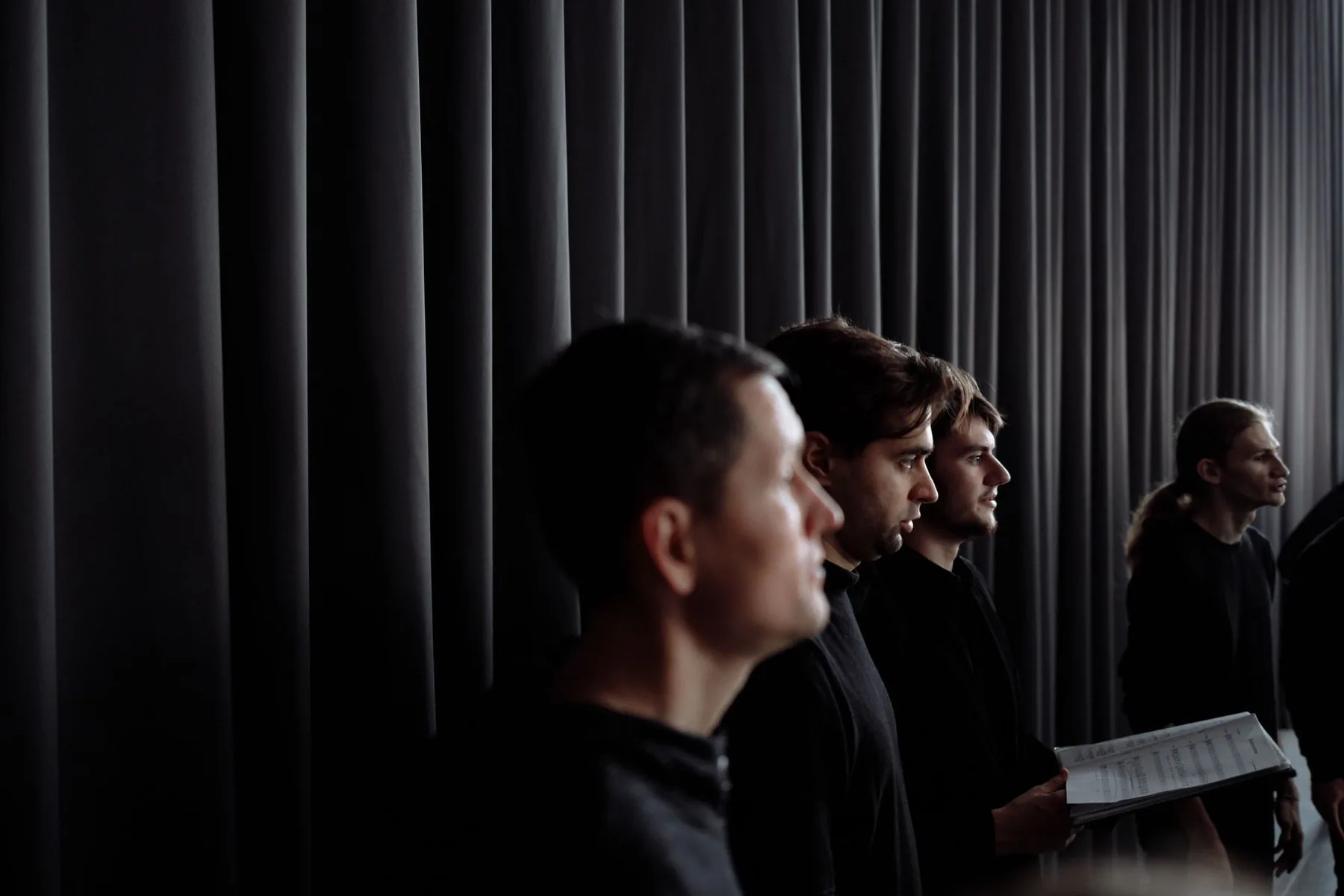
“A good musical choice serves the group’s color and brings quick successes.”
This short guide helps the director make a pragmatic and musical choice from the very first session. It complements the article by offering concrete markers.
Lyrics, articulation, and breath: practical advice
The clarity of words determines the expressive power of a group in rehearsal. Precise diction brings out the meaning of the musical line and makes learning easier. Here are simple gestures to integrate from the first session.
French diction and phrasing management
Work on the pillar vowels (a, e, i, o, u) by sustaining them along the line. Emphasize final consonants without hardening them so the lyrics remain intelligible.
Establish shared phrasing on liaisons and vocal releases. Shared attacks on key words strengthen semantic impact.
Breathing and sustaining phrases at a moderate tempo
Organize collective breaths that are silent and distributed. Maintain a moderate tempo that leaves time to place consonants and carrying vowels.
Use breathing exercises (low inhalation, controlled exhalation). Break down fast sequences into spoken sub-rhythms before singing.
| Goal | Exercise | Expected effect |
|---|---|---|
| Articulation | Sustained vowels + final consonants | Intelligible text |
| Shared phrasing | Liaisons worked in a loop | Line homogeneity |
| Breathing | Low inhalations, controlled exhalations | Sustained phrases |
Themes that bring everyone together
Titles about hope and travel easily unite voices. They create an immediate connection between the group and the audience.
Anthems of hope and perseverance
Select a song that carries hope, with a simple, unifying chorus. A repetitive motif helps everyone sing together and feel included.
Favor choruses that the audience can join in with. Add short spoken or instrumental transitions to establish the drama without making the setup heavier.
Love, memories, and travel
Emotional themes allow natural expressiveness. Texts about love or memories open the way to intimate nuances and beautiful shared phrases.
Vary the moods, from intimate to energetic, to give the program relief. Adjust the difficulty according to preparation time and participants’ experience.
“Choose music that tells a story and moves people: the audience will remember it.”
| Goal | Characteristic | Stage effect |
|---|---|---|
| Hope | Repetitive chorus | Engages the audience |
| Memories | Narrative text | Shared emotion |
| Travel | Varied styles | Maintains curiosity |
Starting group singing: “feel-good” pieces
Start with pieces that offer an immediately singable chorus to create a collective success from the very first rehearsal.
Practical choices: favor comfortable keys and natural rhythms. A simple verse/chorus form invites everyone to take part.
Prepare practice tracks by section. These recordings speed up setup between sessions and help singers learn to sing faster.
Teaching tip: begin in one or two voices, then add doublings or a simple countermelody. Plan achievable mini-goals for each session.
Text and atmosphere: favor positive, unifying lyrics. This easy song should remain a moment of enjoyment for everyone.
| Piece | Advantage | Rehearsal action |
|---|---|---|
| Short chorus | Quick entry | Collective singing from the 1st pass |
| Middle key | Vocal comfort | Transpose if needed |
| Verse/chorus form | Immediate participation | Short loops + section track |
| Positive lyrics | Motivation | Celebrate each step |
Start simply, celebrate progress, and let enjoyment guide commitment.
Program ideas by length and level
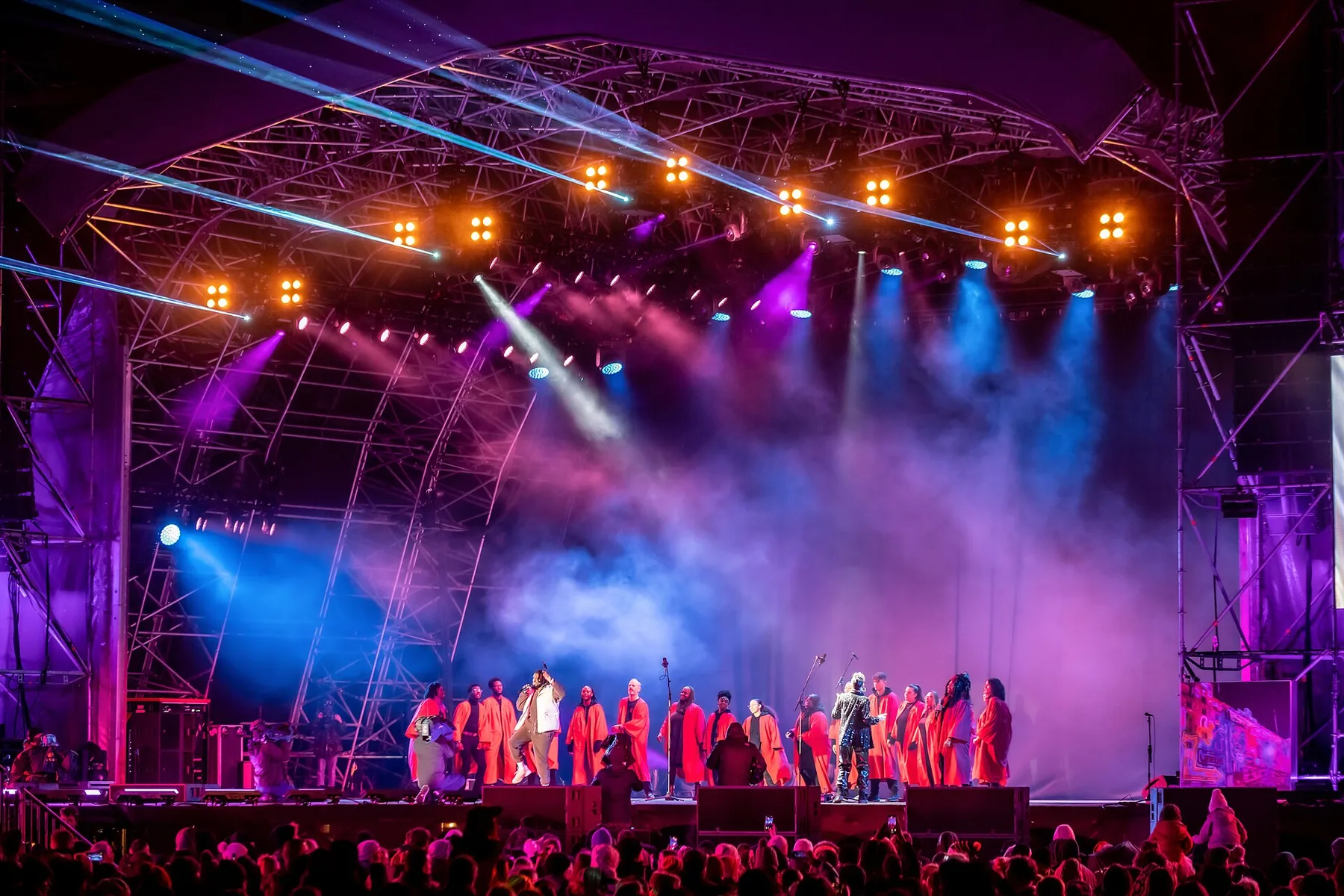
Building a program according to the available time makes it easier to manage breath and attention. Here are practical formats for workshops, auditions, and small concerts.
Short formats for workshops and auditions
Express format (10 to 15 min): three pieces in sequence — energetic opening, lyrical middle, unifying finale. Plan an a cappella piece in the middle to calibrate listening and refine intonation.
Give two tempo markers and tune the room before starting. Insert a brief spoken transition to keep time and refocus the voices.
Thematic sets for seasonal concerts
For 25 to 35 min, alternate a recent song with an arranged classic. Reserve one piece for a women’s voices sub-ensemble to vary the colors.
Adjust the keys so the singers remain comfortable throughout. Conclude with a participatory piece to involve the audience.
“Preparing time margins and spoken transitions saves rehearsal time and secures the stage result.”
| Length | Structure | Goal |
|---|---|---|
| 10 to 15 min | 3 pieces (energy / lyrical / finale) | Quick impact, breath management |
| 25 to 35 min | Thematic set + a cappella | Variety, listening, progression |
| 45 min and more | Alternating blocks and short break | Endurance, colorful diversity |
Where to buy and download French scores for choir
Buying the right edition changes everything: intonation, markers, and vocal comfort depend as much on the choice of edition as on rehearsal work.
Platforms: favor shops that offer printable PDFs for quick preparation. They allow print-on-demand and immediate access to the piece.
Éditions À Cœur Joie has a large catalog of French choral music suited to SATB, SSA, and TTBB formations.
Specialized shops and formats
Concrete examples: Fauré (piano/organ reductions for SATB), Les Roses d’Ispahan (SSA + piano, delivery in 2 to 5 days), Saint-Saëns a cappella SATB available as an instant download for €2.00.
Availability and delivery times
- PDF: immediate availability for many references.
- Physical products: standard delivery within 2 to 6 business days depending on the reference.
- Check the formation (SATB/SSA/TTBB) and level before buying to optimize the budget.
“Centralize purchases through the director to harmonize editions and make annotations easier.”
| Resource | Format | Advantage |
|---|---|---|
| Online libraries | Instant printing, time saving | |
| Éditions À Cœur Joie | Print / PDF | Wide choice of works for equal and mixed voices |
| Classical editions (Fauré, Saint-Saëns) | Print / download | Specific examples and clear prices (e.g. €2.00) |
To prepare your rehearsals, also consult sites offering scores and accompaniments, for example score download sites for vocal ensemble.
Rehearsal setup: technique and interpretation
Organize each session as a succession of small technical and musical wins.
Start with targeted warm-ups: breath, resonance, and diction adapted to the song of the day. These exercises prepare projection and reduce fatigue.
Segmenting the rehearsal helps concentration. Work successively on rhythmic placement, the accuracy of entrances, the text, then musicality and nuances.
Set up visual and gestural markers to synchronize attacks and cutoffs on the choruses. A simple gesture is sometimes better than a long explanation.
Before singing, speak the phrases to make the rhythm and syncopations reliable. This spoken passage supports alignment and word clarity.
Record short rehearsal takes. Listening back cold makes it possible to correct specific flaws during the next session.
Refine interpretation: dynamics, intention behind the words, eye contact, and stage posture strengthen the impact. Work on controlled projection without forcing the voices.
Vary configurations (semicircles, mixed sections) to develop horizontal listening between voices. These rotations improve balance and cohesion.
Close each session with a complete run-through of the piece. This makes it possible to assess what has been learned and plan priorities for the next session.
“A clear, rhythmic, recorded rehearsal multiplies progress and strengthens collective confidence.”
| Step | Goal | Recommended duration |
|---|---|---|
| Warm-ups | Breath, resonance, diction | 10 to 15 min |
| Segmentation | Rhythm, pitch accuracy, text | 20 to 30 min |
| Interpretation | Dynamics, posture, eye contact | 10 to 20 min |
Conclusion
To finish, a few clear markers help turn a choice into a collective musical success.
Favor a simple melody, a middle range, precise text, and a moderate tempo. This combination makes learning easier and gives beginners confidence.
Start with unifying titles, then broaden the repertoire across styles and eras. Structure a program of 3 to 6 pieces balancing energy, emotion, and breathing space on stage.
Practical resources exist: PDF scores, reference recordings, and section-by-section tools. In particular, consult a guide to learning methods for transmitting popular singing.
Take stock of successes at each stage and adapt the program according to the acoustics and the audience. From pop to classical, from urban variety to poetry, music opens up to the world when choices are simple and inspired.