The ocarina is an ancient musical instrument that attracts many beginners. With a success rate of 94%, new players can quickly perform their first melodies. This wind instrument stands out for its simplicity and gentle sound, making it ideal for anyone who wants to learn.
Tabs offer an effective learning method. They use intuitive symbols, such as filled and empty circles, to guide musicians. This makes it easy to understand the notes to play quickly.
Several reading systems exist, including simple tabs and hybrid formats. Each of these systems helps beginners progress, making learning even more accessible.
Why learn to read sheet music for the ocarina?
Mastering sheet music opens the door to a rich and varied musical world. It gives you access to a repertoire spanning more than 500 years of musical history, from Beethoven’s masterpieces to iconic video game melodies such as Zelda.
The benefits of this skill are numerous. In fact, one study found that regular musicians show a 37% improvement in cognition. This means that learning notes and fingerings improves not only memory, but also hand-eye coordination.
“Sheet music has allowed me to play with artists from every country.” – Gina Luciani
This quote highlights the importance of music theory, a universal language that makes collaboration between musicians easier. By learning to read sheet music, you free yourself from depending on video tutorials. This lets you explore new pieces independently.
- Access to a vast repertoire: from Beethoven to modern themes, sheet music enriches your musical experience.
- Cognitive improvement: musical learning strengthens memory and concentration.
- Rhythmic precision: classical sheet music gives clear indications for note values and rests.
- Universal language: music theory lets you play with musicians from all over the world.
- Musical independence: you can learn on your own without relying only on online resources.
- Structured progress: learning fingerings and notes builds self-confidence.
- Combination of methods: pairing tabs with sheet music speeds up learning.
- Suitable collections: specialty shops offer collections for every level, making learning easier.
In short, learning to read sheet music for this instrument is a major advantage. It not only expands your repertoire, but also helps you develop essential skills for your musical journey. To learn more about reading sheet music, you can read this detailed article.
Ocarina sheet music: how to read it and find suitable pieces – the basics
For music lovers, understanding the basics of tabs is essential. These intuitive diagrams let you navigate the world of notes easily. Thanks to simple symbols, such as filled and empty circles, you will know which holes to cover or leave open on your instrument.
Understanding simple tabs and their symbols
Tabs use visual representations to indicate the notes to play. For example, a filled circle (●) means the hole must be covered, while an empty circle (○) indicates that it should remain open. To read tabs well, it is essential to follow the reading order: from top to bottom, then from left to right. This helps avoid decoding mistakes.
Dashes also play an important role. One dash doubles the duration of the previous note, while two dashes quadruple it. Horizontal braces indicate that several notes should be played in one breath. This helps create smooth phrasing.
Discovering classical sheet music adapted to the ocarina
Classical sheet music, meanwhile, follows traditional notation. It uses precise rhythmic values: whole note (4 beats), half note (2 beats), quarter note (1 beat), and eighth note (1/2 beat). To enrich your musical interpretation, it is essential to understand the importance of dots, ties, and triplets. These elements add nuance to your playing.
Interestingly, 82% of beginners prefer hybrid tabs. These formats combine the precision of notes on a staff with visual fingering diagrams. This greatly simplifies learning and supports quick progress.
Hybrid tabs: combining precision and ease
Hybrid tabs are an excellent solution for anyone who wants to combine the simplicity of tabs with the rigor of classical sheet music. By using tools such as Part’Ocarina, you can create customized tab versions that meet your specific needs.
In short, mastering the basics of tabs and sheet music is fundamental for any musician. It gives you access to a vast musical repertoire and helps improve your skills. To deepen your knowledge of reading sheet music, read this detailed article.
| Symbol | Meaning |
|---|---|
| ● | Covered hole |
| ○ | Open hole |
| – | Normal duration |
| — | Double duration |
| — | Quadruple duration |
| {} | Continuous breath |

Choosing your ocarina to optimize sheet music reading
Selecting a suitable instrument can greatly influence your musical experience. Ocarinas come in several models, each with its own characteristics. It is important to understand the differences between the available types of ocarinas.
Models by number of holes: 4, 6, 12
Ocarinas come in several configurations, including 4, 6, 10, or 12 holes. The 4-hole model is ideal for children, while the 6-hole model is simple for starting out. However, the latter limits the musical range.
The 12-hole model is often recommended because it covers a full chromatic scale over an octave and a half. In addition, it accounts for 89% of online resources, making sheet music easier to access.
The importance of key (C, F, G) in fingerings
The ocarina’s key plays a crucial role in fingerings. For example, an ocarina in C uses different patterns from a model in F or G. In fact, 35% of students give up learning when the sheet music does not match their instrument’s key.
Materials, ergonomics, and instrument quality
The choice of materials is also essential. Ceramic offers a warm tone but remains fragile. Plastic, on the other hand, is durable and affordable, making it suitable for travel.
When buying, evaluate the quality of the wind instrument. Check the ergonomics, balance, and airtightness of the holes. An effective method is to use a mirror to detect air leaks.
Recognized brands such as STL Ocarina, Songbird, Night by Noble, and Focalink/Noble guarantee the tuning accuracy of their instruments. A beginner pack including a case and a metronome can also structure the first weeks of learning.
| Ocarina type | Number of holes | Characteristics |
|---|---|---|
| 4-hole model | 4 | Ideal for children, simple to play |
| 6-hole model | 6 | Easy for beginners, but limited range |
| 12-hole model | 12 | Covers 1.5 octaves, access to most resources |
Step-by-step method for reading a simple tab
Learning to decode a tab is an essential skill for any musician. It allows you to play melodies with ease and understand the structure of the notes. To get started well, it is important to follow a simple and effective method.
Decoding finger diagrams: filled and empty circles
In a tab, each symbol has a precise meaning. For example, a filled circle (●) indicates that you need to cover the hole, while an empty circle (○) means it should remain open. Remember that the two rear holes near the mouthpiece should be covered by the thumbs.
To read correctly, follow the line order: from top to bottom, then from left to right. This makes it easier to understand the notes to play.
Managing rhythm, dashes, and repetitions
Managing rhythm is crucial. One dash extends the duration of the previous note to two beats, while two dashes lengthen it to four beats. Multipliers, such as 3x[DO-RE], indicate that a sequence should be repeated several times. This helps structure your playing.
Practical exercises for beginners
To put these concepts into practice, start with simple exercises. For example, use melodies such as Brother John or By the Light of the Moon, which require no more than 6 notes. This will make learning and reading easier.
Adopt an effective learning protocol: start with three silent readings, then two rhythmic readings while tapping. Finally, play with your instrument starting at a slow tempo. Use a metronome set to 60 BPM to internalize the rhythm, then gradually increase it in 5 BPM steps.
Finally, to improve your breath, try the 4-4-4 method: inhale for 4 seconds, hold your breath for 4 seconds, then exhale for 4 seconds. This ensures a stable air column for each note.
By annotating your tab with breath marks, accents, and duration reminders, you can automate your finger movements and avoid common mistakes.

Adapting the sheet music to the range and type of ocarina
Understanding how to adjust sheet music to your type of ocarina can transform your musical experience. Each model has specific features that influence how you interpret notes. Soprano ocarinas shine in the high register but can struggle in the low register. Alto models, by contrast, offer versatility suited to 70% of the repertoire, while bass ocarinas produce warm sounds, ideal for creating atmosphere.
Differences between soprano, alto, and bass
It is essential to know the differences between these types of ocarinas. The soprano excels in bright high notes, perfect for light melodies. The alto covers a wider range, making a broad variety of pieces accessible. The bass, with its rich tones, is especially suited to ambient music.
Olivier Gosselink of Musique de Terre notes that “our customers do 40% better with sheet music adapted to their range.” This shows the importance of choosing pieces that match your instrument.
Transposition techniques and useful annotations
To adapt each note to your model, it is sometimes necessary to transpose the music. Moving up or down an octave without changing the fingering is a simple and effective technique. Always check the extreme notes that could exceed your instrument’s range.
Marking octave changes in pencil on your sheet music can also help maintain smooth reading while playing. This lets you focus on interpretation rather than searching for notes.
By identifying repertoires suited to each type of ocarina, you can explore video game themes for soprano, European folk tunes for alto, and film music for bass. Remember to adjust your breath according to the register: a thinner breath for high notes and a gentler one for low notes will ensure a stable, in-tune note.
Finally, compare your performance with an audio reference to check the intonation and tuning accuracy of your wind instrument in the music you are playing.
Where can you find sheet music suitable for beginners?
For beginner musicians, access to quality resources is essential for progress. Fortunately, there are many options for finding sheet music and tabs that will make learning easier.
Specialized sites and free or paid resources
Start by exploring sites such as STL Ocarina, which offers more than 300 pieces of sheet music organized by difficulty. These resources are ideal for beginners looking for pieces suited to their level.
Another valuable tool is Part’Ocarina, a customizable tab editor that lets you create your own versions of pieces. This makes learning more interactive and personalized.
For free resources, remember to use the search technique filetype:pdf ocarina on Google. This will help you uncover hidden gems, such as free sheet music online.
Recommended books and methods
Investing in books can also be very beneficial. For example, the Ocarina Method Book 1 has been a bestseller since 2015. This book includes progressive exercises and a CD, all for around EUR22.
For video game fans, the Zelda Songbook offers 15 famous themes, perfect for motivating beginners to play.
Video supports and online communities
YouTube channels dedicated to the ocarina are also excellent supports. They show fingerings in real time, which is very useful for beginners. By setting playback speed to 0.75x, you can better master technical passages.
Finally, do not hesitate to join forums such as OCTalk, where players exchange advice, sheet music, and encouragement. These communities are valuable for staying motivated and progressing together.
- Discover specialized sites such as STL Ocarina, which offers more than 300 pieces of sheet music organized by difficulty, ideal for beginners looking for suitable resources.
- Learn to use tools such as Part’Ocarina, a customizable tab editor that makes learning music easier.
- Explore online forums and communities such as OCTalk, where players exchange sheet music, advice, and encouragement to progress.
- Master the Google search tip filetype:pdf ocarina to find free sheet music and hidden resources online.
- Invest in recommended methods such as Ocarina Method Book 1 (EUR22), a bestseller since 2015 with a CD of progressive exercises included.
- Discover the Zelda Songbook (EUR18), which offers 15 famous themes: a perfect example of motivating sheet music for video game fans.
- Take advantage of discount codes such as OCARINA15 at Musique de Terre to buy quality instruments and sheet music at a lower price.
- Complete your learning with YouTube video supports that show fingerings in real time, using 0.75x playback for technical passages.
Exercises and routines for making effective progress
To progress in musical practice, establishing an effective routine is essential. A 15-minute session each day can transform your learning. This method is divided into three blocks:
Working on scales and breath-finger coordination
Start with 5 minutes of breath control. This will help you stabilize your airflow. Then focus on the C major scale. Play C with all holes covered, then D by partially opening the right thumb. Add the left index finger for E.
Simple pieces recommended for learning
To anchor the basics of playing, practice simple melodies. Here are a few suggestions:
- Brother John: 2 days of learning.
- By the Light of the Moon: 3 days.
- Happy Birthday: 1 week.
These pieces will let you develop your technique while having fun.
Using a metronome and self-assessment
Use a metronome such as the Korg MA-2 to keep tempo. Gradually increase the tempo by 5 BPM. Record yourself regularly to assess the accuracy of each note. This will help you improve the consistency of your breath and the precision of transitions between fingers.
Also include Zelda’s Lullaby in a hybrid version in your practice. This effectively connects reading music with fingering diagrams. Note difficult fingerings in a notebook and take breaks to avoid muscle fatigue.
Follow a weekly progression method: week 1, work on C major at 60 BPM; week 2, add D at 65 BPM; week 3, play the full scale at 70 BPM.
Common mistakes and solutions for accurate reading
Reading music can seem complex, but by avoiding certain mistakes, you can improve your performance. Understanding frequent problems related to breath and finger position is essential for playing accurately.
Breath and finger position: avoiding air leaks
Irregular breath can harm your playing. Symptoms include unstable attacks, shrill high notes, and muffled low notes. For each note, the ideal pressure is between 2 and 3 cm H2O. To detect air leaks, use a mirror to check whether the holes are properly covered.
It is also crucial to correct finger position. About 75% of tuning problems come from incorrect placement. Adopt the pencil method: place a pencil in front of your lips without making it fall while blowing. This will help you work on breath consistency.
Interpreting rhythmic symbols and duration
Mastering rhythmic symbols is essential for accurate reading. Clearly distinguish dashes, which lengthen note duration, from multipliers, which indicate repetitions. Bar lines indicate pauses or breaths.
To avoid confusing a quarter rest (1 beat) with a half rest (2 beats), annotate your sheet music with visual markers on the reading line. Apply the 30-second rule: if you cannot decode a melody in 30 seconds, choose simpler sheet music to maintain your motivation.
Tips for maintaining motivation and progress
To progress effectively, work on difficult fingerings in isolation before integrating them into a musical phrase. Use a metronome to set the tempo and detect unintended accelerations. Alternate technical exercises and short melodies to keep your motivation intact.
Joining online communities can also give you constructive feedback on your reading. Sharing your experiences with other musicians will help you stay motivated and progress together.
- Identify common breath problems: unstable attacks, shrill high notes, muffled low notes, and maintain ideal pressure between 2 and 3 cm H2O for each note.
- Correct finger position by using a mirror to detect air leaks, since 75% of tuning problems come from poor placement over the holes.
- Adopt the pencil method to stabilize your wind instrument: place a pencil in front of your lips without making it fall while blowing to work on breath consistency.
- Master the interpretation of rhythmic symbols by clearly distinguishing dashes (duration extension), multipliers (repetitions), and bar lines for accurate reading.
- Avoid confusing a quarter rest (1 beat) with a half rest (2 beats) by annotating your sheet music with visual markers on the reading line.
- Apply the 30-second rule: if you cannot decode a melody in 30 seconds, choose simpler sheet music to maintain your motivation.
- Work on difficult fingerings in isolation before placing them back into the musical phrase, using a metronome to set the tempo and spot unintended accelerations.
- Maintain your progress by alternating technical exercises and short melodies, and by joining online communities to get constructive feedback on your reading.
Practical tips for choosing well and starting with the right sheet music
A good choice of pieces makes learning easier for beginners. To progress with this instrument, it is essential to select melodies suited to your level. Here are some practical tips to help you get started.
Essential criteria for selecting your pieces
When choosing your first melodies, prioritize simple pieces. Choose ones that use fewer than 6 notes, such as nursery rhymes and traditional tunes. This will let you learn to play without frustration.
An excellent way to structure your learning is to follow a gradual progression. The pack of 50 folk melodies, for example, offers:
- Level 1: 20 nursery rhymes and traditional tunes.
- Level 2: 20 European folk tunes.
- Level 3: 10 rhythmic variations.
Prioritizing simplicity, enjoyment, and gradual progress
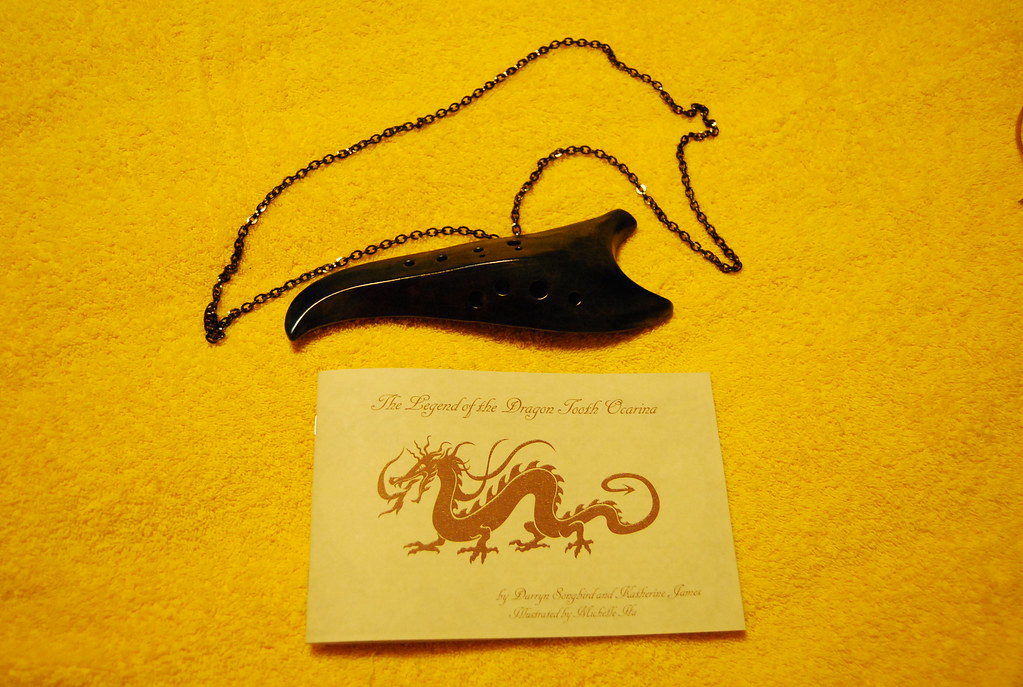
Investing in a complete bundle including an ocarina, a case, and a metronome can help greatly. This type of pack shows a 94% success rate for beginners. Twelve-hole models in C, such as the STL Ocarina “Dragon,” offer unbeatable value for money.
If you travel often, the durable plastic Night by Noble model is ideal. It also includes a fingering booklet to make playing easier. For video game fans, the Songbird Ocarina of Time is a legendary replica with an integrated teaching guide.
Finally, remember to prioritize enjoyment in your learning. Choose sheet music for melodies you like to maintain steady motivation. Gradually increase the difficulty of your pieces, moving from simple tabs to hybrid formats and then to classical sheet music.
Conclusion
In conclusion, learning this instrument can be an enriching adventure. By choosing a 12-hole model in C, you will make your progress easier. With regular commitment, you will be able to play a variety of pieces and explore different musical styles in just six months.
Combine the use of tabs and sheet music to speed up your learning. Remember to include a metronome, record your sessions, and take notes to track your progress. This will help you identify areas to improve.
Joining online communities, such as OCTalk, can also be beneficial. Share your experiences and receive constructive feedback. Finally, plan your week with a daily 15-minute routine and learn a new piece to maintain your motivation.
For more advice on reading tabs, feel free to read this detailed article.
Share your progress with the hashtag #BeginnerOcarina and keep exploring the recommended resources to enrich your musical journey.