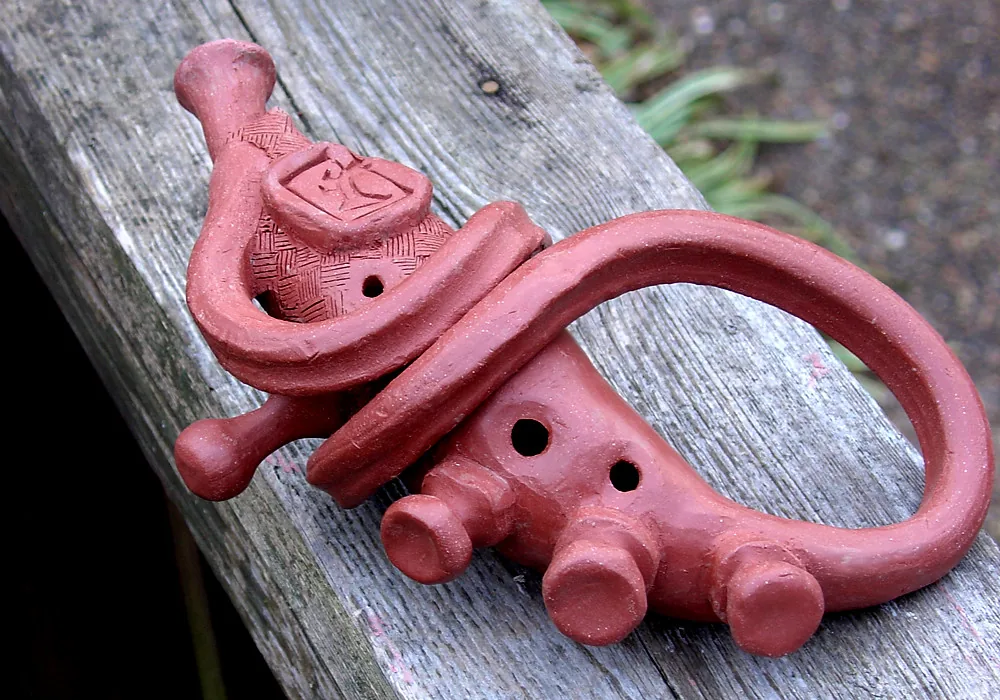

Welcome to the fascinating world of the ocarina, a wind instrument that charms players with its simplicity and enchanting sound. This guide is for beginners who want to explore this joyful instrument, made famous with the general public by the world of Zelda since 1998. Whether made of ceramic or plastic, the ocarina remains accessible to everyone and offers a wonderful first musical experience.
We will help you choose short, repetitive melodies so you can progress quickly. This path includes fingering exercises and practical tips to build confidence. The 12-hole alto in C is the recommended model for beginning your learning journey.
French-speaking communities share useful resources, such as tabs and online tutorials. By making the ocarina part of your daily routine, you will discover how regular practice turns your curiosity into musical enjoyment.
1. The ocarina: an accessible instrument and its benefits for beginners
A musical journey can begin with the ocarina, an instrument within everyone’s reach. Its fascinating history goes back to several ancient civilizations, especially in Mesoamerica, where similar forms were used in ritual contexts. Over the centuries, this instrument evolved, notably thanks to Giuseppe Donati in 1853, who modernized its design.
The ocarina’s sound qualities are remarkable. It produces soft, melodic sounds that appeal to music lovers. Its compact size and ergonomic shape make it an instrument that is easy to carry, ideal for beginners. It also requires only moderate breath pressure to create harmonious melodies.
What makes this instrument especially attractive is its accessibility. In fact, many beginners correct their intonation mistakes within a few weeks with the help of a tuner. Jean, aged 72, says this instrument suits all ages, from children to seniors.
Learning the ocarina has many benefits. It helps improve coordination between the hands, breath and listening, while developing concentration from the very first weeks. Whether you are young or not so young, this instrument can offer immediate musical pleasure.
2. Why start with simple pieces to progress quickly
Learning the ocarina ideally begins with simple, accessible pieces. This allows beginners to become familiar with the instrument without feeling overwhelmed. A limited repertoire helps master breath control and movements, two essential elements for making progress.
The importance of repetitive melodies with a limited note range
Easy pieces often feature repeated patterns and few accidentals. This stabilizes the rhythm and makes it easier to learn the notes without sudden interval leaps. By working at a moderate tempo, beginners can focus on note accuracy.
Mastering breath control and securing the rhythm
Working on short phrases is essential for learning diaphragmatic breathing and legato. These techniques are fundamental for breath control. To secure the rhythm, using a metronome set to 60 BPM is recommended.
Reducing mistakes with simple fingerings
An interesting point to note is that many wrong notes among beginners come from poor finger placement. By using simple fingerings, you reduce mistakes and strengthen accuracy. A short 10-minute daily routine, including long notes and rhythmic patterns, is ideal for progressing quickly.
It is also important to work on the smoothness and consistency of the airflow rather than power. This encourages greater fluidity in your playing. By incorporating gentle attacks and tiny breathing pauses, beginners can improve their technique.
In conclusion, adopting regular practice with simple melodies builds confidence and accuracy. For more advice on suitable pieces, see this article on the best easy songs to play on the ocarina.

3. Ocarina and music: the easiest pieces to start with
Exploring melodies on the ocarina opens up a world rich in emotion. For newcomers, it is essential to start with classics that make learning easier. Zelda themes, for example, are perfect choices.
Essential classics: Zelda themes and lullabies
The main Zelda theme, with simple notes such as C, D, E, G and A, is ideal for the first practice sessions. Zelda’s Lullaby, soft and melodic, helps you become familiar with the instrument.
Song of Storms is an excellent exercise for working on the alternation between low and high notes. Once these basics have been mastered, the Temple of Time can be approached on a 12-hole ocarina.
Adapted traditional French and popular pieces
Many traditional French songs are also suitable for beginners. These include “La Faute à Voltaire” in a chorus-focused version, “Santiano,” “La Maritza,” “Et l’on n’y peut rien” and “La Rivière.”
These songs allow you to check pitch phrase by phrase and work on breath control. They offer a great opportunity to practise with pleasure.
Suggested progression from beginner to intermediate
To progress effectively, here is a suggested path:
- Beginning: start with Zelda’s Lullaby to consolidate the notes.
- Intermediate: move on to Santiano to work on phrasing.
- Advanced: play La Maritza to master continuous playing and nuance.
A 12-hole ocarina covers most tunes without excessive strain. However, it is important to pay attention to the side holes.
To enrich your learning, use tabs and sheet music available online. Memorizing the fingerings for each piece will help you gain fluidity and confidence in your playing.
Do not hesitate to explore additional resources, such as video tutorials and online communities, to expand your repertoire of pieces.
4. Essential basic techniques for playing the ocarina
To master this instrument, it is essential to learn certain fundamental techniques. These basics will allow you to play with ease and progress quickly. By incorporating practical exercises, you will strengthen your confidence and control.
The ideal posture: the “tree” position
Adopting the “tree” position is useful for stabilizing your playing. Stand upright, with your back well aligned and your shoulders relaxed. This posture stabilizes your breath and makes changes in fingerings easier. Check your position in front of a mirror to correct any mistakes.
Breath control and introduction to vibrato
Diaphragmatic breathing is the key to good air control. Breathe in deeply through your nose, expanding your belly, then exhale slowly into the ocarina. One useful exercise is the candle exercise: blow gently to make a flame flicker without putting it out. This will help you master airflow.
For vibrato, use small pulses from the diaphragm. Start slowly, then build regularity. Remember that vibrato should come from the diaphragm, not the throat. Practise it in front of a mirror to assess yourself more effectively.
Mastering basic fingerings and progression exercises
It is important to know the numbering system for the ocarina’s holes, usually indicated in the methods and tabs for the model being used. This will help you master the basic fingerings. A good progression exercise consists of practising a short daily scale, moving up and down slowly. This warms up your breath and your fingers.
To improve your intonation, use a tuner such as OcarinaTuner. This will allow you to check the accuracy of each note during practice. Here is an example structure for a typical session:
| Duration | Activity |
|---|---|
| 5 minutes | Breath exercises |
| 10 minutes | Progressive tab practice |
| 5 minutes | Pitch check with the tuner |
By following these techniques, you will develop a solid foundation for your playing. Regular practice is essential to progress and fully enjoy this instrument. For more advice, see resources such as this step-by-step video tutorial for learning the ocarina.

5. Reading sheet music and tabs for ocarina
Learning to read sheet music and tabs is essential for progressing with this instrument. It will allow you to play your favourite melodies with confidence. Tabs, in particular, are an excellent starting point for beginners.
Understanding tabs: numbers and holes to cover
Tabs use numbers to indicate which holes to cover. Each number corresponds to a hole, depending on the convention used by the tab. For example, the sequence 4-2-1-2-4 can be used as an exercise to work on a simple pattern inspired by Zelda’s Lullaby. This intuitive method makes learning easier.
Simple basics of standard notation for beginners
In addition to tabs, it is useful to know a few basics of standard sheet music. Become familiar with the treble clef, note pitch and duration symbols such as whole notes, quarter notes and eighth notes. This will enrich your musical understanding.
Using digital tools: MuseScore and online resources
Digital tools such as MuseScore allow you to transpose sheet music for your ocarina model, such as the 12-hole alto in C. In addition, sites such as OcarinaTabs.org offer many free tabs, perfect for all levels.
To progress, start with simplified arrangements, such as Zelda themes or lullabies. Follow a step-by-step method to connect each tab number to a specific hole and a duration. This will ensure smooth and accurate reading.
Finally, do not hesitate to join online communities to exchange sheet music and share your progress. These resources can greatly enrich your learning experience.
6. Choosing the right instrument: models, materials and number of holes
Choosing the right instrument is crucial for a rewarding musical experience. Two main models stand out: the 12-hole transverse ocarina and the 4- or 6-hole pendant. Each has its advantages and disadvantages.
12-hole transverse ocarinas vs 4-6-hole pendants
The 12-hole transverse model, often an alto in C, covers a wide repertoire. It makes practising varied music easier. The pendant, by contrast, is lighter and more compact, making it ideal for children. This model is easy to handle and perfect for getting started.
The transverse model offers better control for technical progress. It allows you to play most tunes without strain. The pendant, on the other hand, is a relevant choice for small fingers and a gentle introduction.
Ceramic or plastic: advantages, disadvantages and care
Materials influence the sound quality of your instrument. Ceramic produces a warm, rich sound, but it is fragile. Its price often ranges from 30 to 60 euros. Plastic, by contrast, is light, durable and affordable, with models generally costing between 10 and 40 euros, although its tone is less deep.
It is important to choose a model that matches your needs. Also check the tuning of the instrument. Choose recognized brands such as STL, Songbird or Hind to ensure good quality.
Buying tips and recommended accessories
When buying an instrument, here are a few tips to follow:
- Check the ocarina’s tuning before buying.
- Choose a well-reviewed model to ensure good sound quality.
- An alto in C is the best compromise for beginners.
- Invest in a hard case to protect your instrument from impacts.
- Let the ocarina air-dry after each session to preserve sound quality.
By avoiding untuned decorative ocarinas, which are often of poor musical quality, you will maximize your learning experience. With these tips, you will be well equipped to make the right choice and fully enjoy this fascinating instrument.
7. Practice plan and resources for progressing effectively
To master this instrument, it is essential to have a well-structured practice plan. A 30-day training schedule will allow you to alternate between breath work, reading sheet music and practising short patterns. This will encourage smooth, effective progress.
30-day training schedule: breath, fingering and melodies
Here is a suggested weekly progression:
- Week 1: start with simple nursery rhymes to work on your breath.
- Week 2: tackle easy Zelda themes to strengthen your fingering.
- Week 3: explore an accessible French repertoire to diversify your practice.
- Week 4: consolidate what you have learned and record yourself to assess your progress.
Structuring a typical session and helpful tools (metronome, tuner)
A 30-minute practice session can be structured as follows:
| Duration | Activity |
|---|---|
| 5 minutes | Breathing exercises |
| 10 minutes | Scale practice and hole exercises |
| 10 minutes | Work on a simple tab |
| 5 minutes | Free playing |
Use a metronome set to 60 BPM to stabilize the rhythm and avoid speeding up. This will help you maintain optimal control of your playing.
Communities, tutorials and sheet music to support learning
Joining online communities, such as Discord servers dedicated to the ocarina, can enrich your experience. You can exchange sheet music, tabs and advice with other enthusiasts. Resources such as OcarinaTabs.org offer many references, while MuseScore allows you to transpose sheet music according to your model.
In addition, use OcarinaTuner to check the accuracy of each note. Recording your sessions will allow you to listen back and identify small intonation differences, an effective method for adjusting your breath and finger precision.
Finally, keep a practice log showing the pieces you worked on, the BPM reached and your observations about transitions between notes. Set clear, measurable goals to maintain your motivation throughout the learning process.
Here is a practical checklist for each session:
- Tuner ready.
- Metronome set.
- Sheet music printed.
- Hydration planned.
- A 20- to 30-minute slot reserved in your schedule.
8. Maintaining and protecting your ocarina to ensure its longevity
Taking care of your instrument is essential to guarantee its durability and the quality of its playing. By following a few practical tips, you can keep your ocarina in good condition. This includes cleaning, storage and protection against common mistakes.
Cleaning adapted to the material
Cleaning your instrument varies depending on whether it is made of ceramic or plastic. For a ceramic model, let it dry naturally in the open air, avoiding direct sunlight. For a plastic ocarina, you can gently clean the entrance of the holes with a cotton swab, without forcing it inside the windway. Remember to wipe the instrument after each practice session with a soft, slightly damp cloth to limit moisture buildup.
One practical tip is to let the instrument dry in a ventilated place to allow condensation to escape, which is especially useful for plastic models.
Storage, cases and precautions to take
For storage, a hard case is strongly recommended. Some protective case brands offer sturdy options to protect your instrument from impacts. Place the ocarina in a stable-temperature environment, ideally between 15 and 25 °C. Use moisture-absorbing packets to limit humidity fluctuations.
Avoid immersing the instrument in water and do not expose it to extreme temperatures. When storing it, place the ocarina securely in its case, without pressure on the mouthpiece or sensitive holes, to avoid deformation and impacts.
Avoiding common mistakes and protecting your instrument
To avoid common mistakes, never leave your instrument in direct sunlight. Also avoid overly powerful compressed air, which can send moisture or dust into the windway and affect the instrument’s response. Adopting a regular maintenance routine is essential to preserve sound quality over time.
Finally, if you notice microcracks on a ceramic ocarina, ask a repairer for advice or use a ceramic-appropriate product cautiously, so as not to clog the holes or alter the tuning.
By applying these tips, you will ensure the longevity of your instrument and enjoy a rewarding musical experience. For more information on fingerings and maintenance, see our guide to notes and fingering for the 6-hole ocarina.
9. Conclusion
To conclude, regular ocarina practice, even in sessions of ten to thirty minutes a day, can lead to significant progress. In two months, many beginner musicians can already play several iconic Zelda melodies. For effective learning, choose a 12-hole alto in C model, ideal for covering a wide range of melodies.
Use tabs, a tuner and a metronome consistently to structure your practice. Set yourself a simple goal, such as mastering three melodies in eight weeks, and share your progress in online communities. Remember: “it is never too late to learn!”
Avoid common mistakes such as excessive air pressure and neglected cleaning. Once you have consolidated your technique, you can consider moving on to a ceramic model to enrich your sound. Finally, download free sheet music and consult specialized resources such as this page dedicated to Zelda music on the ocarina to continue progressing in your musical learning.