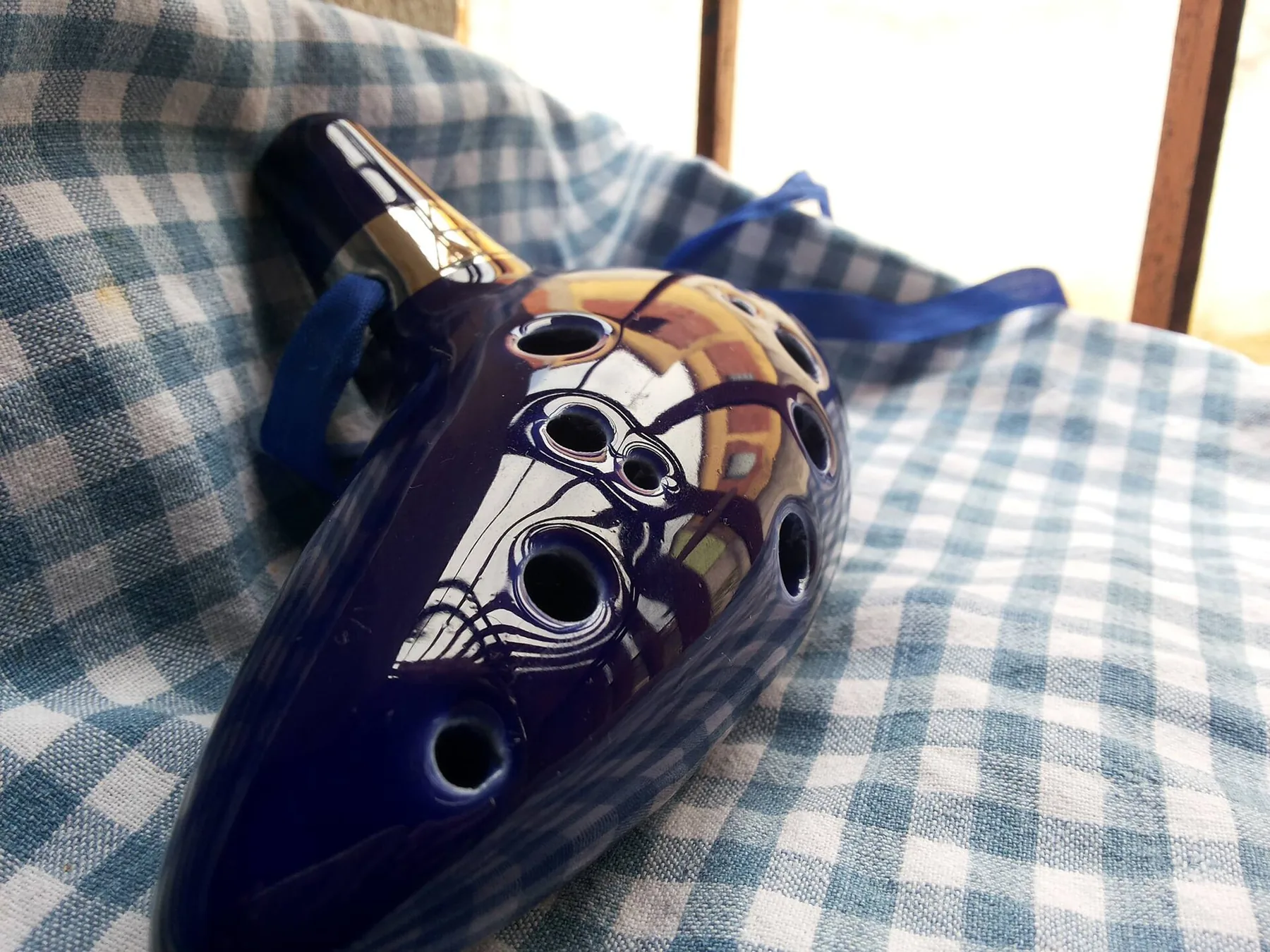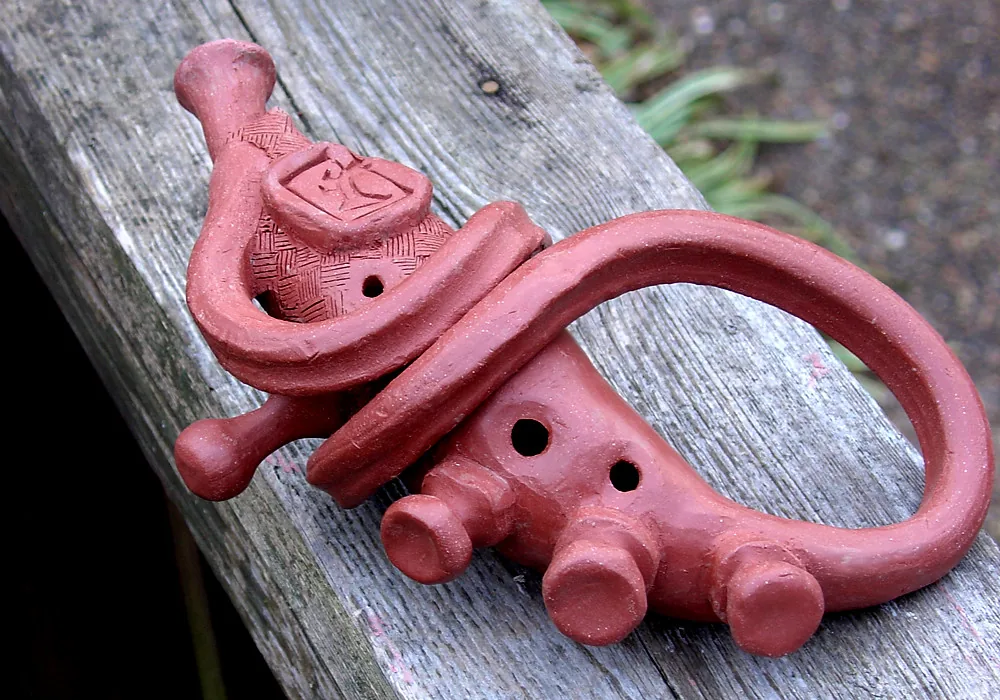

The ocarina is a globular wind instrument, very accessible and melodic. It is ideal for anyone who wants to explore the world of instruments without spending too much. Popularized by the Zelda saga, this instrument is attracting more and more enthusiasts.
It is crucial to choose your first model carefully in order to avoid the frustration caused by poor-quality instruments. In this guide, we will cover essential criteria such as the number of holes, range, tuning, and materials. Choosing a good ocarina helps you progress quickly and enjoy playing.
We will also introduce recognized brands such as STL Ocarina and Musique de Terre, which offer quality instruments. Stay with us to discover how to avoid the traps of low-priced models and invest wisely in an ocarina that plays in tune.
Introduction to the ocarina: a simple and melodic instrument for beginners
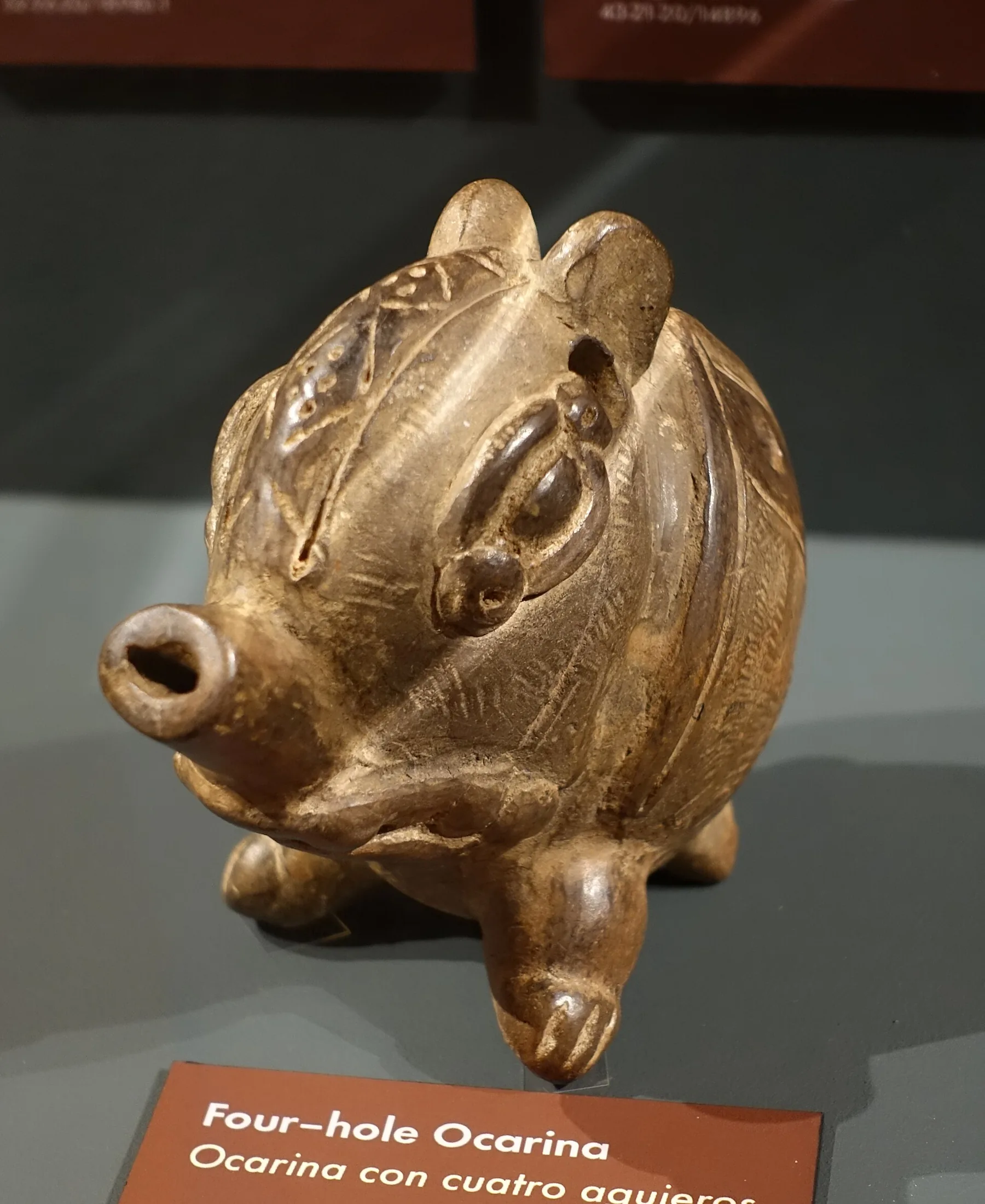
For more than 12,000 years, the ocarina has stood out as a fascinating wind music instrument. Used by the Maya for rituals, this instrument was reinvented by Giuseppe Donati in 1853. Its unique design makes it possible to produce sounds with controlled breath, requiring about 30% less air than a concert flute.
Here are a few reasons why this instrument is perfect for beginners:
- Rich history: the ocarina has crossed the ages, from ancient rituals to modern melodies.
- Ease of use: its intuitive handling allows for a gentle learning curve.
- Portability: compact and lightweight, it slips easily into a pocket.
- Variety of models: from 4-hole ocarinas for children to multi-chamber versions for advanced musicians.
- Rich sound: it can produce notes ranging from warm lows to crystal-clear highs.
- Varied materials: made of ceramic or plastic, each material influences sound quality.
Its popularity was revived by video games such as Zelda, attracting millions of players and music lovers. For music enthusiasts, this instrument is an ideal choice. Whether you are a child or an adult, the ocarina offers a rewarding musical experience.
It is essential to choose a quality model, especially to avoid disappointment with entry-level instruments. We invite you to explore this article further to discover the important criteria to consider before buying your first ocarina.
The essential criteria for choosing your first ocarina
Choosing a suitable ocarina is essential for ensuring a rewarding musical experience. For beginners, several criteria should be taken into account in order to make an informed choice.
Here are the key points to consider:
- Number of holes: a 12-hole model is recommended for an adult, as it allows you to play around 21 to 22 notes and therefore offers great musical variety.
- Range: the alto range in C is ideal for beginners, as it offers a good balance between low and high notes.
- Tuning: it is crucial to choose an ocarina tuned in C major, which makes learning scales easier and allows you to play many pieces.
- Materials: ceramic ocarinas offer better sound quality, while plastic ones are more durable and lightweight.
- Budget: a good-quality ocarina generally costs between 35 and 60 euros, a reasonable investment compared with other instruments.
It is also important to be wary of models sold on general marketplaces such as Amazon, Wish, or AliExpress. These ocarinas may look appealing, but they are often poorly tuned and frustrating for beginners.
Instead, choose specialist sellers such as STL Ocarina or Musique de Terre. These recognized makers offer quality instruments suited to the needs of budding musicians.
Finally, make sure your ocarina comes with an A440 tuning certificate and a fingering chart. These elements will help you progress more easily in your learning.
| Criterion | Importance | Recommendation |
|---|---|---|
| Number of holes | Allows you to play more notes | 12 holes |
| Range | Sound balance | Alto in C |
| Tuning | Makes learning easier | C major |
| Materials | Sound quality and durability | Ceramic or plastic |
| Budget | Affordability | 35-60 euros |
How to choose an ocarina for beginners: practical guide
For a novice musician, the ocarina is an instrument that offers a lovely introduction to music. Choosing a suitable model is essential for ensuring an enjoyable learning experience. Here is a practical guide to help you make the right choice.
For adult beginners, a 12-hole ocarina tuned in C major is the ideal choice. This versatile model allows you to play around 21 to 22 notes, offering a broad musical repertoire. For children, a 4- or 6-hole model is more appropriate. These instruments are lighter and suited to small hands, making learning easier from the age of 5.
Here are a few points to consider when making your selection:
- Fit for the player: choose according to age and musical experience.
- Advantages of the 12-hole model: its fingering is intuitive: when you lift a finger, you produce a higher note, which makes memorization easier.
- Musical capabilities: a 12-hole model allows you to play around 21 to 22 notes, compared with 17 to 18 for a 6-hole model.
- Tuning check: make sure the instrument is tuned to A440 to avoid developing bad habits.
- Ergonomics: test the weight and hole spacing before buying for optimal comfort.
- Buying from specialists: choose sellers who provide a fingering chart and a protective case.
Start with simple pieces, such as Zelda themes, to become familiar with fingering and breath control. By following this practical guide, you will be able to make an informed choice and begin your musical journey in the best conditions.
The number of holes: 4, 6, 12, or more?
The number of holes on an ocarina greatly influences the playing experience. The available models vary, each with its own specific features. Let’s look at the different options to better understand their advantages.
4-hole ocarinas: simplicity for younger players
4-hole ocarinas are perfect for children from age 5. With only 9 available notes, they allow a first musical discovery without frustration. These models are light and easy to handle, making them ideal for small hands.
6-hole ocarinas: an ergonomic and melodic compromise
6-hole ocarinas, developed according to the John Taylor system in the 1960s, offer an excellent compromise. They allow you to play between 17 and 18 notes. Their average weight of 150 g and compact size, from 6 to 8 cm, make them easy to carry, whether as a pendant or in a pocket.
12-hole ocarinas: the standard for beginners and musicians
12-hole models are often recommended for adult beginners. They offer around 22 notes over 1.5 octaves, with intuitive progressive fingering. However, it is important to note that 70% of children give up with a 12-hole model, compared with only 25% with a 6-hole model. This fact highlights the importance of matching the number of holes to the musician’s profile.
Multi-chamber ocarinas: for experienced musicians
Multi-chamber ocarinas, whether double, triple, or quadruple, extend the range to 2 octaves and beyond. They are intended for experienced musicians looking for a richer sound. Two types of fingering stand out: Asian fingering, which maximizes the number of notes, and Pacchioni fingering, which prioritizes consistency of tone.
| Type of ocarina | Number of holes | Available notes | Target audience |
|---|---|---|---|
| 4-hole ocarina | 4 | 9 | Children |
| 6-hole ocarina | 6 | 17-18 | Beginners |
| 12-hole ocarina | 12 | 22 | Adult beginners |
| Multi-chamber ocarinas | Variable | 2 octaves and more | Experienced musicians |
The different ranges and their impact on sound
Each ocarina range offers a unique palette of notes and musical expression. The range determines the span of sounds the instrument can produce, like a piano divided into several sections from low to high.
Soprano range: high notes and portability
Soprano ocarinas are known for their high notes. Their small size makes them very portable, which is an advantage for musicians on the move. However, the sound can sometimes be piercing, which may not suit all listeners.
Alto range: versatility recommended for beginners
The alto range is often recommended for beginners. It offers an ideal balance between warm low notes and controlled highs. This makes it a versatile choice, ideal for exploring different musical styles.
Bass range: warm sound and depth
Bass-range ocarinas produce a deep, gentle sound that can evoke certain Native American flutes. This type of sound is perfect for meditative music. However, these instruments are generally bulkier and more expensive.
It is important to note that, at STL Ocarina, the terms “Tenor” and “Alto” refer to the same type of ocarina tuned in C. This can be confusing, but it highlights the importance of researching carefully before making a choice.
Finally, singers are advised to align the range of their ocarina with their vocal range. This makes accompaniment easier and makes group playing more harmonious. By choosing a range suited to your musical tastes, you will stay motivated throughout your learning process.
Tuning: understanding the basic notes to get started well
When it comes to playing an ocarina, tuning is a fundamental aspect to master. Each instrument is tuned according to a reference note, which determines the range of notes available. The most common tunings include C, G, F, and B-flat.
C major tuning: the standard for easy learning
C major tuning is the recommended choice for beginners. It offers the complete scale: C, D, E, F, G, A, B, C. This makes learning and reading sheet music easier, making the experience more enjoyable.
Other common tunings (G, F, B-flat)
In addition to C major, other tunings are commonly used:
- G tuning: includes the notes G, A, B, C, D, E, F#, G.
- F tuning: produces lower sounds, suited to specific melodies.
- B-flat tuning: offers a different harmonic color with the notes B-flat, C, D, E-flat, F, G, A, B-flat.
A440 standard and the importance of pitch accuracy
The A440 standard is the international reference for pitch accuracy. It ensures that the ocarina plays in tune and can be played with other instruments tuned to the same basis. It is advisable to check your instrument’s tuning as soon as you receive it using an electronic tuner or a mobile app.
Beware of poorly tuned ocarinas! They can force you to compensate with incorrect breath, which distorts your musical ear and makes learning more difficult. Remember that range and tuning are two separate concepts. Range determines whether the ocarina sounds high or low, while tuning defines the set of notes available.
To benefit from the widest range of educational resources and tablatures available online, start with an ocarina in C major. By following these tips, you will be better prepared to make an informed choice about the tuning best suited to your musical needs.

Materials: choosing between ceramic and plastic
The choice of material for an ocarina is essential for optimizing the musical experience. Two main materials stand out: ceramic and plastic. Each has unique characteristics that influence the instrument’s sound, durability, and appearance.
Ceramic ocarinas: warm sound and attractive finish
Ceramic ocarinas are renowned for their warm sound and strong projection. According to tests conducted by STL Ocarina, these models show a sound volume 15 dB higher than plastic ones. In addition, glazed finishes improve resonance by 20%, offering beautiful colors that make each instrument unique.
However, it is important to note that these ocarinas are more fragile. The risk of breakage is higher than with plastic models. Therefore, careful handling and a protective case are recommended to preserve their integrity.
Plastic ocarinas: strength and lightness
Conversely, plastic ocarinas, such as the Night by Noble model, stand out for their robustness. Weighing around 150 g, they are light and shock-resistant, making them ideal for outdoor use. Their durability makes them perfect for traveling musicians or children.
Recent advances in high-end plastic manufacturing have also improved sound quality. These models offer elegant matte finishes and pitch accuracy comparable to entry-level ceramic ocarinas.
Hybrid materials and recent innovations
Innovations in the field of ocarinas have led to the creation of hybrid models, such as those by Oberon Ocarinas. These instruments combine the advantages of ceramic and plastic, optimizing sound properties while ensuring increased durability.
It is advisable to choose the material according to the intended use. Ceramic is ideal for playing at home and recording, while plastic is better suited to outdoor rehearsals and frequent travel.
Finally, it should be noted that ceramic ocarinas from brands such as Musique de Terre or STL Ocarina hold their resale value better than plastic models. In terms of price, quality plastic ocarinas are generally more affordable, ranging from 25 to 45 euros, while ceramic models start at around 50 euros.
| Type of ocarina | Material | Advantages | Disadvantages | Price |
|---|---|---|---|---|
| Ceramic ocarina | Ceramic | Warm sound, attractive appearance | Fragile, risk of breakage | From 50 euros |
| Plastic ocarina | Plastic | Robust, lightweight | Less rich sound | 25 to 45 euros |
| Hybrid ocarina | Ceramic and plastic | Durability, optimized sound | Variable price | Variable |
Quality and reliability: avoiding the traps of general marketplaces
Buying an ocarina may seem simple, but there are traps to avoid. General marketplaces such as Amazon, Wish, or AliExpress present significant risks. Nearly 60% of ocarinas sold on these platforms are said to be counterfeits or models sold without real quality control.
The risks of models without quality control
Low-priced models have many flaws. These include:
- Approximate drilling: poorly positioned holes affect pitch accuracy.
- Random tuning: an instrument that is out of tune distorts the musical ear.
- Poor-quality materials: they make learning difficult and frustrating.
These problems are often reported by buyers. A poorly tuned ocarina forces you to compensate with incorrect breath, which can lead to bad habits.
Signs of a well-tuned and durable ocarina
To avoid unpleasant surprises, here are a few signs of a quality instrument:
- A440 tuning certificate: a guarantee of pitch accuracy.
- Detailed fingering chart: useful for beginners.
- Careful finishes: an indicator of quality craftsmanship.
- Consistent pitch accuracy: essential across the full range of notes.
Recognized brands such as STL Ocarina, Musique de Terre, and Focalink/Stein generally receive better feedback than anonymous models from general platforms.
It is recommended to test each note with a tuner when you receive the instrument. Check the stability of the tone from low to high notes. Keep proof of purchase and take photos upon receipt. This will make any return easier if the tuning does not match the advertised specifications.
Ceramic ocarinas made by artisans, such as Olivier Gosselink, are often more reliable. Most quality ocarinas are sold with a protective case and a learning method. This reflects the maker’s commitment to the user experience.
By taking these precautions, you will be able to invest in a reliable ocarina that will accompany you for many years.
Where to buy an ocarina in France and online: recommended shops and websites
Buying a quality ocarina is essential for ensuring a rewarding musical experience. Whether in a shop or online, several options are available to you. Here is an overview of the best places to buy this fascinating instrument.
STL Ocarina: wide selection and international reputation
STL Ocarina has been a recognized global player in ocarina sales for more than 15 years. Its catalog includes more than 300 models, including popular models such as the Dragon ocarina, the Phoenix ocarina, and the Zelda ocarina. These models are available from €50 for an alto in C.
The ordering conditions are advantageous:
- Fast shipping: delivery in about two and a half weeks.
- Shipping costs: free for any order over $100.
- Customs fees: possible, with around 20% to budget for.
Musique de Terre: French handcrafted production
Musique de Terre, run by Olivier Gosselink, is a French workshop certified EPV (Entreprise du Patrimoine Vivant). With more than 30 years of experience, it offers handcrafted ocarinas with beautiful glazed finishes and a unique sound.
Among its flagship creations are:
- Traversier 11 trous C5
- Oisocarina C3 8 trous
- Triple C3 with Pacchioni fingering, prized by collectors, with prices ranging from €50 to €210.
Dinda Ocarina, Spencer, Ocarina World, and other reliable shops
Several other online shops also offer interesting options:
- Dinda Ocarina: offers handmade models on Etsy from €35.
- Spencer Ocarina: specializes in high-end models, with prices between $199 and $299.
- Ocarina World: reseller of the Stein/Focalink brand in France, with altos in C from €42.
- Songbird Ocarina: known for its original shapes.
Tips for ordering online (delivery times, fees, returns)
When buying online, it is important to consider certain aspects:
- Production times: Musique de Terre announces about 3 weeks.
- Customs fees: to be anticipated for purchases outside Europe.
- Return policy: choose websites with a clear policy in case of tuning problems.
In addition, consider choosing beginner packs that include an ocarina, a learning method, and a protective case. These packs are often available from most specialized retailers.
In short, it is advisable to buy your ocarina from recognized specialists rather than from general marketplaces. This guarantees a quality instrument and reliable after-sales service. For more information, see this article, which brings together several buying options.
Budget and essential accessories for getting started
Investing in a quality ocarina is essential for ensuring an enjoyable musical experience. For beginners, it is important to know the reasonable price range in order to make an informed choice.
Price range depending on materials and models
The price range for a first quality ocarina generally falls between €35 and €60. Here are a few popular options:
- Dinda: around €35.
- STL Ocarina: around €50-60 for an alto model in C.
- Night by Noble: a plastic model at €42, known for its robustness.
- Focalink PVC: available at €26, ideal for children.
- High-end models: such as Spencer ocarinas, whose prices range from $199 to $299.
It is strongly advised to avoid ocarinas under €20, as they are often poorly tuned and made with low-quality materials. This represents a poor investment for beginners.
Useful accessories: case, method, tuner, protection
In addition to the instrument, certain accessories are essential for a good start:
- Padded case: around €15, it protects the ocarina from impacts.
- Brush kit: around €9, for cleaning the holes.
- Electronic tuner: or mobile app to check pitch accuracy.
- Learning method: invest in a method or follow online tutorials to progress quickly.
Beginner packs, often offered by shops such as STL Ocarina, generally include a case and a learning method. This can make it easier to integrate the instrument into your musical routine.
It is also wise to set aside a slightly larger budget for a quality ceramic ocarina. This type of instrument offers better sound and greater longevity than a low-end plastic model.
Remember that the price of an ocarina remains very accessible compared with other musical instruments. An investment of €50 in a reliable model allows you to play for many years.
Finally, do not forget to compare prices between the different online shops. Take shipping costs and any customs taxes into account in your total budget. By following these tips, every beginner will be able to find the ocarina and accessories suited to their means, without compromising on sound quality or the instrument’s pitch accuracy.
| Model | Price (€) | Type | Notes |
|---|---|---|---|
| Dinda | 35 | Ceramic | Good value for money |
| STL Ocarina | 50-60 | Ceramic | Reliable and well tuned |
| Night by Noble | 42 | Plastic | Robust and lightweight |
| Focalink PVC | 26 | Plastic | Ideal for children |
| Spencer | 199-299 | High-end | Handcrafted finishes |
Learning to play: techniques and resources for beginners
To progress quickly with this fascinating instrument, it is essential to master certain basic techniques. Good posture, controlled breath, and proper fingering are the foundations of successful learning.
Posture, breath, and basic fingering
The recommended posture is to hold the ocarina at a 45° angle to obtain steady airflow. This helps ensure good air circulation and produce a clear sound. Here are a few tips:
- Relaxed posture: adopt a stable and comfortable position, standing or sitting, then check yourself in a mirror to correct your posture.
- Controlled breath: aim for a steady airflow. Practice exercises such as the “tu” technique or the candle exercise to stabilize your breath.
- Progressive fingering: learn to use the instrument’s holes. Each uncovered hole produces a higher note, which makes transitions between notes easier.
Beginners can master their first 10 melodies in just 3 weeks with a 6-hole model, while a 12-hole ocarina may require up to 8 weeks.
Video resources: YouTube channels and online tools
Many online resources can help you progress. Here are a few recommended YouTube channels:
- OCTalk
- Gina Luciani
- Tristan Laurens
- STL Ocarina: more than 300 videos free for all levels.
These channels offer varied tutorials, from the basics to advanced techniques. You can also join online communities such as the OCremix forum, which has 25,000 members, to exchange tips and share tablatures.
Using tablature creation and reading tools
To compose your own pieces, the Part’Ocarina tool is ideal. It allows you to create tablatures by clicking on a virtual piano and automatically generate the corresponding ocarina fingerings. Reading tablatures is a visual alternative to traditional sheet music, showing exactly which holes to cover to play each note.
Finally, feel free to use the Ocarina Tutor app, available on iOS and Android, for personalized tracking of your progress and exercises suited to your level.
Remember that regular practice is the key to success. Spend 15 to 20 minutes a day mastering the basics in just a few weeks. By recording yourself regularly, you will be able to identify wrong notes and correct fingering or breath mistakes.
For extra motivation, explore tablatures for Zelda themes and other video game music, which are especially well suited to beginners.
Care and storage of your ocarina
To preserve the sonic beauty of this instrument, regular care is essential. This ensures that your ocarina remains in good condition for many years.
Regular cleaning and mold prevention
After each playing session, it is important to empty out any accumulated moisture. Carefully wipe the mouthpiece and let the instrument air-dry. For deep cleaning, use a mild solution of white vinegar and water.
A specialized brush kit, available for around €9, lets you gently clean the holes without damaging them. Avoid prolonged immersion and harsh products that could damage the glazed finishes of ceramic models.
Storage and protection against impacts
Store your ocarina in a quality padded case, starting at €15. This protects the instrument from impacts. In a humid environment, always let the ocarina dry completely before putting it away in order to limit the risk of mold.
Avoid leaving the ocarina in a car exposed to sun or frost. Sudden temperature changes can cause irreversible cracks.
Simple repairs and tuning checks
In case of hairline cracks on a ceramic ocarina, use epoxy glue rather than cyanoacrylate for a stronger and more durable repair.
It is recommended to carry out a monthly tuning check with an app such as Tuner T1. This allows you to verify that the ocarina remains in tune across its full range and to detect any possible drift.
Plastic ocarinas require less maintenance, but they should also be cleaned regularly to prevent bacteria from building up.
For major repairs, entrust your instrument to a professional or to the maker, especially for valuable models such as those from Musique de Terre or Spencer.
By following these good care practices, you will ensure the longevity of your ocarina and preserve its sound qualities through many years of musical practice.
Conclusion
With the ocarina, music becomes an experience within everyone’s reach. For adult beginners, a transverse 12-hole model in C major is the best choice. This type of instrument offers a fine combination of ease of use and rich sound.
It is important to consider alternatives, such as 4-, 6-, or 8-hole ocarinas, suited to children and first musical discoveries. For more experienced musicians, multi-chamber models allow exploration of additional octaves.
Choose recognized brands such as STL Ocarina or Musique de Terre, which offer superior quality. By following these tips, you will be able to choose an ocarina that enriches your musical experience.
Finally, do not forget to commit to regular practice. Spending 15 to 20 minutes a day will allow you to progress quickly and fully enjoy this fascinating instrument.