
The terracotta ocarina is a fascinating musical instrument. It belongs to the family of Helmholtz resonators and produces a soft, round, enveloping sound. This character appeals to beginners and experienced musicians alike.
In this article, we explore the sound specific to this instrument. We also detail the main stages of its handmade creation from clay, then the best practices for its everyday care.
We will also cover the acoustic principles that influence how it works, especially the resonator’s natural frequency and its coupling with the air jet. This guide will therefore help you better understand this ancient musical instrument, simple in appearance, yet very rich in sound.
Introduction to the terracotta ocarina
A captivating wind instrument, the ocarina is fascinating for its simplicity and the softness of its timbre. It is classified among Helmholtz resonators. It works on a principle similar to that of a bottle you blow into to produce a sound. This particular design makes it possible to obtain a gentle and easily recognizable melody.
What makes this instrument especially appealing is how easy it is to learn. Music teachers sometimes use it as an educational tool in middle schools. Its terracotta construction gives it a warm sound. This material offers a natural resonance that synthetic materials struggle to reproduce.
The origins of this instrument go back to ancient civilizations. However, it was in Italy, in the nineteenth century, that Giuseppe Donati popularized its modern form. The evolution of the ocarina then gave rise to a wide variety of shapes, sizes and numbers of holes. These adaptations make it possible to approach different musical repertoires.
Today, the ocarina is enjoying renewed interest in France. Handmade workshops, such as those led by Olivier Depoix of the Son Ar Mein association, contribute to this momentum. This article presents the acoustic and cultural richness of the ocarina, an instrument that is both ancient and still very much alive today.
| Features | Details |
|---|---|
| Instrument type | Wind instrument |
| Main material | Terracotta |
| Popularization | Giuseppe Donati, nineteenth century |
| Educational use | Introductory tool for music teachers |
| Variants | Different shapes and sizes |
Understanding the sound of the terracotta ocarina
The magic of this instrument lies in its particular acoustic behavior. The ocarina acts as a Helmholtz resonator: the air contained in its cavity behaves like a spring, while the mass of air located in the openings oscillates. This interaction produces a soft, stable and enveloping sound.
Like a flute, the ocarina’s mouthpiece guides air toward an edge. This mechanism creates instability in the air jet, which is essential for sustaining the sound. Unlike other wind instruments, the position of the holes does not directly determine pitch through the length of a tube: it is mainly the total open surface area that changes the frequency produced. This logic makes the instrument accessible to musicians of various levels.
The acoustic principle: the Helmholtz resonator
- The fundamental acoustic principle is based on the Helmholtz resonator, in which the air in the cavity oscillates.
- The overall shape of the ocarina has little influence on pitch in the ideal model, as long as the neck remains short and the cavity retains sufficient volume.
- The soft sound of the terracotta ocarina comes partly from the predominance of the Helmholtz mode, which limits the appearance of overly pronounced harmonics.
Effect of shape, holes and material on the sound
The material plays an important role in sound quality. Terracotta offers a warm resonance and a richness of timbre appreciated by musicians. In addition, the number of open holes changes the instrument’s natural frequency. This makes it possible to play different notes and enriches the musical experience.
Understanding these acoustic principles helps you choose the right instrument. It also allows you to appreciate the subtleties of its construction, which influence the final sound. To learn more about the different types of ocarinas, see this article on ocarina shapes and materials.
Physics and mechanics of the ocarina’s sound
The interaction between the physics and mechanics of sound is essential for understanding this instrument. The natural frequency of the ocarina can be approximated by the following formula: ω = c √(S/(V·h)). Here, c represents the speed of sound in air, S the surface area of the openings, V the volume of the cavity, and h the effective height of the acoustic openings.
Natural frequency and tuning of the instrument
The instrument’s tuning depends on the ratio between the total surface area of the open holes and the product of the internal volume and the effective height of the openings. This relationship is decisive for obtaining an accurate and harmonious sound.
Coupling with the air jet and pitch variations
Coupling with the air jet is a fundamental phenomenon. When you blow harder into the mouthpiece, the speed of the jet increases. This can make the note produced rise slightly. For example, an ocarina with a volume of 3.1e-4 m³ can see its frequency increase by about a semitone when the air speed rises from 10 to 20 meters per second.
Damping and sound quality
The damping of the Helmholtz mode directly influences the instrument’s sound quality. The radiated power is generally moderate, on the order of 10 milliwatts, making it an instrument suited to home practice or chamber music. Losses through heat transfer to the terracotta walls contribute to this damping and play a part in the ocarina’s characteristic sound.
An ocarina that is too heavily damped can become difficult to make sound. This highlights the importance of construction quality and material choice in obtaining a functional instrument. The notion of acoustic “stiffness” here refers to the slope of the impedance function near resonance.
The specific features of the terracotta ocarina: material and acoustics
The clay used in the design of this instrument plays a crucial role in its acoustic quality. Its natural porosity influences damping and gives the ocarina a warm resonance. This unique character makes it a preferred choice for musicians seeking natural sound depth.
Influence of clay and terracotta on resonance
Once shaped and fired, terracotta has properties that can enrich the ocarina’s timbre. The inner surface of the cavity is never perfectly smooth, which can slightly modify air circulation. These details contribute to the instrument’s sonic signature.
The effect of firing the clay is also important. Terracotta fired at high temperature becomes harder and more resonant, while gentler firing preserves a certain porosity. This variation in the firing process directly influences the final sound quality.
Comparison with wooden and plastic ocarinas
Compared with wooden ocarinas, terracotta models offer better dimensional stability in response to humidity changes. Wood can provide a soft, muted sound, but terracotta remains a reference material for many artisans. Plastic ocarinas, which are more impact-resistant and less expensive, do not always reproduce the acoustic richness of terracotta.
Finally, clay allows great freedom of shaping. Artisans can create varied forms that subtly influence the resonance and ergonomics of the instrument. The choice of material therefore remains essential for obtaining an authentic sound.
| Features | Terracotta ocarina | Wooden ocarina | Plastic ocarina |
|---|---|---|---|
| Resonance | Warm and rich | Soft and muted | Less rich |
| Dimensional stability | Excellent | Varies with humidity | Good |
| Durability | Fragile under impact | Moderate | High |
| Cost | High | Variable | Low |
| Freedom of shaping | High | Moderate | Limited |
The different shapes and sizes of terracotta ocarinas
The world of terracotta ocarinas is rich in diversity, both in shapes and dimensions. These instruments come in a wide variety of styles, from the classic ovoid form to more decorative creations. Each shape subtly influences the sound and gives the instrument a particular identity.
Variations in diameter, mouthpiece shape and number of holes
The diameter of the main cavity largely determines the volume of air contained in the instrument. It therefore has a direct impact on the fundamental frequency and on the ocarina’s range. A well-proportioned mouthpiece shape, with a clean edge, makes sound production easier and improves the musician’s comfort.
The number of holes generally varies from 4 to 12. Each configuration offers a different note range, with fingerings that are more or less complex depending on the chosen model.
Impact of size on range and playability
The size of the ocarina directly influences its range. Small models produce high-pitched sounds, while large ones go further into the lower register. This makes it possible to create true families of instruments and broaden musical possibilities.
Variations in the diameter of the playing holes are also decisive for the instrument’s tuning. Each hole must be drilled precisely to obtain an accurate note. Playability also depends on the size of the ocarina: an instrument that is too bulky can be difficult for small hands to hold, while a model that is too small may lack sound power.
Finally, “pendant” ocarinas are small and can be worn around the neck. They offer a portable solution for musicians who want to keep their instrument within reach.
Handmaking a terracotta ocarina: step-by-step guide
Creating your own musical instrument is an exciting adventure. Making a clay ocarina requires precise gestures to obtain a quality sound. Here are the main steps to follow to make this unique instrument.
Collecting and preparing the clay
The first step consists of collecting the clay. This material may come from natural deposits, such as the foreshore of Perharidy beach in Roscoff. Once collected, the clay must be cleaned, then kneaded with a little water to obtain an even texture.
Shaping the initial form and creating the air pocket
To begin, take a ball of clay 6 to 8 cm in diameter. With your thumb, create a hollow in the center of the material. Then gently stretch the clay to form a bowl, sealing cracks with a little water. This step is crucial for creating a large enough air pocket.
Joining the walls and making the slipper shape
Once the initial form has been created, bring the edges of the bowl together to form a slipper shape. Carefully join the walls together while preserving the largest possible air cavity. This operation requires patience and precision.
Making the mouthpiece and forming the whistle
For the mouthpiece, flatten the clay with a ruler to obtain an even surface and a clearly defined angle. This area will form the upper part where the whistle will be pierced. Forming the whistle is delicate: using a small stick, pierce an opening of about 5 mm on the top of the mouthpiece, then create the edge toward which the air will be directed.
Drying and first sound tests
After forming the whistle, let the clay dry for 5 to 10 minutes. This allows the material to reach a consistency better suited to precision work. Then blow into the instrument to check that it produces a sound. If it does not, check the edge, the opening and the cutting angle.
Drilling the holes and final adjustment
To finish your ocarina, drill two holes on each side with a toothpick. Each hole must be made precisely to obtain different notes. The final adjustment consists of gradually adjusting their diameter in order to tune each note, which requires an attentive ear and a good understanding of acoustic principles.
Advanced techniques for tuning and optimizing the sound
The acoustic adjustments of a wind instrument can transform the musical experience. To tune an ocarina, it is useful to understand the principles that govern how it works.
Adjusting the holes and correcting pitch
Precise tuning of a terracotta instrument requires taking into account the length correction of the playing holes. This correction depends in particular on the cross-section of the hole and can be estimated, in some models, at about 0.8 times the diameter of the hole.
- Adjusting the holes consists of gradually changing their diameter to obtain the desired note pitch.
- Use an electronic tuner to check the accuracy of each note of the instrument.
Improving the edge and airflow
Another advanced technique consists of improving the edge in order to optimize the airflow through the mouthpiece. It is important that the cutting angle be clean and that the window be correctly sized.
- The effective height of the mouthpiece window includes a length correction that is added to the geometric height.
- When the ratio between the surface area of the window and that of the neck is very small, the instrument can behave as if the true acoustic neck were the window itself.
- Pitch correction can also be achieved by slightly modifying the internal volume of the ocarina.
Experienced musicians know that tuning a terracotta instrument is an iterative process. Each change to a hole affects all the notes, making tuning both artistic and technical.
A well-tuned instrument offers consistent accuracy across its entire range. The musician can then play with greater confidence and expressiveness in different registers.
Caring for the terracotta ocarina
To preserve the sound quality of your instrument, regular care is essential. Delicacy is required, because terracotta remains fragile. Here are a few tips for keeping your ocarina in good condition.
Cleaning the inside and outside without damaging the tuning
The inside of the instrument must be cleaned carefully. It is important never to immerse the ocarina in water, as this could alter the tuning by changing the properties of the terracotta.
For effective cleaning, use a pipe cleaner or a cotton swab. Insert it gently into each hole to remove impurities. This gesture preserves the walls without damaging them. For the outside, a slightly damp cloth is enough. Make sure not to let water enter the holes or the mouthpiece.
Precautions related to contact with water and humidity
Terracotta is porous and can absorb moisture. This can change the internal volume or the surface condition of the walls, leading to loss of tuning. Therefore avoid any prolonged contact with water. A plastic ocarina can sometimes be rinsed, but this practice is strongly discouraged for a ceramic or terracotta model.
After each use, let the instrument air-dry. This allows moisture from the breath to evaporate. Also avoid exposing it to a direct heat source or prolonged sunlight, as this could weaken the material and cause cracks.
Storage and protection to extend its lifespan
Your ocarina should be stored in a dry place, protected from temperature and humidity variations. Use a padded case to protect it from impact. A well-maintained instrument can last for years, even decades.
Regular, attentive care ensures that the ocarina retains its sound quality and tuning over time. For additional advice, you can read this article on cleaning and caring for the ocarina.
| Aspect | Tips |
|---|---|
| Interior cleaning | Use a pipe cleaner or cotton swab |
| Exterior cleaning | Use a slightly damp cloth |
| Contact with water | Avoid immersion |
| Storage | Choose a dry place and a padded case |
| Lifespan | Can extend over decades with proper care |
Educational use and musical practice of the terracotta ocarina
The ocarina stands out for how easy it is to learn. This quality makes it an interesting choice for musical initiation. Teachers appreciate its gentle sound, which suits group sessions well.
Middle school music teachers sometimes recommend this instrument. It is relatively easy to produce a pleasant sound, even for a beginner. Students can therefore focus on their progress without being discouraged by early technical difficulties.
The ocarina as a learning instrument
Ocarinas are well suited to teaching the basics of music. Their range, often limited to about one octave, may seem restricted, but it makes the first musical concepts easier to learn. Ocarina fingerings have points in common with recorder fingerings, which can make the transition to other wind instruments easier.
Benefits for beginner and experienced musicians
- For beginners, the terracotta ocarina offers immediate reward: from the first breaths, it can produce a pleasant sound.
- Experienced musicians find in the ocarina an expressive instrument, interesting for ensemble playing.
- Making ocarinas with students, as part of educational projects, is an enriching learning experience.
- The basic technique required to produce a correct sound makes it possible to focus quickly on musical interpretation.
- This type of instrument develops breath control, a useful skill for other wind instruments.
- Regular ocarina practice encourages the development of musical ear and sense of rhythm.
| Aspect | Details |
|---|---|
| Ease of learning | Sound production quickly accessible |
| Classroom use | Appreciated by teachers for its softness |
| Range | About one octave |
| Transition to other instruments | Fingerings close to those of the recorder |
| Musical development | Improvement of ear and rhythm |
Tips for choosing your terracotta ocarina
Choosing a terracotta ocarina requires taking several essential criteria into account. Every detail influences the instrument’s ergonomics, tuning and sound.
Criteria to consider: shape, size, number of holes
The shape of the ocarina plays an important role. It determines holding comfort and can influence tone color. Ovoid models are popular, but other shapes can offer different playing sensations.
The size of the ocarina is also decisive. Small models produce high-pitched sounds, while large ones offer lower notes. The choice will depend on the musical repertoire you want to explore.
The number of holes is an essential criterion. A 4-hole ocarina is well suited to beginners because it allows quick learning. A 10- or 12-hole model offers a wider range of notes and is aimed more at musicians who want to expand their repertoire.
Finally, the shape of the mouthpiece must be comfortable for the musician’s mouth. A well-defined angle makes sound production easier and reduces fatigue during long playing sessions.
Differences between handmade and industrial production
The difference between handmade and industrial production is significant. A handmade terracotta ocarina often has a unique sonic personality. Each piece is the result of meticulous artisan work, which gives it a distinctive character.
By contrast, industrial ocarinas, often made of plastic or molded ceramic, offer consistent tuning and a more accessible price. However, they sometimes lack the sonic richness sought in a handmade instrument.
The way the ocarina is tuned is an indicator of quality. A good instrument should produce accurate notes across its entire range, without perceptible deviation. It is therefore advisable to try several ocarinas before making your choice. Each instrument has its own sonic personality, and preferences vary from one musician to another.
The type of terracotta used also influences the instrument’s durability and sound. Fine, well-fired clay will generally produce a more resistant and clearer ocarina.
Taking the time to choose the right ocarina is an investment in musical practice. This instrument can accompany years of playing and enjoyment.
| Criteria | Importance |
|---|---|
| Shape | Influences ergonomics and sound |
| Size | Determines the range |
| Number of holes | Influences range and playing complexity |
| Production | Handmade for a unique sonic personality |
| Type of terracotta | Influences durability and sound |
Innovations and current trends around the terracotta ocarina
Recent developments around the terracotta ocarina reveal an interesting world of innovation. This type of instrument continues to evolve thanks to new geometric forms and research that pushes the boundaries of traditional acoustics.
Contemporary instrument makers are experimenting with asymmetrical shapes and multiple cavities. These innovations enrich the ocarina’s sound spectrum and can extend its range beyond the usual octave.
New forms and acoustic capabilities
The new acoustic capabilities of modern ocarinas include, in particular, double-chamber systems. They make it possible to play over two full octaves and open the way to more ambitious repertoires.
The shape of contemporary ocarinas is sometimes inspired by futuristic lines or revisited traditional motifs. Each instrument thus becomes a unique piece, at the crossroads of craft and music.
Revival and making workshops in France
The rediscovery of the ocarina in France also happens through making workshops. For example, on January 13, Olivier Depoix of the Son Ar Mein association led a workshop devoted to creating ocarinas from sea clay. The clay used had been collected on the foreshore of Perharidy beach in Roscoff.
These workshops introduce the public to the creation of instruments from local clay. They are part of an ecological and heritage-based approach, highlighting regional natural resources.
The time devoted to handmaking an ocarina is a guarantee of quality. Each step is carried out with care to ensure optimal sound and precise tuning.
Few musical instruments are experiencing such a revival, driven by a community of enthusiasts. They share their knowledge through articles, tutorials and online forums.
| Aspect | Details |
|---|---|
| Acoustic innovations | New geometric forms, double-chamber systems |
| Making workshops | Introduction to creating instruments from clay |
| Materials used | Locally collected clay |
| Ecological commitment | Promotion of regional natural resources |
| Community | Sharing knowledge through articles and forums |
Placing the ocarina in the contemporary musical world
In today’s musical landscape, the ocarina finds its place in a variety of genres. It appears in traditional music, folk music and certain contemporary compositions, where its distinctive timbre attracts more and more performers.
Contemporary musicians use its airy sound to create original atmospheres. In film or video game soundtracks, the ocarina can add a poetic and immediately identifiable touch.
Chamber music and ocarina ensembles are also developing. These groups make it possible to explore polyphonic repertoires, where each instrument covers a specific range. This enriches the musical experience for listeners.
Collaborations between French musicians and terracotta ocarina makers give rise to innovative projects. These initiatives highlight local craft heritage while opening up new musical perspectives.
French stages, from traditional music festivals to experimental music concerts, are also welcoming more artists who play this instrument. This presence contributes to its visibility and integration into the contemporary musical landscape.
The ocarina is also used in music education. As an introductory wind instrument, it allows students to discover the joys of collective instrumental practice. This makes it a valuable tool for teachers.
The versatility of this instrument allows musicians to integrate it into varied ensembles. From an intimate duo to a larger group, it adapts to many musical contexts.
Whenever an ocarina is played on stage, it brings a touch of authenticity and poetry. It captivates the audience and sparks curiosity about an instrument that is still too little known.
Contemporary composers also recognize its expressive qualities. More and more pieces are being written specifically for the ocarina, emphasizing its ability to evoke delicate soundscapes.
Finally, the ocarina’s place in the contemporary musical world also passes through social media. Video-sharing platforms allow musicians around the world to share their performances and creations, contributing to its growing popularity.
| Aspect | Details |
|---|---|
| Musical genres | Traditional, folk, contemporary and film music |
| Creative use | Original sound atmospheres and distinctive musical textures |
| Ensembles | Chamber music, polyphonic repertoires |
| Collaborations | Innovative projects with local instrument makers |
| French stages | Festivals and experimental music concerts |
| Music education | Introductory instrument for students |
| Versatility | Integration into various musical ensembles |
| Authenticity | Brings poetry and curiosity to the audience |
| Contemporary compositions | Writing pieces specifically for the instrument |
| Social media | Sharing performances and creations |
Environmental impact and durability of terracotta ocarinas
The making of musical instruments, such as the ocarina, raises important questions about environmental impact. This instrument, made mainly from clay, has several ecological advantages. It is useful to understand how the choice of materials influences its overall footprint.
Natural materials and low ecological footprint
Terracotta ocarinas are made from natural materials, mainly clay. This resource is abundant and can be extracted locally when managed responsibly. The earth used often comes from deposits close to workshops, which reduces transport and the carbon impact associated with production.
In addition, these models do not generate microplastics at the end of their life, unlike plastic instruments. Choosing a terracotta ocarina can therefore be part of a more environmentally respectful approach.
Comparison with plastic ocarinas
By comparison, plastic ocarinas are often criticized for their environmental impact. Their manufacture relies on petrochemical materials and requires industrial processes. At the end of their life, these instruments decompose with difficulty and can contribute to ecosystem pollution.
Wooden ocarinas represent another natural alternative, but terracotta offers good stability against wood-boring insects and humidity variations. A well-maintained terracotta ocarina can last for decades, which partly offsets its fragility under impact.
Every time a musician chooses a terracotta ocarina rather than a plastic model, they help reduce demand for petrochemical products. This choice also supports local craftsmanship and promotes a more sustainable economy.
In conclusion, this article emphasizes the importance of choosing a musical instrument consistent with a responsible approach to consumption. The trend toward acoustic and natural instruments aligns with contemporary ecological concerns.
| Aspect | Terracotta ocarina | Plastic ocarina |
|---|---|---|
| Materials | Natural | Synthetic, petrochemical |
| Ecological footprint | Low to moderate depending on firing and transport | Higher |
| End of life | Does not generate microplastics | Difficult to decompose |
| Durability | Long lifespan with proper care | Resistant, but can degrade |
| Environmental impact | More favorable if production is local and responsible | Less favorable |
Practical tips for getting started with your terracotta ocarina
To get started properly with the ocarina, it is essential to understand a few fundamental techniques. Breath control is crucial: you must learn to dose air pressure in order to produce a stable sound and control the pitch of the notes.
Breathing techniques and posture
The musician’s posture plays an essential role. Keep your back straight, your shoulders relaxed, and hold the instrument firmly but without tension. This position encourages free breathing and fluid playing.
The mouth should rest gently on the ocarina’s mouthpiece, without biting or pinching. This allows air to circulate correctly through the mouthpiece and helps produce a clear sound.
Simple exercises for mastering the notes
The first exercises consist of blowing gently into the wind instrument while covering all the holes with your fingers. This produces the lowest note and helps you become familiar with the ocarina’s response.
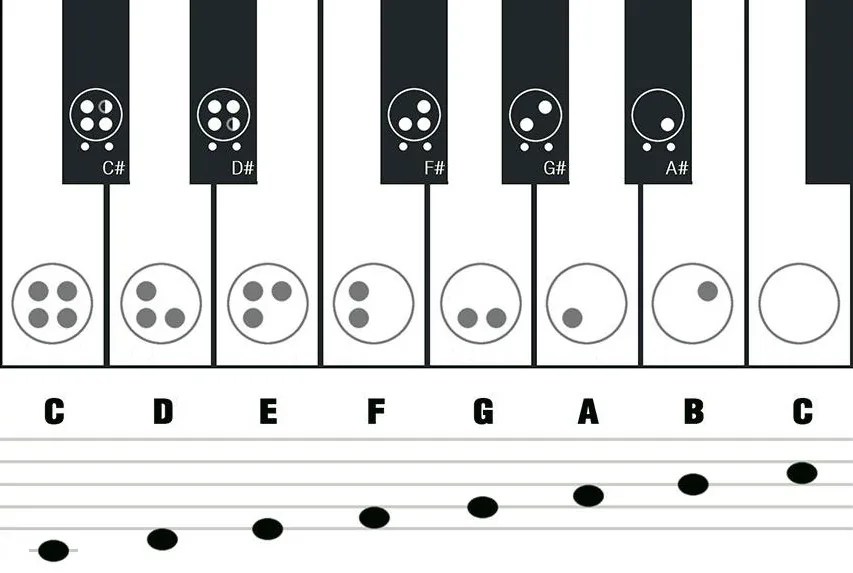
Fingerings are introduced gradually. Learn to uncover the holes one by one to move up through the range. Each fingering corresponds to a specific note of the scale.
It is advisable to devote a little time each day to practicing the ocarina. This helps develop muscle memory and finger precision.
Abdominal breathing exercises help control airflow and maintain steady pressure. This is an important condition for playing in tune on a wind instrument.
Music played on a terracotta ocarina becomes more expressive when the musician masters breath nuances, from pianissimo to fortissimo, including vibrato.
Learning scales and simple melodies develops the musical ear. It also encourages coordination between breath, fingers and reading notes on a score.
With patience and regular practice, even a beginner can quickly play pleasant pieces on a terracotta ocarina. This progress brings great satisfaction and lasting musical enjoyment.
| Aspect | Details |
|---|---|
| Breath control | Dose air pressure to obtain a stable sound |
| Posture | Keep the back straight and shoulders relaxed |
| Mouth position | Place the mouth on the mouthpiece without biting or pinching |
| Beginner exercises | Blow while covering all the holes |
| Learning fingerings | Uncover the holes one by one |
Integrating the terracotta ocarina into your musical life
Integrating an instrument like the ocarina into your everyday musical life can enrich your sound experience. Whether solo, in a duo or within an ensemble, this instrument deserves a regular place in your practice.
Regular care to preserve sound quality
Instrument care is essential for maintaining sound quality. Gentle cleaning after each use and proper storage ensure its longevity. Since the mouth is in direct contact with the mouthpiece, it is advisable to clean this area gently with a dry cloth. This limits residue buildup.
Tips for extending the life of the instrument
To extend the lifespan of your ocarina, avoid sudden temperature changes, which could crack the terracotta. Always transport the instrument in a protective case.
The way you handle the ocarina day to day affects its durability. Hold it by the strongest areas and avoid placing it on hard surfaces without protection. The time devoted to its care is a useful investment, because a well-maintained ocarina retains its tuning and sound for years.
Each type of ocarina may require specific care depending on the nature of the clay used and the firing technique. Ask the maker for suitable advice.
Music is an integral part of life. Thanks to its simplicity and portability, the ocarina can accompany you on your travels and offer moments of improvised playing. Few instruments are as easy to carry, which encourages regular practice, essential for making progress.
This article is intended to accompany you in your discovery of the ocarina, from making to care and musical practice, for an enriching and lasting experience.
Conclusion
This clay instrument goes beyond the simple role of musical instrument. It is also an art object, a bearer of ancient traditions and accessible to everyone. Throughout this article, we have explored its richness, from acoustic principles to tuning techniques.
Handmade production, which uses natural clay, perpetuates valuable know-how. Even though care requires delicacy, it remains essential for preserving sound quality and extending the instrument’s lifespan.
Practicing the ocarina offers educational benefits and encourages musical learning at every age. By choosing a terracotta ocarina, you choose authenticity, simplicity and a more respectful approach to natural materials.
The community of ocarina enthusiasts continues to grow, supported by local initiatives. Few instruments offer such a combination of simplicity, sonic beauty and cultural richness.
We hope this article has sparked your curiosity and will encourage you to discover the joys of music with this instrument, for a fulfilling and creative musical life.