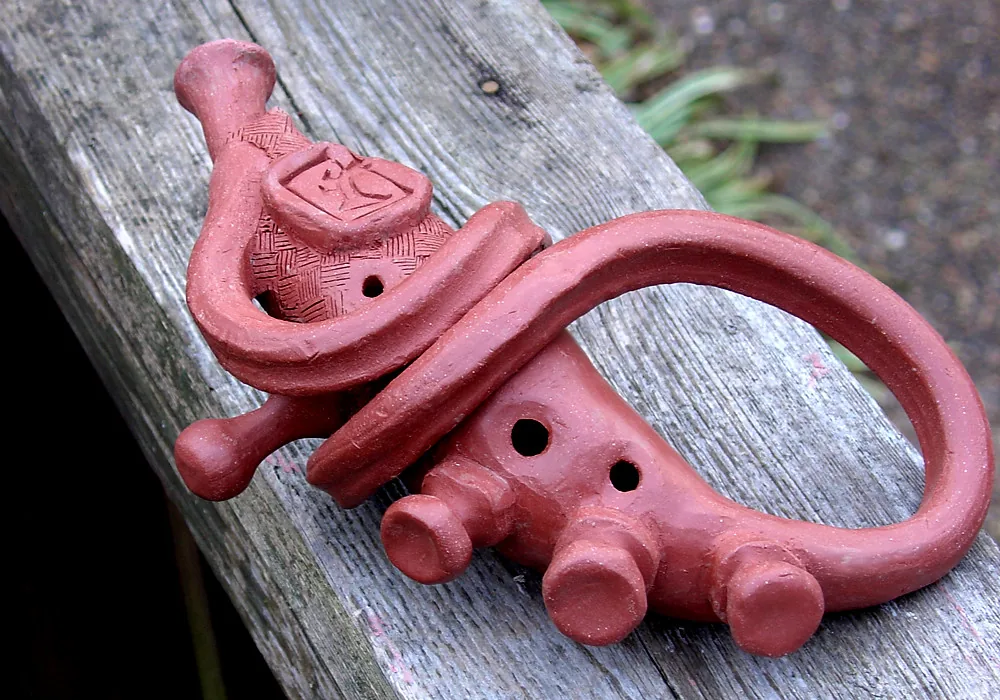
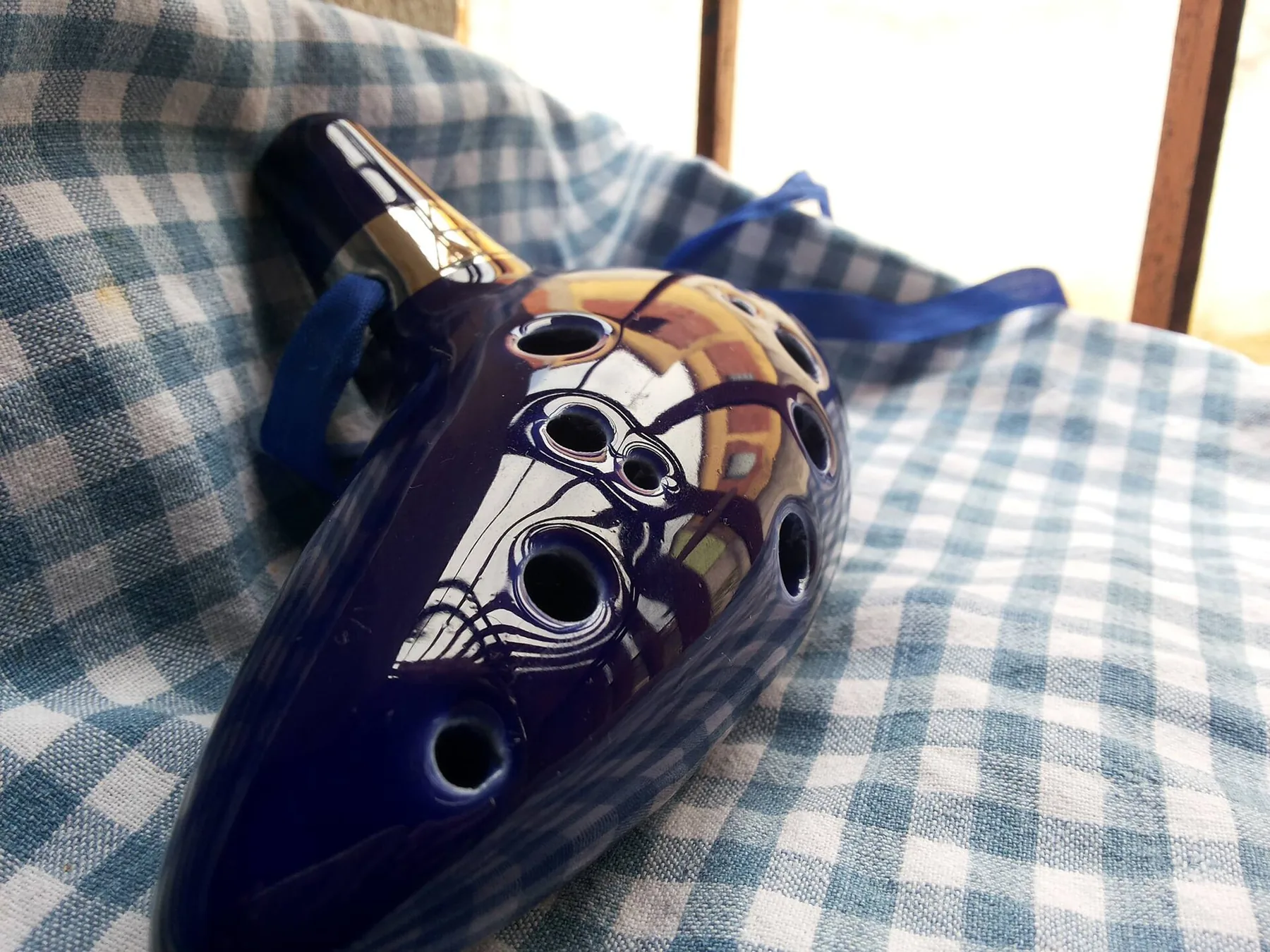
The ocarina is a captivating wind instrument, appreciated by many musicians. Its unique shape and enchanting sound make it an ideal choice for beginners and experienced musicians alike. Models vary, with a number of holes ranging from 4 to 12, which influences their musical range.
A classic model lets you play between 17 and 21 notes, offering a range of about an octave and a half. Understanding the range is essential for exploring this instrument’s musical possibilities. Fingerings also play a crucial role in producing accurate sounds.
In this article, we will explore the history, types and materials of the ocarina. We will also cover learning methods and the importance of choosing a quality instrument. For those who want to learn more about reading sheet music, we have a helpful guide available here.
Introduction to the ocarina: history and how it works
The ocarina, an ancient instrument, has endured through the ages thanks to its enchanting melody. Found in several ancient civilizations, it fascinates with its unique sound. Early forms of ocarinas and globular flutes already existed several millennia ago, especially in ritual and popular contexts.
Over time, the ocarina evolved, incorporating various styles and techniques. Its popularity has never faded, and it continues to inspire contemporary musicians.
To better understand this instrument, let’s look at how its acoustics work. The ocarina works by controlling the breath and covering the holes. Unlike transverse flutes, it has no open terminal hole, which affects its resonance.
Origins and evolution
Let’s explore the ancient origins of the ocarina, an instrument used for millennia in different cultures, particularly in Mesoamerica and Asia. Over the centuries, it has been rediscovered and adapted, from ancient civilizations to modern music.
Acoustic and mechanical principle
Classified as a globular flute, the ocarina produces sounds when air is directed toward the edge, or labium. This principle transforms breath into sound vibration through simple but precise acoustics. The shape of the chamber and the internal resonance play a crucial role in the instrument’s sound quality.
It is essential to note that the absence of an open terminal hole distinguishes the ocarina from many classical flutes. This contributes to its distinctive sound and its ability to produce varied notes. In addition, intonation and tuning are fundamental for a quality instrument.
Finally, the ocarina has undergone a modern rediscovery, particularly in contemporary music and video game soundtracks.
“The ocarina is a bridge between past and present, a timeless melody.”
The basics of ocarina range and scale
Understanding an instrument’s musical range is essential for any musician. For the ocarina, the span of notes is directly influenced by the number of holes on the instrument. The more holes there are, the wider the spectrum of playable notes. A 12-hole model, such as the Enigma, generally covers A4 to F6, or about 1.6 octaves.
SPN notation (Scientific Pitch Notation) is a universal system that helps identify notes. For example, C4 corresponds to middle C on a piano. This notation also includes sharps and flats, which is crucial for playing complete scales.
Number of holes and note range
Ocarina models generally range from 4 to 12 holes. A 6-hole ocarina lets you play a diatonic scale over about one octave, making it a popular choice for beginners. By contrast, a 12-hole ocarina provides access to a more complete chromatic scale, thereby expanding the musical possibilities.
Classical scales and SPN notation
Classical ranges are divided into several registers, including the higher soprano and the deeper low ranges. Each register has its own sound characteristics. Using SPN notation makes it easier to understand these registers and play accurately.
Overblowing and extending the range
One interesting technique is overblowing, which can sometimes add a few notes to the standard scale. This can be especially useful for more complex pieces. However, it is important to note that single-chamber models have physical limits that can restrict this extension.
A good instrument must remain in tune across its entire range. Tuning in C or G also determines the usable range. To play themes such as Zelda, a range of about 1.5 octaves can be enough, which a classic ocarina with its 17 to 21 notes handles perfectly.
For more information on the number of holes and their impact on range, see our dedicated article.
| Type of ocarina | Number of holes | Note range | Scale |
|---|---|---|---|
| 4-hole ocarina | 4 | Limited | Diatonic |
| 6-hole ocarina | 6 | A4 – B5 | Diatonic |
| 12-hole ocarina | 12 | A4 – F6 | Chromatic |

The different types of ocarinas and their impact on range
Each ocarina model has unique characteristics that directly influence its musical range. The number of holes is a key factor in this diversity. In fact, the instruments are mainly classified into three categories according to their design.
4-, 6- and 12-hole ocarinas
4- and 6-hole ocarinas are often called pendant models. They offer a range of about one octave, which makes them perfect for children or beginners. These models can allow several notes to be played through fingering combinations, but memorizing them takes a little practice.
Conversely, the 12-hole model is considered the most versatile. It offers an extended range, often covering about 1.5 octaves. The more progressive fingering of this model makes it accessible, even for beginners. For example, the STL Dragon is known for its accuracy and falls within a price range of €80 to €120.
Multi-chamber ocarinas
Multi-chamber ocarinas represent a major step forward. These instruments can reach up to 3 octaves thanks to their multiple chambers. Gosselink’s Triple C3 model is one example, but it is intended for advanced musicians, with a price often above €200.
These instruments offer remarkable flexibility, but their complexity can put beginners off. The Pacchioni system, used in some models, improves the precision of high notes and reduces the risk of unstable notes, which is a considerable asset for musicians who want to play technical passages.
Comparing models: advantages and disadvantages
When choosing an ocarina, it is essential to consider several criteria. 4- or 6-hole models are more portable and affordable, ideal for young musicians. However, their range is limited to about one octave.
By contrast, 12-hole models offer greater tonal richness, but at a higher cost. Multi-chamber ocarinas, while excellent for advanced performance, require a significant investment and a high level of skill.
In short, the choice of ocarina type should be guided by the musician’s skill level and musical goals. For more information on the range of a classic ocarina, see our article here.
Ranges: bass, alto and soprano
Ocarinas, like human voices, offer a variety of ranges. Each register has distinct sounds suited to different musical styles.
Sound characteristics and sizes
The bass range corresponds to the lowest models. Models such as the 11-hole transverse ocarina in C measure about 8 inches and produce a warm tone. This type of ocarina is ideal for solemn melodies.
Ceramic is the preferred material for these instruments because it promotes a round, stable sound. Musique de Terre excels in this category.
Next, the alto range is the most versatile. It suits most musicians, whether beginners or advanced players. STL’s durable plastic models are lightweight, perfect for long playing sessions.
Finally, the soprano range corresponds to the most compact ocarinas. They shine in the high notes, offering a crystalline sound for cheerful tunes. However, they can sound shrill without good breath control.
Choosing according to musical style and use
The choice of range depends on the musical style. Low models are perfect for classical music, while alto is more versatile. Sopranos, meanwhile, are ideal for lively melodies.
Here are a few examples of models by range:
- Bass range: 11-hole transverse ocarina in C by Musique de Terre
- Alto range: STL plastic model
- Soprano range: blue ZFan
It is important to test different ranges before buying. This helps you find the one that best matches your musical sensitivity and repertoire.

Materials: influence on sound and quality
The material used to make an instrument has a major impact on its sound. In the case of the ocarina, each material choice shapes the musical experience. Let’s analyze the main options available.
Ceramic: classic and warm
Ceramic is often considered the reference material for purists. It offers a warm sound and excellent projection, which is particularly appreciated in models from makers such as STL or Gosselink. However, its fragility requires careful handling.
Plastic: practical and durable
Plastic, like that used in the Night by Noble model, is a popular option for its durability and light weight. Ideal for travel, it lets you play without fear of breakage. However, it can generate condensation, which slightly affects the high notes.
Metal and other materials: stability and exceptions
Metal is a rarer option, sought after for its robustness and stability. Metal instruments can maintain reliable tuning over the years, but their cost is generally higher and their sound depends heavily on the design.
It is important to note that other materials, such as wood, require specific maintenance. For example, wood must be protected from humidity changes to prevent cracking. Each material has its advantages and disadvantages, thereby influencing the choice of instrument.
In short, the choice of material should be based on your budget, your level and the intended use. Whether for home use, concerts or travel, it is essential not to compromise on the quality of the instrument.

The best ocarina makers
In the world of musical instruments, some makers stand out for their expertise. This article looks at three brands recognized for their quality and creativity in making ocarinas.
STL Ocarina: leader and creative design
STL Ocarina is a major player in the market, with more than 15 years of experience. Its models, such as the Dragon, combine imaginative design with remarkable acoustic accuracy. This 12-hole model is prized for its artistic finishes inspired by pop culture, attracting collectors as a result.
In addition, STL Ocarina offers international shipping, making its instruments accessible to a global audience. Its commitment to quality makes it a leading choice for musicians.
Musique de Terre: local craftsmanship and quality
Musique de Terre specializes in local French craftsmanship. Its ceramic ocarinas are renowned for their rich, deep sound. The Traversier model is especially valued for its powerful low notes.
This maker also offers a lifetime warranty on its instruments, demonstrating its confidence in the durability of its products. In addition, it provides free tutorials to help musicians get familiar with their instruments.
Dinda Ocarina: affordable option and traditional patterns
Dinda Ocarina, from Thailand, offers affordable instruments that are perfect for beginners. Its Alto C model, starting at €35, is handmade and features attractive traditional patterns.
Although this model has a slightly limited range, it is an excellent introduction for anyone who wants to explore the world of ocarinas.
Here is a comparison table of the three makers:
| Maker | Flagship model | Approximate price | Features |
|---|---|---|---|
| STL Ocarina | Dragon | €80-120 | Creative design, international shipping |
| Musique de Terre | Traversier | €90-150 | Rich sound, lifetime warranty |
| Dinda Ocarina | Alto C | €35-60 | Affordable, traditional patterns |
Choosing an ocarina from one of these recognized makers generally guarantees superior quality. It is advisable to consult online reviews and comparisons, such as those from the OCTalk channel, before making your choice.
Understanding and learning ocarina fingerings
Mastering the fingerings of a wind instrument is essential for producing accurate sounds. For the ocarina, there are specific methods depending on the number of holes. In this section, we will explore fingering systems for 4- and 6-hole models.
Method for 4 holes
For the 4-hole ocarina, each hole is numbered as follows:
- Position 1: top left
- Position 2: top right
- Position 3: bottom left
- Position 4: bottom right
In the table below, a number indicates a covered hole and an “X” represents an open hole. Here are the finger combinations for each note:
| Note | Fingerings |
|---|---|
| C | 1, 2, 3, 4 |
| D | 1, X, 3, 4 |
| E | 1, 2, 3, X |
| F | 1, X, 3, X |
| F# | X, 2, 3, 4 |
| G | X, X, 3, 4 |
| G# | X, 2, 3, X |
| A | X, X, 3, X |
| A# | X, X, X, 4 |
| B | X, 2, X, X |
| C at the octave | X, X, X, X |
Method for 6 holes
For the 6-hole ocarina, two additional holes are added:
- Position 5: on the left, underneath the instrument
- Position 6: on the right, underneath the instrument
To produce the same sounds as with the 4-hole ocarina, simply cover the two bottom holes. Holes 5 and 6 then allow the pitch of the note to be adjusted by a semitone or a tone depending on the model’s fingering system:
- Semitone: cover hole 5 and leave 6 open
- One tone: cover hole 6 and leave 5 open
The role of memorization and combinations
Memorizing fingering combinations is crucial. Regular practice is recommended, starting slowly to anchor the positions in muscle memory. This helps you move up and down the scale accurately, without rushing.
Comparing fingering systems for 4- and 6-hole models helps you understand their respective advantages. Using a learning manual specific to your model can also make your progress easier. For more advice on learning, see our article here.

How to play scales and interpret notes
To become a skilled musician, it is crucial to master ascending and descending scales. This practice is the foundation of musical learning. In particular, the C major scale is an excellent starting point.
The progression of notes in this scale is simple: C-D-E-F-G-A-B-C. Each note corresponds to a finger combination on your instrument. Memorizing these combinations is essential for playing with ease.
It is also important to work on speed of execution. Start slowly to ensure finger accuracy and correct intonation. Over time, you will be able to increase speed without sacrificing sound quality.
Familiarize yourself with music notation and reading sheet music. These skills are essential for interpreting varied pieces. You can find sheet music in books or online, making it easier to access your favorite pieces.
Resources such as ocarina fingering guides can help you master the nuances and subtleties of melodies. This will enrich your musical experience.
To develop coordination between breath and fingers, regular exercises are recommended. Practice in short but frequent sessions to build automatic habits. This will help you progress in interpreting melodies.
Finally, start with simple pieces, such as video game themes or nursery rhymes. This will let you apply the scales you have learned. Feel free to explore different musical styles to enrich your repertoire and musicianship.
| Exercise | Description | Goal |
|---|---|---|
| Ascending scale | Play the C major scale ascending | Master the fingerings |
| Descending scale | Play the C major scale descending | Improve fluidity |
| Progressive speed | Increase execution speed | Work on precision |
| Reading sheet music | Interpret pieces from sheet music | Develop musical understanding |
Choosing your first ocarina: practical advice
Starting with a suitable instrument is the key to an enriching musical experience. For beginners, it is essential to take several criteria into account when choosing their first ocarina.
Criteria to consider
When choosing an instrument, the number of holes is a determining factor. A 12-hole model in C major is often recommended. It offers a balanced range that makes learning easier.
The material also plays a crucial role. Plastic is ideal for starting out because it is lightweight and durable. This lets beginners play without fear of breakage.
Finally, price is an aspect to consider. A budget of €50 to €60 is reasonable for a good instrument. Be sure to check the tuning with an app such as Tuner Lite.
Where to buy and what pitfalls to avoid
It is advisable to buy your instrument from specialist shops, such as Musique de Terre, which offer warranties and suitable advice. Avoid general marketplaces, as they may hide counterfeits.
Be careful with low-priced models, especially those under €30, which may not be certified. Favor recognized brands such as STL or Night by Noble, which guarantee superior quality.
A good tip is to choose a complete pack including a learning method and a protective case. This will allow you to start in the best conditions.
Here is a summary table of the criteria to consider:
| Criterion | Details |
|---|---|
| Number of holes | 12-hole model recommended for a better range |
| Material | Plastic for its light weight and durability |
| Price | Ideal budget between €50 and €60 |
| Sales channel | Favor specialist shops |
| Avoid | Models under €30 without certification |
Ocarina notes: understanding fingerings and range – a focus on practice
Learning to play an instrument can seem intimidating, but the ocarina offers an accessible approach. To get started easily, begin with a 12-hole alto transverse ocarina in C. This model allows linear fingering, making it easier to move up the scale by lifting the fingers one after another.
Getting started easily with suitable fingerings
Suitable fingerings are essential for making progress. By becoming familiar with your finger positions, you will be able to play notes quickly. For example, the Zelda theme is an excellent piece to learn, as it requires only 1.5 octaves.
Practical examples and simple pieces to play
For those who want to play melodies from the very beginning, several pieces of sheet music are available online or in specialized books. Community tutorials and tools such as Part’Ocarina will help you progress in your learning.
It is crucial to practice scales regularly, ascending and descending, because this forms the basis for playing complete pieces. Here are a few tips for structuring your learning sessions:
- Start with scales to warm up.
- Work on simple pieces, such as the Zelda theme.
- Finish with free playing to have fun.
Consistency is essential: short sessions of 15 to 20 minutes every day are more effective than long, spaced-out sessions. Also consider recording your playing to track your progress and identify points to improve.
Ultimately, the pleasure of playing should be your main driver for learning. Choose pieces that motivate you and make you want to improve on the ocarina.
| Exercise | Description | Goal |
|---|---|---|
| Ascending scale | Play the C major scale ascending | Master the fingerings |
| Descending scale | Play the C major scale descending | Improve fluidity |
| Progressive speed | Increase execution speed | Work on precision |
| Reading sheet music | Interpret pieces from sheet music | Develop musical understanding |
Conclusion
Choosing your first instrument can seem difficult, but there are simple criteria to guide your choice. The number of holes, the scale and the material are determining elements that influence your musical experience. Always prioritize quality to ensure optimal sound.
Multi-chamber models offer a natural next step for enthusiasts who want to explore richer sounds. Don’t forget to use resources such as ocarina sheet music reading guides to master the nuances and progress quickly.
Finally, music should above all be a pleasure. The ocarina is an instrument accessible to everyone, whatever your level. Join the community of players to share your progress and discover new pieces. The musical adventure begins here, with this instrument capable of producing enchanting sounds.